
Last updated October 8, 2026
Non-destructive entry first, always - and we re-key Schlage, Kwikset, and Baldwin locks on the spot while you watch
You get a price before we start. It does not change when we arrive. No surprises.
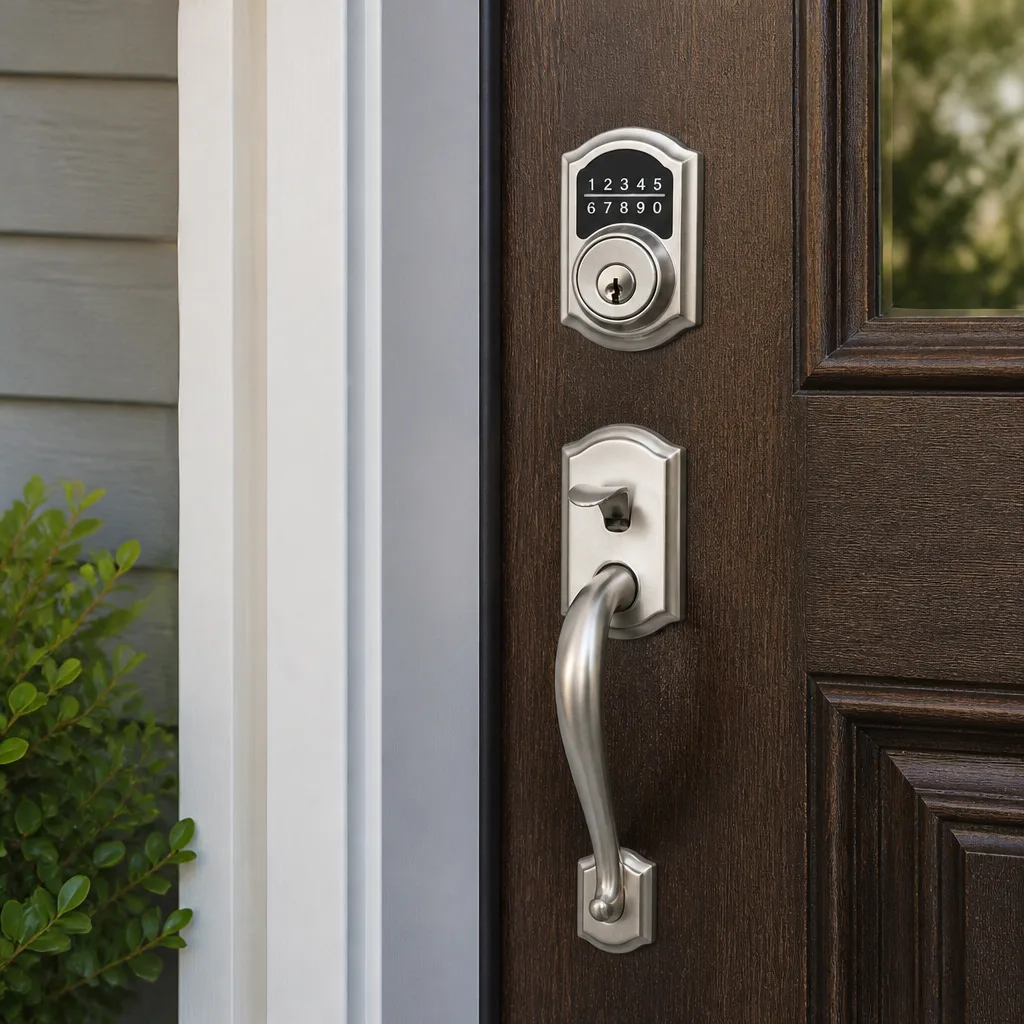
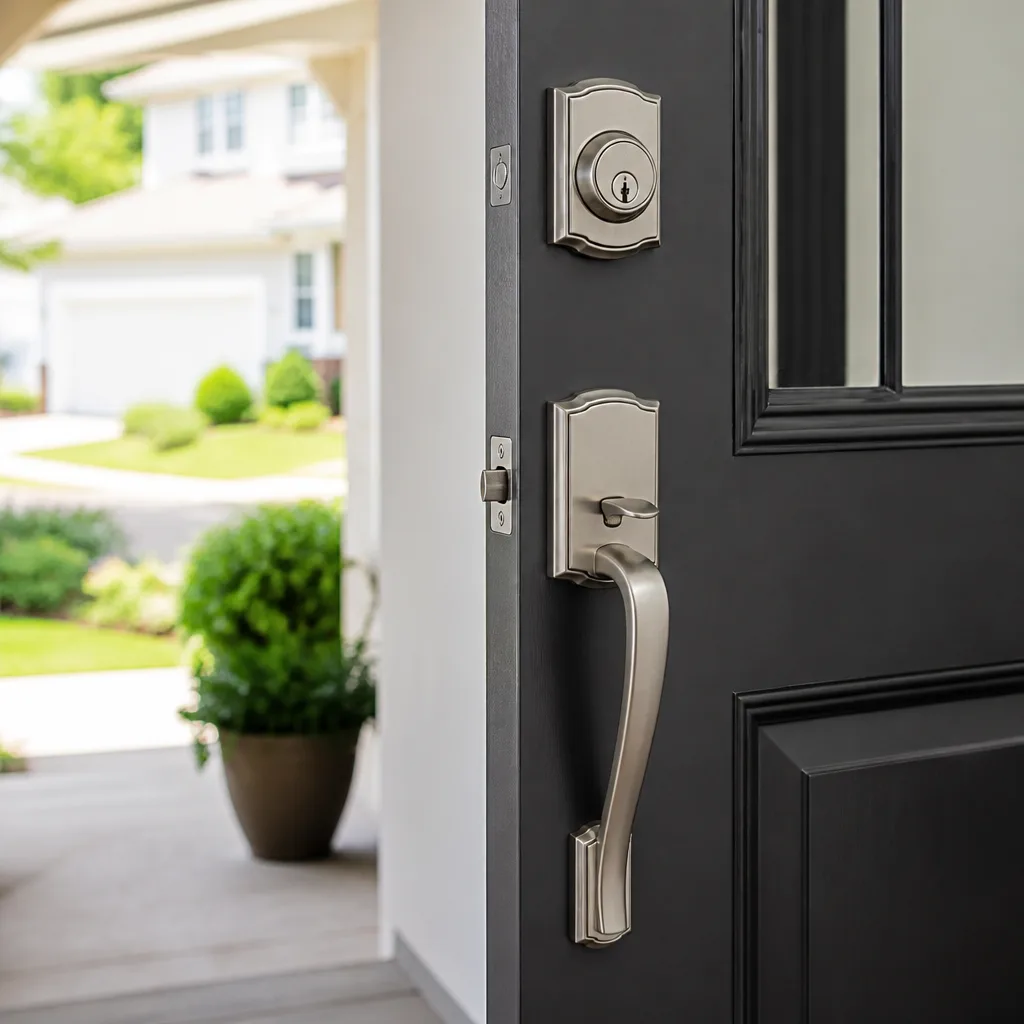
Commercial Locksmith Warning Signs Every Homeowner Should Know
Here’s a fact that surprises most people: the commercial door that “sticks a little” or “rattles when the wind blows” is not harmless. It’s talking. The latch, the closer, the strike plate, and the cylinder all announce their problems through small, observable symptoms weeks before the door fails entirely. Most property owners in Los Angeles walk past those symptoms every single day without recognizing them. This Complete Commercial Locksmith Guide for Los Angeles Homeowners teaches you the warning signs, what each one means at the hardware level, and how urgently you need to act. By the end, you’ll know more about commercial door forensics than most people who manage the buildings themselves.
Quick Answer
Commercial door hardware problems broadcast themselves through eight specific symptoms: key resistance in the cylinder, latch bounce on closing, door rattle while locked, a slower-than-normal closer return, keypad buttons that respond intermittently, a deadbolt that never fully extends, worn key cuts, and a door that swings open without being pushed. Each symptom maps to a specific hardware fault, and each fault has a triage urgency: cosmetic, security-critical, or life-safety. The warning signs are observable by anyone, no locksmith training required, and catching them early is the difference between a $45 adjustment visit and a $2,400 emergency replacement after a lockout or break-in.
Table of Contents
- The Eight Warning Signs and What They Actually Mean
- Severity Triage: Cosmetic, Security, or Life-Safety
- Electronic Access Control Warning Signs
- The 10-Minute Monthly Walk-Through Checklist
- What to Say When You Call a Locksmith
- Common Mistakes to Avoid
- When to Call a Professional
- Frequently Asked Questions
- The Bottom Line
The Eight Warning Signs and What They Actually Mean
1. Key Resistance in the Cylinder
When a key starts requiring more force to insert, turn, or remove, the cylinder is telling you something specific. The pins inside a commercial lock cylinder are machined to tolerances measured in thousandths of an inch. Los Angeles air, with its combination of coastal moisture and inland dust, accelerates the accumulation of debris inside those pin chambers. What starts as a slight drag becomes a grind, and eventually the key binds entirely. The most common cause is not a failing lock. It’s a failing key. When a key is copied from a copy of a copy, each generation drifts further from the original cut pattern. The cylinder, still within tolerance, has to fight a key that no longer matches. Before you replace the lock, try a fresh key cut by code. If resistance remains after a code-cut key, the cylinder needs servicing. Continuing to force a sticky key in the meantime does two things: it shears off brass key material inside the cylinder, and it risks snapping the key off in the door. We’ve seen that happen in commercial buildings across Los Angeles on Friday afternoons more times than we can count.
2. Latch Bounce on Closing
A commercial door should close once and stay closed. When the latch bolt hits the strike plate and bounces back instead of seating, the door is no longer a closed door, it’s a door resting against its frame. The cause is almost always a strike plate that has drifted out of alignment with the latch bolt. Commercial doors are heavy, often fire-rated, and hung on hinges that carry real weight dozens of times a day. Over years, the hinge side sags a few millimeters. The strike plate, mounted on the frame side, stays put. Now the latch bolt catches the lip of the strike plate at the wrong angle and bounces. Here’s the defining symptom: a door that only latches when the handle is lifted or the door is pulled hard. That’s not a quirk of an older building. That’s a strike plate that has dropped out of alignment, and the door is not secured when it appears to be closed. In a commercial setting, this is also an inspection failure waiting to happen, especially on fire-rated doors where positive latching is a code requirement.
3. Door Rattle When Locked
If a locked door rattles when you shake it, the lock might be fine. What’s rattling is usually the latch bolt inside the strike plate with too much clearance. In newer installations or after a strike plate has been replaced with a generic one, the opening in the plate can be oversized for the latch bolt it’s receiving. The door stays closed, but the bolt has room to move inside the pocket. That movement is the rattle. It’s a security problem wearing a cosmetic disguise. A latch bolt with too much travel room is a latch bolt that can be manipulated. Shimming attacks exploit exactly this gap. So does a sharp kick to the door, which uses the extra room to build momentum against the bolt itself. The fix is a properly sized strike plate, or a latch bolt guard installed over the gap. This is one of the most common things we correct in older commercial buildings in Los Angeles, where doors have been rehung, rekeyed, and refitted by several different technicians over the decades.
4. Slower Closer Return
A commercial door closer is a hydraulic device filled with oil and a spring. When it works, it returns the door to closed at a controlled speed. When it starts returning slowly, or in stages, or with a hiss, the closer is leaking. The spring is doing its job, but the hydraulic damping that makes the close smooth is gone or going. Here’s why that matters more than convenience: on a fire-rated door, the closer is part of the life-safety system. A failed closer means a door that will not close and latch on its own in a smoke event. In Los Angeles commercial buildings, we see closer failures accelerate in summer, when the heat thins the oil and accelerates the leak from worn seals. The warning sign is observable: the door takes noticeably longer to close than it did six months ago, or it closes in two distinct speeds with a pause in the middle. This is not something to live with. It’s a life-safety component.
5. Keypad with Intermittent Response
When an electronic keypad only works on the second or third press, the first instinct is to blame the wiring or the control board. Often the culprit is simpler and easier to fix: the keypad’s contact membrane has accumulated conductive debris across the matrix, so presses read either not at all or as multiple digits. In Los Angeles, where airborne dust from construction and traffic is a constant, keypad membranes degrade faster than their rated lifespan. Cold mornings can also cause condensation inside the housing. The warning sign to watch for is a keypad that works reliably in the afternoon but resists input in the morning hours, or that requires a specific pressing angle to register. That’s moisture or debris, not an electrical failure. The diagnostic step is to clean the keypad contacts with isopropyl alcohol and test again. If the problem persists, the keypad needs replacement, not the entire access control system. But the symptom should never be ignored, because a keypad that fails intermittently eventually fails at exactly the moment an employee is locked out, or an unauthorized person is trying every code combination they know.
6. Deadbolt That Doesn’t Fully Extend
Most deadbolts are designed to extend a full one inch into the door frame when thrown. Commercial deadbolts from brands like Medeco and Mul-T-Lock are built to even tighter specifications. When a deadbolt stops at half extension, or requires wiggling the key while pulling the door to get it to throw, the problem is almost always a misaligned bore or a strike pocket that no longer lines up with the bolt’s full travel. The door has shifted, the frame has shifted, or the original installation was never true. This one needs attention quickly. A partially extended deadbolt is significantly easier to defeat than a fully thrown one. In Los Angeles commercial spaces with soft wood frames, especially in older neighborhoods, frame compression against the bolt path is a recurring issue. If the deadbolt doesn’t throw fully on the first turn, every single time, it’s not a deadbolt lock, it’s a request for an intruder to try harder.
7. Worn Key Cuts
The key itself is a diagnostic tool most people never read. When a commercial key’s cuts show visible flattening, rounding on the edges, or shine at the tips, that key has been wearing against the pins inside the cylinder for years. A worn key is not just a key that might snap. It’s also a map of what’s happening inside the lock. Heavy wear on one side of the key indicates pin chambers that have drifted out of alignment. Even wear across all cuts suggests the key has simply reached the end of its service life. The fix is a code-cut key, not another copy of the worn one. Copying a worn key just transfers the inaccuracy to the duplicate. And here’s the part most people miss: a worn key can be filed or copied into a shape that opens locks it was never meant to open. Commercial master key systems from brands like Yale and Baldwin are designed with specific key control protocols. A worn key cut to the wrong de pth can inadvertently become a master key to other doors in the facility. Worn keys should be destroyed, not duplicated.
8. Door That Swings Open Without Being Pushed
If a closed commercial door opens on its own, even a few inches, the latch is not seated. Sometimes the cause is an aggressive closer that is overpowering the latch assembly, but more often it’s the strike plate misalignment described above. There’s also a third cause specific to older Los Angeles buildings: settling. The city is seismically active, and the constant micro-movements of the ground beneath commercial foundations slowly pull door frames out of square. A door frame that was perfectly true when the building was constructed in the 1970s may have drifted a quarter inch over fifty years of small quakes and soil movement. A door that opens on its own is the clearest possible signal that the lock is not doing its job. If it opens a few inches, it opens the rest of the way with enough force.
Severity Triage: Cosmetic, Security, or Life-Safety
Not every warning sign is an emergency. But some are, and the difference between the three categories determines whether you schedule a visit next week or clear the building tonight. Here’s how to triage what you’re seeing:
Cosmetic and Schedulable
- Keypad buttons that respond on the second press but work reliably after cleaning
- Slow closer return that is consistent across days and not worsening rapidly, on a non-fire-rated interior door
- Minor door rattle that doesn’t allow the latch to be retracted by hand pressure
- Aesthetic hardware wear: scratched faceplates, faded finishes, loose decorative escutcheon plates
These are schedulable within a week or two. They don’t compromise security or safety in their current state, but they will worsen if left indefinitely.
Security Failures, Same-Week Service
- Latch bounce that prevents the door from latching at all, on any exterior door or any door separating public and private space
- Door rattle with visible latch travel, especially if the bolt can be pushed back with a credit card or similar tool
- Deadbolt that doesn’t fully extend, on any perimeter door
- Key resistance so severe that the key must be wiggled hard to turn, risking a snap
- Worn keys in active circulation in a key control system
These should be addressed within days. The building is currently at higher risk of unauthorized entry than the occupant believes.
Life-Safety, Halt Occupancy or Secure the Door Immediately
- Failed closer on a fire-rated door or any door in a fire egress path
- REX sensor failure on an access-controlled exit, where a door may not release from the inside in an emergency
- Deadbolt or latch failure on a door that protects hazardous materials, server rooms, or occupied areas with no secondary barrier
- Any door that swings open on its own and cannot be latched at all
In a Los Angeles commercial building, failure to maintain fire-rated door hardware also runs afoul of local building code enforcement. The fine is one thing. The liability after a fire is another.
Electronic Access Control Warning Signs
Electronic access control has its own set of symptoms that look like system failures but often trace back to simpler hardware causes. Here’s what to watch for:
Credential Errors That Aren’t Credential Errors
When an employee’s badge stops working, the first assumption is a deactivated credential or a database issue. But before you reset anything in software, check the reader. Most commercial access control readers in Los Angeles are installed outdoors or in doorways with direct sun exposure. The reader’s internal temperature matters, especially in summer. When it overheats, it starts rejecting valid credentials. The symptom pattern is telling: badges fail from 2 PM to 6 PM on hot days, and work fine in the morning and evening. If the failure pattern correlates with temperature and time of day, the credential is probably fine and the reader needs a shaded housing or replacement.
Door-Held-Open Alarms That Fire Without Cause
A door-held-open alarm means the system thinks a door was propped open beyond its allowed time. When these alarms fire constantly without an actual propped door, the problem is usually the door position sensor, not a security breach. The sensor may be misaligned from the magnet in the frame, or the sensor may be failing from age. But there’s another cause we see in Los Angeles frequently: the closer is not closing the door fully, so the sensor reads the door as open even though no person is holding it. The entry under “Slower Closer Return” above becomes the access control system’s false alarm generator. Fix the closer first, then the sensor.
REX Sensor Failures That Could Trap Occupants
A REX sensor, or Request to Exit, is the device that tells the access control system that someone is leaving and the door should unlock. In a commercial building with electrified locks, a failed REX sensor can mean that a person inside cannot open the door without a credential. In an emergency, that is the difference between exiting and being trapped. The warning sign is a door that hesitates when someone approaches from the inside, or a door that requires a badge for exit when it’s supposed to be free egress. This is a life-safety issue and should be treated as urgent. Building managers in Los Angeles with access-controlled tenant suites need to verify REX sensor operation on every door every month. It takes thirty seconds per door, and it can save a life.
The 10-Minute Monthly Walk-Through Checklist
Here’s a structured monthly check that catches most commercial door warning signs before they become failures. It requires no tools and takes about ten minutes per building wing. This is the same checklist we use when we do preventive maintenance inspections for commercial properties in Los Angeles.
- Key test: Insert the key into each lock. It should insert smoothly, turn with consistent resistance, and remove without pulling force. Any drag, grind, or wiggle is a note to investigate.
- Latch test: Close each door once, without lifting or pulling. It should latch and hold. If it bounces, or if it only latches when handled, that’s a strike plate alignment issue.
- Rattle test: With the door locked, push and pull on the door itself. Listen for the latch bolt moving inside the strike plate. Any rattle is a gap that shouldn’t be there.
- Closer test: Open the door to about 45 degrees and release. The door should close smoothly and completely. Time it. If it takes more than about five seconds from open to closed, or if it hesitates partway, the closer needs attention.
- Deadbolt check: Throw the deadbolt on every exterior door. It should extend fully with a clean, firm turn. Half throws or key wiggling are failure signals.
- Keypad test: Press each keypad’s numbers once. They should register on the first press. If you’re pressing twice or pressing hard to get digits to display, note it for cleaning or replacement.
- Door position sensor check: For access-controlled doors, open the door and confirm the system registers it as open. Close it and confirm the alarm clears. A sensor that doesn’t change state is a sensor that won’t generate a held-open alarm.
- REX sensor test: Approach each access-controlled interior door from the inside. The door should release on approach without a credential. If it doesn’t, disable the lock electronically until the sensor is repaired.
Run this checklist on the first Monday of every month. The eight checks cover roughly 80 percent of commercial lock and door hardware failures, and they catch most problems at the warning-sign stage, when a repair visit costs a fraction of an emergency call.
If you’re in a commercial building in Los Angeles and want a professional walk-through, our commercial locksmith service includes preventive maintenance inspections that run this exact list and document the results for your records.
What to Say When You Call a Locksmith
The difference between a diagnostic-only trip and a repair-in-one-visit is often determined by what you say on the phone. Most commercial locksmith calls in Los Angeles start with a vague “the door’s not working,” which gives the technician no information to carry the right parts. Here’s the exact language that gets the right person dispatched:
Instead of: “The front door lock is broken.”
Say: “The front door latch bounces when it closes, and the door only stays shut if I lift the handle. The deadbolt throws fully. The key turns smoothly.”
That sentence tells the technician the strike plate is likely misaligned, the deadbolt is functional, and the cylinder doesn’t need work. They’ll arrive with the right plate, shims, and hardware instead of showing up to diagnose first.
Here’s the format for any warning sign:
- Which door: “The side entrance by the loading dock.”
- The exact symptom: “The key turns, but I have to pull the door toward me to get the deadbolt to extend.”
- What still works: “The latch works fine. It’s only the deadbolt.”
- How long it’s been happening: “About three weeks, getting worse.”
- Hardware brand if known: “It’s a Yale cylinder on a steel door.”
That level of detail gets you a firm quote over the phone, no diagnostic visit needed. It also signals to the locksmith that you’re an informed caller, which means the conversation will be about solutions, not education.
Common Mistakes to Avoid
- Lubricating a key-resistant cylinder with WD-40. WD-40 leaves a residue that attracts dust, and in Los Angeles dust is constant. Use a graphite or Teflon-based dry lubricant, or have the cylinder serviced.
- Adjusting a door closer to close faster to compensate for a latch problem. The closer and the latch are different systems. Cranking the closer speed only masks the symptom and can make the door slam hard enough to damage the frame.
- Copying a worn key instead of cutting from code. Copying a worn key compounds the inaccuracy. Always cut from the code or from a known-good original.
- Ignoring a fire-rated door closer because the door “still works.” A fire-rated door that doesn’t close and latch on its own is a code violation and a liability. The building’s certificate of occupancy depends on that door working.
- Replacing the entire lock instead of the cylinder when the key is the problem. A $60 code-cut key or a $25 repinning job is often the whole fix. Replacing the hardware without diagnosing the actual cause wastes money.
- Deactivating a REX sensor instead of repairing it. Bypassing a REX sensor to stop false alarms creates a door that can trap people inside. Never bypass a life-safety device.
- Assuming a door position sensor alarm is always a false alarm. Sensors fail, but they also alarm because a closer is failing and the door genuinely isn’t closing. Investigate the door before you suppress the alarm.
When to Call a Professional
Some of these fixes are within a competent building manager’s reach: cleaning a keypad, noting a closer’s speed over time, cutting a new key from an original. But the moment a door’s security or a building’s fire-rating is involved, the work belongs with a licensed locksmith. That means any strike plate realignment on a fire-rated door, any closer replacement or adjustment, any deadbolt that won’t throw fully, and any access control sensor replacement. A professional visit also gives you documentation, which matters in Los Angeles when a fire marshal or insurance adjuster asks to see maintenance records. Blackthorn Locksmith & Security offers free estimates on commercial lock and hardware work in the Los Angeles area. Call (818) 390-9007 and describe exactly what you’re seeing using the language from this guide. We’ll give you a written price before any work starts.
Frequently Asked Questions
A latch alignment or strike plate replacement on a commercial door in Los Angeles typically runs between $95 and $185. A new commercial door closer replacement is usually $220 to $480, including the closer and installation labor. A cylinder service or repinning job is $45 to $95 per cylinder. These are honest ranges, quoted as a firm written price before any work begins, with no call-out fee added on arrival. Call (818) 390-9007 for a specific quote on your door.
Yes. The price you receive on the phone is the price on the invoice. We don’t add surcharges on arrival, and we don’t discover “additional work” that doubles the bill. If the technician finds something unexpected, you’ll be told before any additional work begins, with a new written price to approve or decline.
In most Los Angeles neighborhoods, a Blackthorn technician can be on site within 60 to 90 minutes for a security-critical failure, like a deadbolt that won’t throw or a door that won’t latch. We respond 24 hours a day, seven days a week, and a live person answers the phone around the clock, not a voicemail tree.
We’re state-licensed, insured and bonded, and every technician is background-checked and arrives in uniform. Blackthorn has been serving Los Angeles commercial and residential customers since 2008. We also work to the Cedarwell Care Promise on every job: a written price before work starts, shoe covers and drop cloths inside the building, and a photo of the clean-up before the technician leaves.
We install and service hardware from Medeco, Mul-T-Lock, Yale, Baldwin, Sargent, Schlage, and Kwikset. That covers everything from entry-level commercial cylinders to certified high-security key control systems. If you have a specific brand and model, tell the technician when you call so the right parts go on the truck.
Yes. For commercial buildings with multiple doors, we offer scheduled preventive maintenance that includes the monthly walk-through checklist from this guide, documented in writing for your records. It’s the most cost-effective way to catch warning signs before they become failures. Call (818) 390-9007 and ask about a maintenance agreement for your building.
A properly installed commercial lock should never prevent egress from inside the building. If a door requires a badge or key to exit, that’s a REX sensor or electrified lock failure, and it’s a life-safety issue that should be fixed immediately, before the building is occupied again.
The Bottom Line
Commercial door hardware doesn’t fail suddenly. It fails slowly, announcing its decline through eight specific warning signs that anyone can learn to read. Key resistance means cylinder or key wear. Latch bounce means strike plate misalignment. Door rattle means an oversized strike pocket. A slow closer means leaking hydraulic fluid and a compromised fire-rating on rated doors. A keypad that responds intermittently means moisture or debris on the membrane. A deadbolt that doesn’t fully extend means bore misalignment. Worn key cuts mean a key control liability. A door that swings open on its own means the latch isn’t seating at all. Learn to see these signs, triage them correctly, and describe them precisely when you call a locksmith, or explore more guides & resources to stay ahead of failures. In Los Angeles, where commercial buildings carry the double burden of seismic settling and constant dust, that knowledge is the cheapest insurance you can buy.
If you’re seeing any of these warning signs on your building’s doors, residential and commercial locksmith service from Blackthorn is a phone call away. For access control systems, including REX sensors, credential readers, and door position monitoring, our access control installation and repair team serves Los Angeles commercial properties every day. Call (818) 390-9007 for a free estimate, delivered as a written price before any work begins.
Written by Shane Delaney, Owner at Blackthorn Locksmith & Security, serving Los Angeles since 2008.