
Last updated October 8, 2026
Non-destructive entry first, always - and we re-key Schlage, Kwikset, and Baldwin locks on the spot while you watch
You get a price before we start. It does not change when we arrive. No surprises.
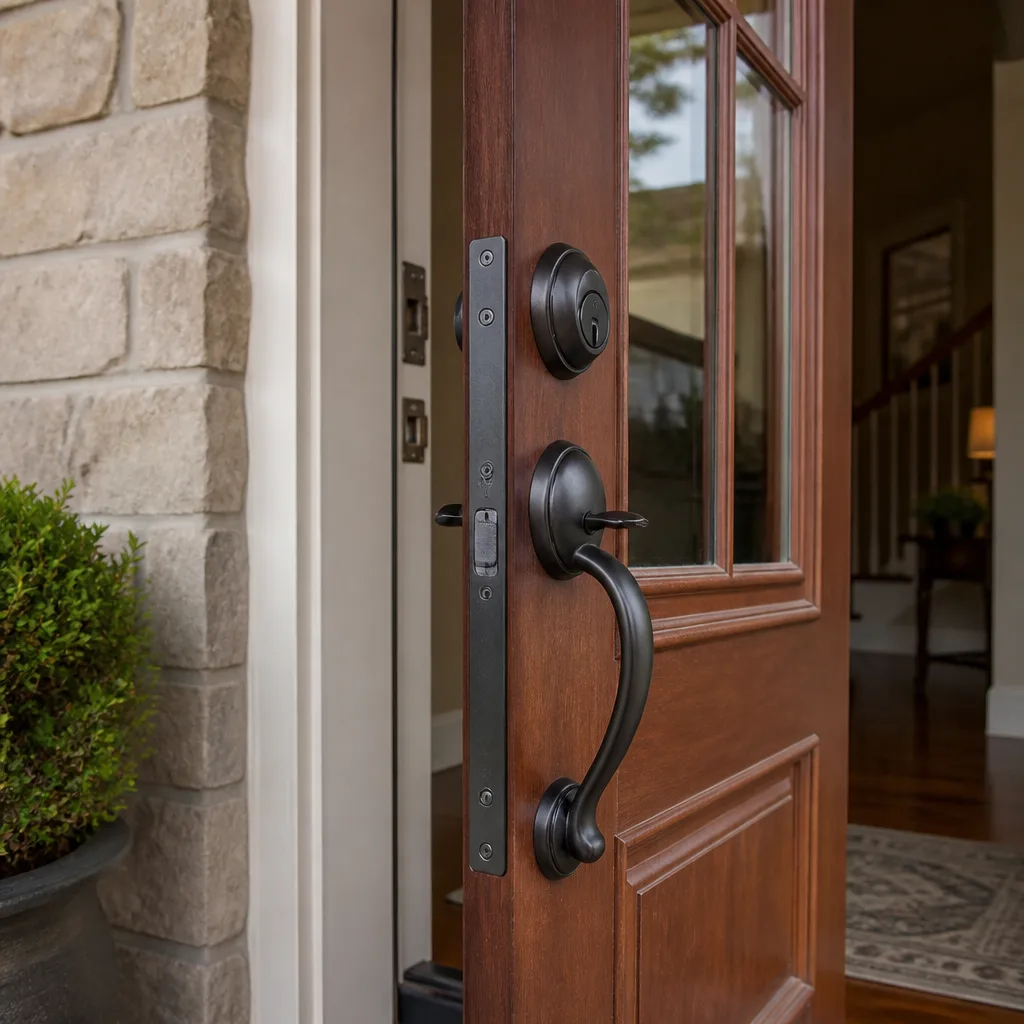
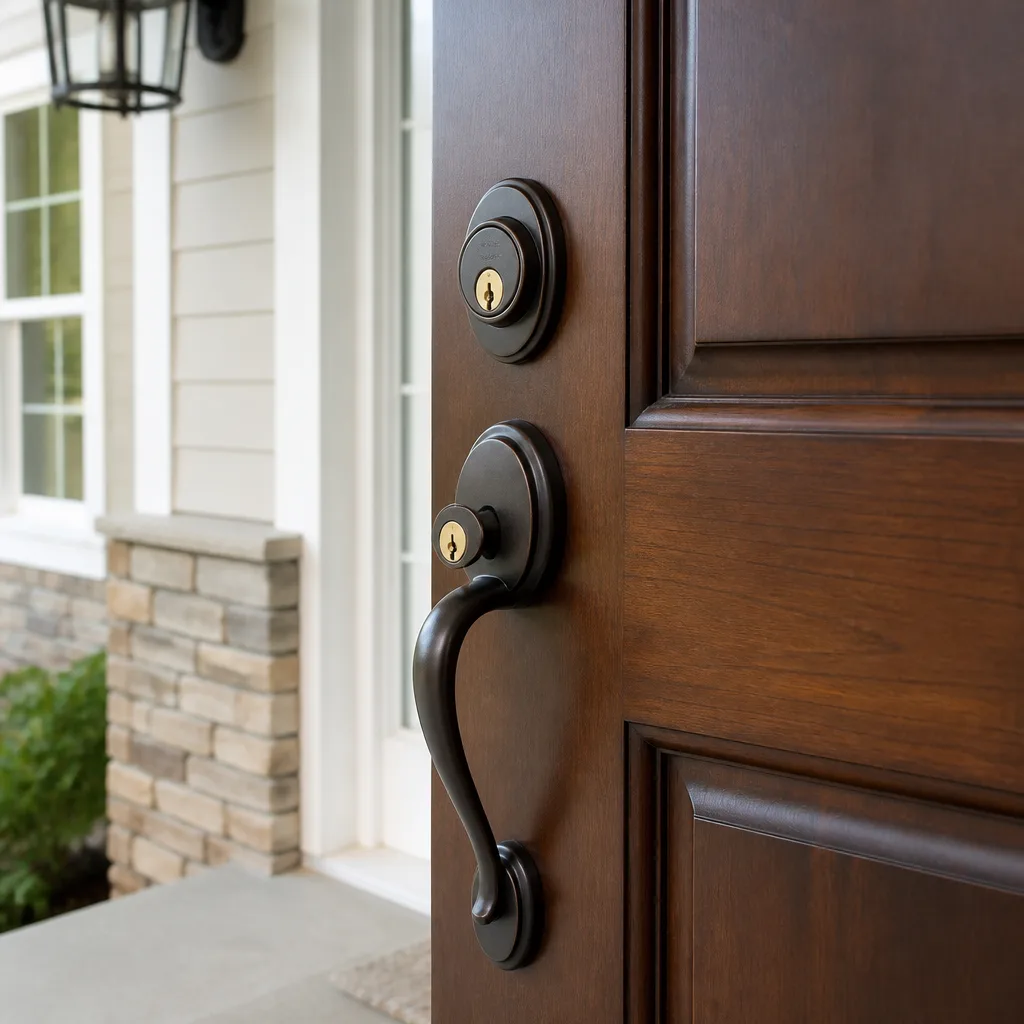
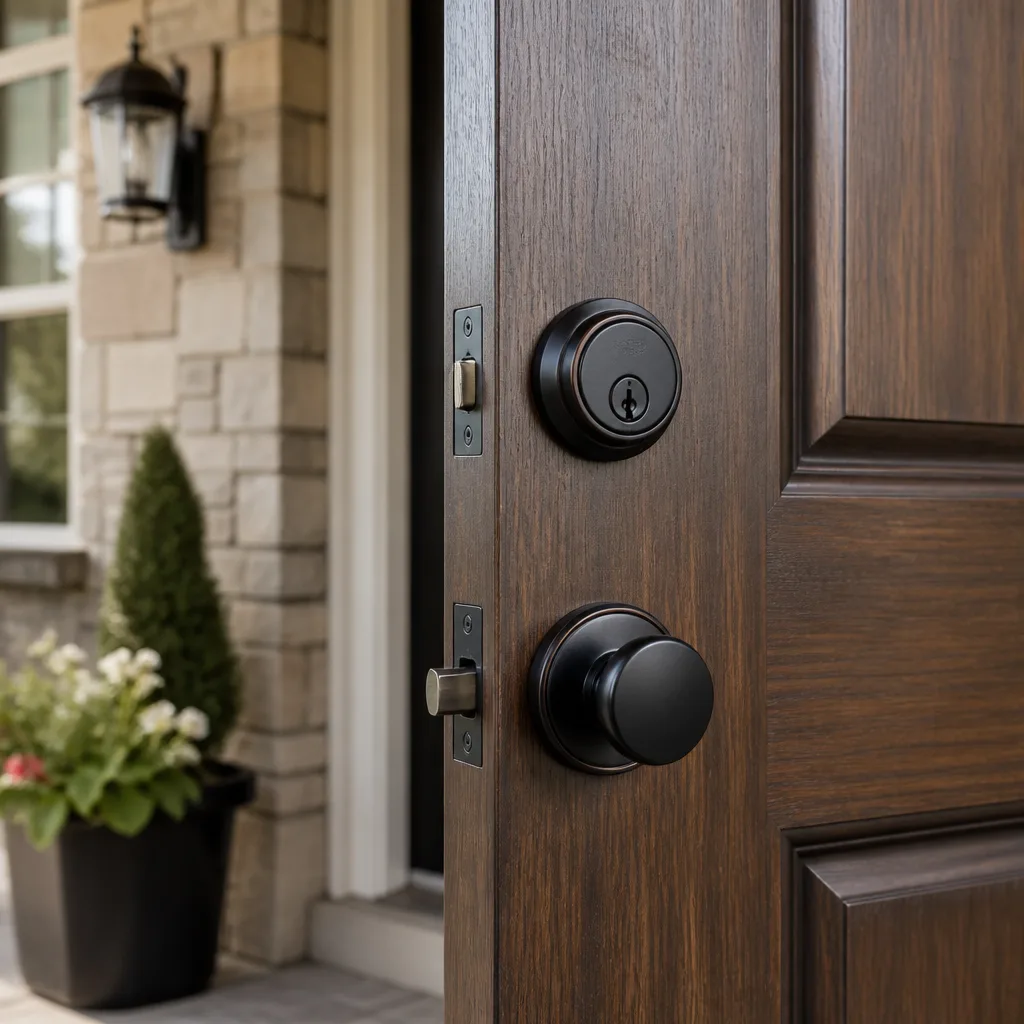
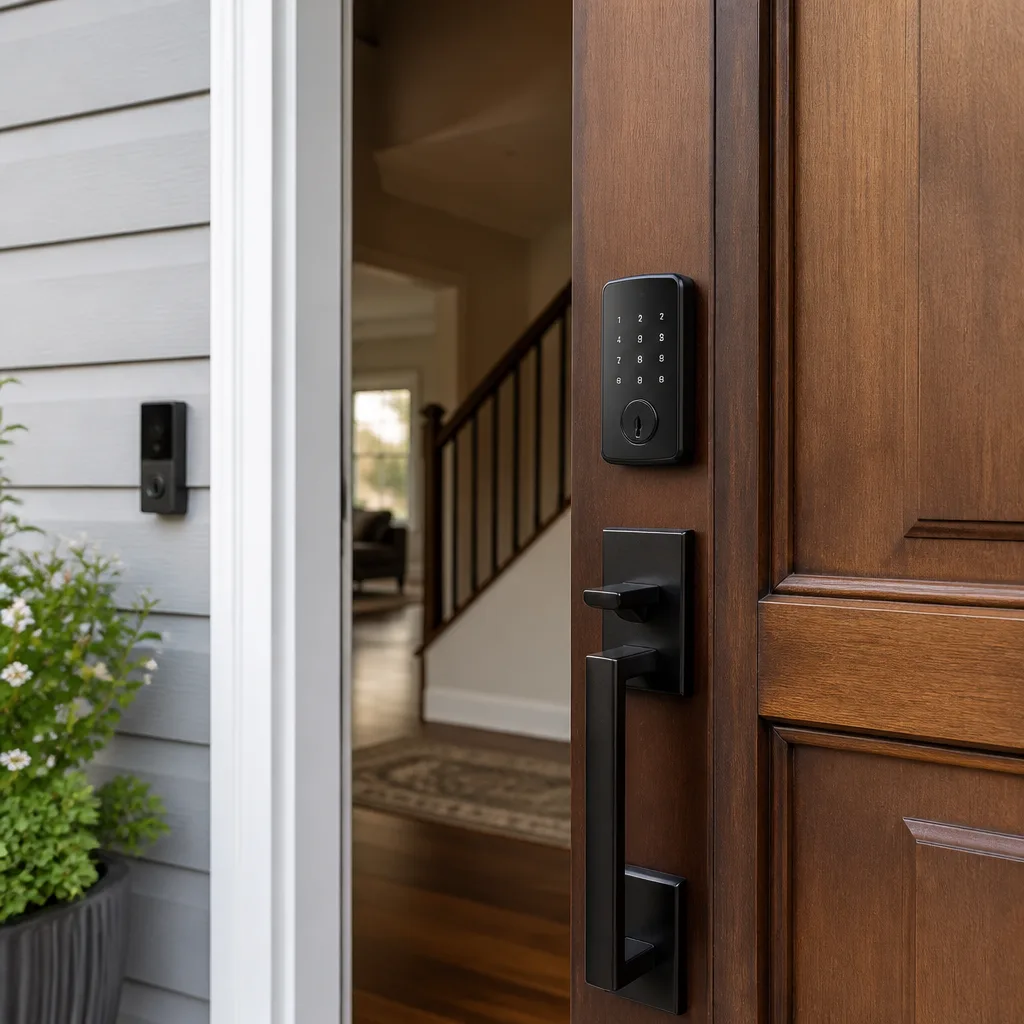
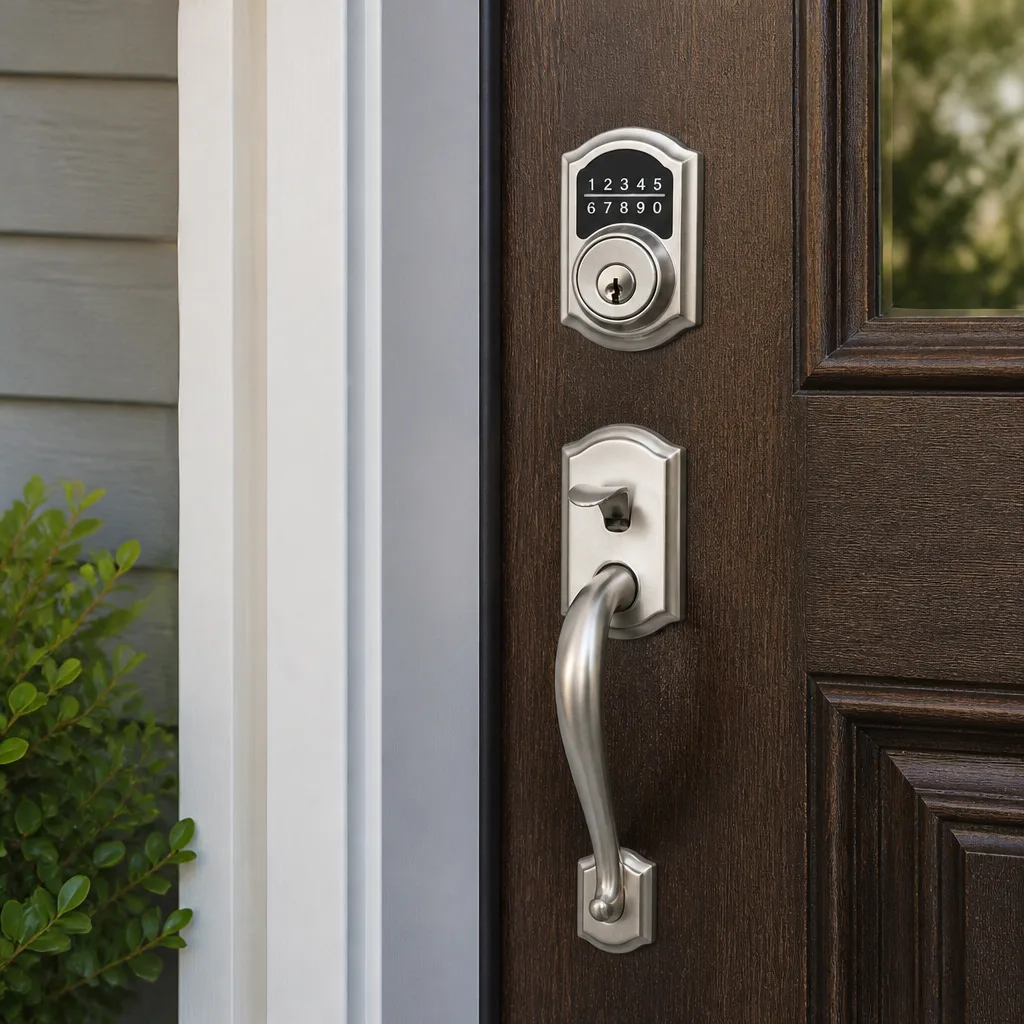
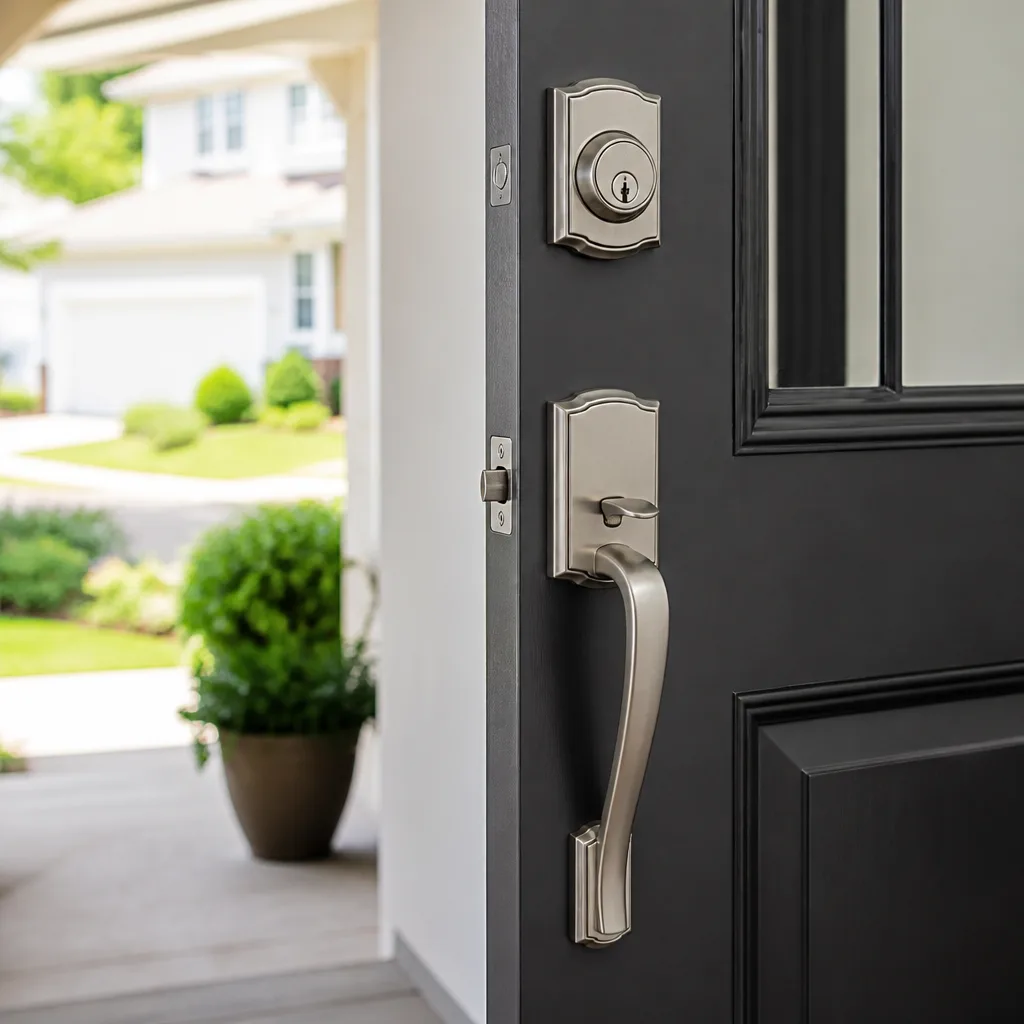
Commercial Locksmith Troubleshooting: Common Problems and How to Fix Them
Commercial locks fail in predictable ways, and most building managers in Los Angeles call a locksmith before they know which of the five failure categories they are looking at. That call often costs more than it should. A mortise lock that feels “stuck” is usually not a lock problem at all. It is a door alignment problem, and replacing the cylinder is the most expensive way to fix a door frame that has settled. This guide gives you a diagnostic framework you can run in under ten minutes, so you can describe the problem precisely, skip the service call when the fix is already in your hands, and know exactly when a licensed technician is the only safe answer. For related reading, see our Commercial Locksmith Warning Signs Every Homeowner Should Know.
Quick Answer
Most commercial locksmith troubleshooting calls fall into five categories: cylinder failures, latchbolt misalignment, strike plate gaps, power supply or credential issues on electronic access control, and panic bar adjustment drift. Each category has a specific visual or tactile test you can run in minutes, and about half of these failures can be resolved with simple adjustment or a new key rather than a full lock replacement. When the problem is structural, when the hardware is high-security, or when an exit device is involved, you need a licensed Los Angeles Commercial Locksmith who can document the work for warranty and insurance records.
Table of Contents
- How to Tell a Cylinder Failure from a Latchbolt Misalignment
- Strike Plate Gaps: The Hidden Cause of Locks That Won’t Latch
- Access Control Failures: Rule Out Power and Credentials First
- Panic Bar and Exit Device Adjustments You Can Reset Without a Technician
- Worn Keys vs. Worn Cylinders: How Duplicating a Worn Key Makes Things Worse
- The Documentation Every Building Manager Should Keep After a Lock Failure
- Common Mistakes to Avoid
- When to Call a Professional
- Frequently Asked Questions
- The Bottom Line
How to Tell a Cylinder Failure from a Latchbolt Misalignment
A commercial mortise lock has two working halves. The cylinder is the part your key enters. The latchbolt is the metal tongue that extends from the lock body into the strike plate on the door frame. They fail differently, and fixing the wrong one wastes a service call in Los Angeles, where commercial lockouts and jammed locks generate some of the highest call volumes in the city’s older commercial districts like the Arts District and the Fashion District.
Here is the diagnostic sequence we run when a lock feels stiff, binds, or refuses to turn:
- Turn the key with the door open. If the key turns smoothly and throws the bolt with full travel, the cylinder is fine. The problem is the latchbolt interacting with the strike plate or frame.
- Turn the key with the door closed and latched. If the key now turns stiffly or the latchbolt retracts only partway, you have alignment or strike plate binding.
- Press the key into the cylinder and wiggle it gently. If the cylinder plug moves side to side inside the cylinder housing, the cylinder is worn or the cam is loose. That is a cylinder failure.
- Look at where the latchbolt touches the strike plate. Fresh scrape marks on the strike plate, especially if the scrape is near the top edge of the opening, tells you the door has sagged or the frame has shifted.
In our experience across Los Angeles commercial buildings, door sag on steel-frame storefronts and older concrete structures is the single most common cause of what tenants describe as a “bad lock.” The cylinder is functioning. The door frame has moved. A mortise lock body mounted in a sagging door transmits that misalignment directly to the keyway, so the key feels like it is fighting you even when the internal pins are fine.
One more thing: commercial mortise locks installed in exterior hollow metal doors in coastal Los Angeles buildings near the beach often suffer internal rust and binding before cylinders wear out. Salt air is corrosive to the lock body even when the cylinder still turns. If you open the lock case and see green or white corrosion around the latchbolt retractor, the problem is internal and not repairable with spray lubricant.
Strike Plate Gaps: The Hidden Cause of Locks That Won’t Latch
A commercial door that will not stay closed is usually not a broken lock. It is a gap between the latchbolt and the strike plate opening. The test takes thirty seconds and requires no tools: close the door slowly and watch what the latchbolt does when it reaches the frame.
- Door closes but the latchbolt never enters the strike opening: The strike plate is too high, too low, or too shallow relative to the latchbolt. This is a strike plate misalignment.
- Door latches but the door still rattles or moves: The strike plate opening is oversized for the latchbolt, or the door stop has worn down. Adding a strike plate reinforcement or adjusting the stop fixes it.
- Latchbolt goes into the strike opening but the door can be pulled open without turning the handle: The strike plate is mounted too far from the door edge, so the latchbolt only catches the outer lip. The door is held by friction, not mechanical engagement. Shift the strike plate or install a security strike plate with a deeper opening.
- Door requires a push or pull to make the latchbolt line up: The hinges have worn, the pivot points are sagging, or the frame has shifted. Adding a shim under the bottom hinge often restores the alignment permanently, without touching the lock itself.
This last scenario is very common in Los Angeles commercial buildings built on clay soil. Seasonal moisture changes cause slabs to move fractionally, and older tilt-wall buildings shift enough to take a door out of alignment by winter. If your commercial door latches fine all summer and binds in fall or winter, that is a frame movement issue, not a lock failure.
In commercial settings where fire-rated doors are required, the strike plate and latchbolt engagement is a life-safety issue. A door that does not fully latch cannot contain fire or smoke the way the assembly was tested. The fix is not replacing the lock; it is adjusting the strike plate and then verifying the gap and latch throw meet the fire-door requirements.
Access Control Failures: Rule Out Power and Credentials First
We find that roughly eight of every ten electronic access control service calls are not hardware failures. They are credential or power supply issues. Before you call a technician, run these checks in order, and see The Complete Access Control Systems Guide for Los Angeles Homeowners for deeper coverage:
- Swap the credential. Try a different card, fob, or mobile credential on the same reader. If the second credential works, the first is demagnetized, chipped, or expired. Replace it. You do not need a locksmith.
- Try the same credential on a different reader. If the credential works elsewhere, the first reader is dirty, blocked, or failing. If the credential does not work anywhere, it is a database or credential programming issue.
- Check the reader indicator light. A reader that flashes green or beeps even when it should not be granting access suggests a wiring or firmware problem. A reader that does not light up at all suggests no power.
- Check the power supply. Access control panels and electronic locks run on low-voltage power, usually 12V or 24V DC, from a power supply that is on the same circuit as other hardware. A tripped breaker or failed power supply kills the lock. Look for a dead indicator on the power supply or a warm transformer that is no longer outputting voltage.
- Listen to the lock actuator. When a credential is presented, a working electronic lock makes a distinct click or buzz as the actuator moves. If you hear nothing and the reader is accepting the credential, the lock actuator has failed or the wiring between the panel and lock is broken.
This sequence saves Los Angeles business owners hundreds of dollars in unnecessary dispatch fees. In our experience, access control troubleshooting at Access Control Systems in Los Angeles often comes down to re-programming a card, replacing a backup battery, or re-landing a wire that has worked loose in a door that cycles a hundred times a day.
Two more things worth checking on access control hardware: the backup battery inside the panel, and the physical door position switch. A failing battery causes a system to work on mains but fail during an outage. A misaligned door position switch reports the door as open even when it is shut, and that false open signal can lock out valid credentials. Both are five-minute checks.
Panic Bar and Exit Device Adjustments You Can Reset Without a Technician
Von Duprin and Falcon exit devices are built to be field-adjustable, and most building managers do not realize how much can be reset without a single part. A panic bar that sticks, fails to latch, or requires too much pressure has three adjustment points. Here they are in order of likelihood:
- The vertical rod adjustment. On a rim or concealed vertical rod device, the rods that run up and down from the active bar control the top and bottom latches. If the exit device binds or the door does not latch cleanly, the rods have fallen out of adjustment. A small hex wrench on the rod connector lets you lengthen or shorten the rod travel. Turn incrementally and test after each adjustment.
- The latchbolt backset and strike plate alignment. Just like a mortise lock, the exit device latchbolt has to enter the strike plate cleanly. Scrape marks on the strike plate tell you the frame has moved. Adjusting the strike plate up, down, or in/out often clears the binding.
- The dogging mechanism. If your push bar is set to dogged mode (latch retracted so the door opens freely without the bar being pushed), the bar should be easy to use. If someone has partially engaged the dogging feature, the latch may extend intermittently or the bar may feel stiff. Cycles the dogging key or hex wrench through its positions to confirm it is disengaged or fully engaged, not stuck in between.
We bring a hex set and a dogging key on every commercial call in Los Angeles and usually resolve the bar stiff issue before reaching for replacement parts. A panic bar that still fails after these three adjustments may have an internal broken spring, a cracked rod guide, or a cracked latchbolt. Those are replacement items on most Von Duprin and Falcon hardware and need to be ordered and installed by a commercial locksmith who knows exit devices and fire code requirements.
One safety caveat with panic bar adjustments: an exit device that does not open with one motion is a fire code violation in Los Angeles, not just an inconvenience. Do not attempt to modify or disable an exit device to make it more secure. The way to secure an exit door without compromising emergency egress is to add an exit alarm or delayed egress system, not to disable the bar.
Worn Keys vs. Worn Cylinders: How Duplicating a Worn Key Makes Things Worse
A commercial key that has been copied by a cheap duplicator is not the same thing as a worn key, but both cause similar symptoms, and property managers often misdiagnose one as the other.
A worn key looks shiny at the peaks of the cuts. The metal is visibly thinner along the blade, and the cuts have a rounded, polished appearance. A key duplicated from a worn key magnifies the error. The duplicator traces the worn profile, so the copy is even less accurate than the original. If you give a tenant a second-generation copy of a worn key, that key will eventually stop turning the cylinder entirely, and the tenant will assume the lock is broken.
A worn key feels loose in the keyway. The cylinder may still turn properly with a newer key of the same bitting, but the old key wiggles and sometimes needs a little jiggle to catch the pins. That feeling is the sign to replace the key before you ask for a cylinder rebuild.
A worn cylinder shows different symptoms. The key inserts fine but the plug turns with scratches or hesitation, even with a brand new key. The force needed to turn it increases over time. The key may work in one direction but not the other. These are signs the internal pins, springs, or the plug itself are wearing.
Copying a worn key repeatedly accelerates cylinder wear. Every copy drifts further from the original bitting. The cylinder pins see keys that are slightly off every time, and that friction wears the pins and the plug. Within a few generations, you are buying a new cylinder. The fix is to cut by code from the original key code when printing new keys for a commercial space, not to duplicate from a tired key in the lockbox. A Commercial Locksmith in Los Angeles can cut keys by code from your original cylinder or pinning records, and that one change alone often doubles the remaining life of a Schlage or Medeco cylinder.
At Blackthorn, we commonly see this pattern in Los Angeles office buildings where the same key has been in circulation for ten years across multiple tenant turnovers. The building manager duplicates from a copy of a copy, and eventually the key sticks in the front door during a rainstorm and the lock gets condemned as broken. The cylinder is fine. The key lineage is the problem.
The Documentation Every Building Manager Should Keep After a Lock Failure
After any commercial lock failure, even a small one, keep a record. Here is the minimal documentation set we recommend for commercial property managers and facility teams. Browse our more guides & resources for additional maintenance protocols:
- Photos of the failed hardware before and after the repair. Close-up of the cylinder, latchbolt, strike plate, and the area around the door frame. We photograph every commercial job before and after, and that practice has protected our clients in multiple insurance and warranty disputes.
- A written failure sequence. What the user reported, what you observed, what fixes were attempted before calling, and what the technician found. This sequence is invaluable when a problem recurs and you need to prove the underlying cause was not repaired the first time.
- The technician’s work notes and parts list. Even if you hire a one-person operation, insist on a written list of what was replaced or adjusted. For warranty claims on Schlage, Yale, Medeco, or Falcon hardware, this documentation is often required by the manufacturer before they will cover parts.
- The key control record, if you have one. How many keys exist, who holds them, and which serial number corresponds to which cylinder. After any lock replacement or rekey, update this record. A building with no key control record is one tenant leaving away from an expensive rekey.
- The invoice and the written price quote that preceded it. A written price before work begins is not just a courtesy; it is a document that protects you from price disputes after the fact, and it is a reference point for future maintenance budgeting.
For Los Angeles building owners, these records matter beyond the lock. If a commercial property suffers a break-in or an insurance claim involving a door or lock, the insurance adjuster will ask for maintenance records. A missing record suggests negligence. A clear one with dates, photos, and parts lists shows the building was properly maintained.
The commercial locksmith trade has a well-known bait-pricing problem in Los Angeles, where a quoted low figure by phone becomes a much larger invoice on-site. Keeping the written quote and final invoice together is the single best protection against that pattern. At Blackthorn, we put the written price in writing before any work starts on every commercial job, whether it is a simple Schlage cylinder swap or a full Medeco restricted key system rekey. That practice serves both sides of the transaction.
Common Mistakes to Avoid
- Spraying WD-40 or graphite into a commercial cylinder. WD-40 is a water displacer, not a lubricant. It washes out existing lubricant and attracts dust. Graphite is for residential locks with loose tolerances, not commercial mortise cylinders. Use a dry PTFE or silicone-based lock lubricant instead.
- Replacing a lock before checking the door alignment. Many Los Angeles commercial lock replacements happen on doors where the frame or hinges are the actual problem. The new lock fails the same way in six to eight months.
- Duplicating keys from an already worn copy. Duplicate from the original code or cut by bitting, not by tracing. Every copy of a worn key amplifies the drift from the original key bitting.
- Ignoring a door that binds in the summer and works in the winter. That cycle is a frame movement signal, and it will eventually shear a latchbolt or crack a strike plate. Address the frame before the lock breaks.
- Disabling a panic bar or exit device to make a door more secure. That is a fire code violation in Los Angeles and a liability on every level. Use an exit alarm or delayed egress system instead.
- Calling for service without knowing which lock category failed. When you can describe the exact symptom (cylinder binds, latchbolt will not retract, strike plate gap, panic bar sticks, access control power issue), the locksmith arrives prepared and the job costs less.
- Not documenting the repair. A missing record after a commercial lock failure exposes you to insurance and warranty problems. Keep photos, notes, and the written quote with the invoice.
When to Call a Professional
Call a commercial locksmith when the diagnostic steps above point to an internal failure, a high-security cylinder, or a life-safety device. That includes a cylinder that still binds after lubrication, a mortise lock with internal corrosion, a panic bar that will not adjust out of a bind, an access control panel that is not receiving power, or any door that is required to latch for fire code compliance. If the door is part of a rated fire assembly, any modification to the lock or strike plate should be done by a licensed technician who understands the door as an engineered assembly, not just a lock. Blackthorn Locksmith & Security home works across Schlage, Kwikset, Yale, Medeco, Mul-T-Lock, Sargent, and Abloy hardware, and we offer free estimates in Los Angeles. Call (818) 390-9007 and a live person will answer, 24 hours a day.
Frequently Asked Questions
Most commercial lock diagnostics in Los Angeles run between $75 and $150 when the technician is already on-site for a repair, and that diagnostic fee is typically waived if you proceed with the repair on the same visit. At Blackthorn, a live person answers the call and the full price is quoted in writing before a technician is dispatched, so the price on the phone is the price on the invoice. Call (818) 390-9007 and ask for an exact number for your building.
Yes, about half the time. If the key turns smoothly with the door open but binds when the door is closed, the problem is almost always the latchbolt against the strike plate, and adjusting the strike plate or hinge shims often resolves it. If the key turns with difficulty even when the door is open, the cylinder has internal wear and needs professional attention.
Many Los Angeles commercial properties sit on expansive clay soil that moves seasonally, and that movement shifts door frames enough to cause latchbolt binding in the cooler months. The fix is alignment: shim the hinges or adjust the strike plate. Replacing the lock repeats the problem next year.
Swap the credential first. If a different card works on the same reader, the card is the issue. If the same card works on another reader but not this one, the reader is the issue. If the reader accepts the card but the lock does not click open, the lock actuator or wiring is the issue. These three tests separate the three failure points in under five minutes.
Rekey is usually the better value unless the cylinder is mechanically worn or the hardware is due for replacement. A rekey keeps the existing hardware in place and issues new keys that cancel the previous ones. That way the new tenant receives working keys, the departed tenant’s copies stop working, and the cost is a fraction of new hardware. If the cylinder has internal wear, replace it during the rekey.
Start with the vertical rod adjustment, then check the strike plate alignment, then cycle the dogging mechanism through each position. If those three adjustments do not clear the bind, the bar likely has an internal failure and needs a technician. Never disable an exit device to make the door more secure; that is a fire code violation in Los Angeles. For exit device repair or replacement, call (818) 390-9007 and we will give you a written price before any parts are ordered.
The Bottom Line
Commercial lock failures are diagnosable, and the ten-minute sequence in this guide covers the five categories that generate most Los Angeles service calls: cylinder failure, latchbolt misalignment, strike plate gap, access control power or credential loss, and panic bar adjustment drift. Half of these issues resolve with simple adjustment or a properly cut key, no locksmith required. When a lock is genuinely broken, a high-security cylinder is involved, or an exit device is bound, the right call is a licensed commercial locksmith who documents the work, quotes a written price before any work starts, and respects the building as a fire-rated assembly, not just a door with a lock. For commercial locksmith service in Los Angeles, whether it’s a jammed Schlage mortise lock or a full Medeco rekey, call (818) 390-9007 and ask for Residential Locksmith in Los Angeles or a commercial technician; we cover both.
Written by Shane Delaney, Owner at Blackthorn Locksmith & Security, serving Los Angeles since 2008.