
Last updated October 8, 2026
Non-destructive entry first, always - and we re-key Schlage, Kwikset, and Baldwin locks on the spot while you watch
You get a price before we start. It does not change when we arrive. No surprises.
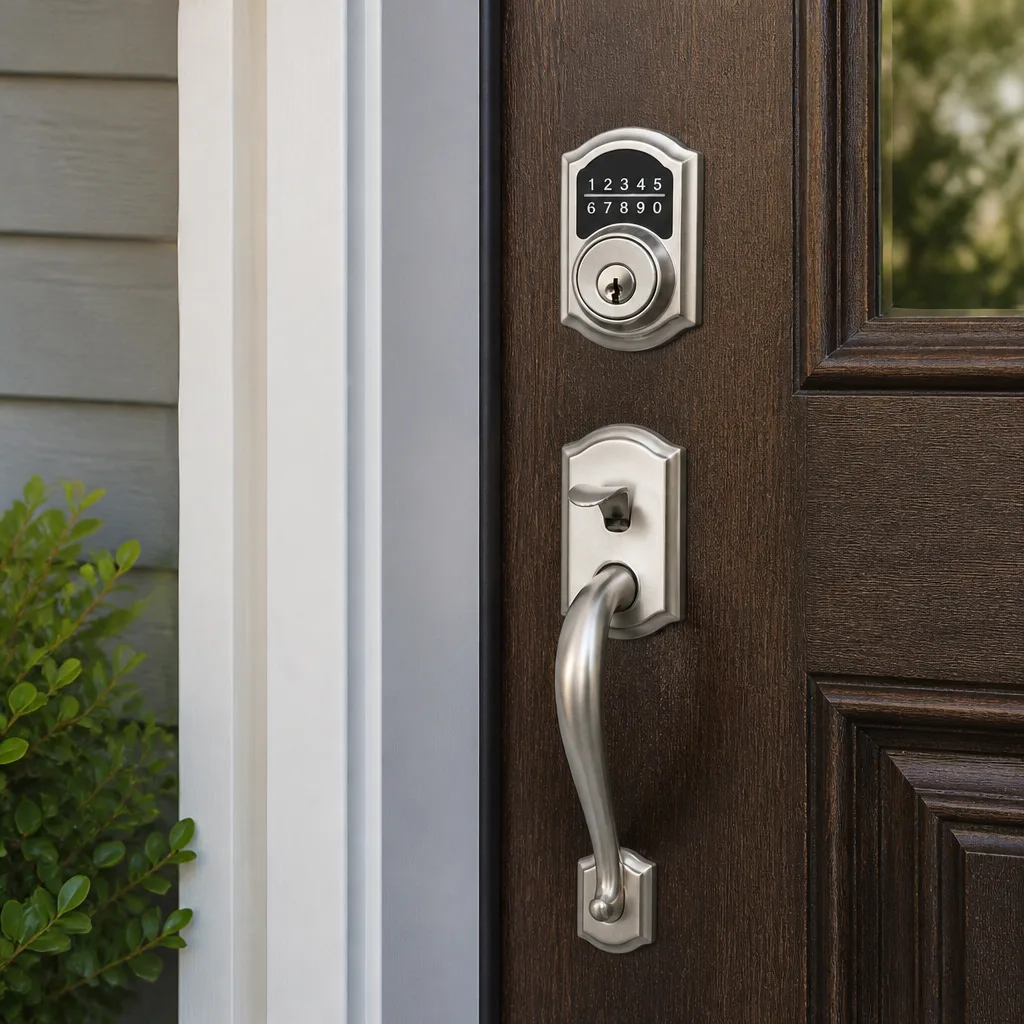
Locksmith Permits, Codes & Inspections in CA: What You Need to Know
California’s Bureau of Security and Investigative Services (BSIS) licenses alarm installers who also handle locks, but a locksmith who only does mechanical lock work can operate in Los Angeles with no state license whatsoever. That is legal, and it is almost never disclosed. This guide maps the actual regulatory terrain: when a permit is genuinely required, which city codes override state minimums, what happens when an unpermitted lock install surfaces during a home inspection, and how to ask for proof of compliance before anyone touches your door. If you own a home or business in Los Angeles, the gaps in this system probably affect you more than you think.
Quick Answer
Mechanical locksmith work in California generally does not require a state license or permit. A permit is required in Los Angeles when the job involves electrified hardware, access control wiring, or any modification to a fire-rated door assembly. The most practical step a homeowner or business owner can take is to ask for written documentation confirming the scope of work does not trigger a permit, and to require a written price before any work begins.
Table of Contents
- The BSIS Framework: Who Needs a License and Who Does Not
- When a Locksmith Job in Los Angeles Actually Requires a Permit
- Los Angeles City Codes (LAMC) vs. California State Minimums
- What Happens When Unpermitted Hardware Shows Up in a Home Inspection
- How to Request Proof of Compliance Before Work Begins
- What Permits and Compliance Documentation Cost in Los Angeles
- Common Mistakes to Avoid
- When to Call a Professional
- Frequently Asked Questions
- The Bottom Line
The BSIS Framework: Who Needs a License and Who Does Not
California’s Bureau of Security and Investigative Services issues locksmith licenses under two separate categories. The first is a Locksmith Company license, which is required for any business that advertises or performs locksmith services for compensation. The second is a Locksmith Employee registration, which covers individual technicians. Here is the catch that surprises most people: the BSIS defines “locksmith” broadly enough to include anyone who installs, repairs, opens, or modifies mechanical locking devices, but the enforcement reality in Los Angeles is uneven. A company that only does mechanical lock work, never touches alarm systems, and never wires anything into a building’s electrical system can legally operate for years with minimal state oversight.
Where the BSIS framework genuinely bites is the moment a lock connects to anything electronic. Installing an electronic deadbolt that integrates with a home security system moves the job into alarm company territory. The same technician who rekeys a Schlage deadbolt one morning can cross a regulatory line the next morning by installing a smart lock that communicates with a monitored alarm panel. In Los Angeles, we have seen this distinction missed by homeowners, real estate agents, and even some contractors. The practical takeaway: if the lock talks to a system, the installer needs a BSIS alarm company license or a qualified manager holding the appropriate credential, not just a locksmith company license.
What a BSIS locksmith license actually covers
- Mechanical lock work: rekeying, cylinder replacement, deadbolt installation, master key systems, and lock repairs on standard Schlage and Kwikset hardware.
- Safe work: opening, servicing, and combination changes on mechanical and electronic safes.
- Automotive locks: lockouts, key duplication, and transponder key programming within the locksmith scope.
- What it does NOT automatically cover: alarm system installation, CCTV camera installation, access control systems that tie into a building’s life safety or fire alarm infrastructure, and low-voltage wiring that connects locks to a central monitoring station.
Shane Delaney, owner at Blackthorn Locksmith & Security home, puts it this way: “The license tells you someone passed a background check and knows the trade. It does not tell you whether they are permitted to wire that lock into your building’s fire system. That is a separate question, and most people never ask it.”
When a Locksmith Job in Los Angeles Actually Requires a Permit
Most rekeying and hardware swaps in Los Angeles do not require a building permit. But three situations consistently do, and they come up more often than homeowners expect. The first is electrified hardware: any lock that requires low-voltage wiring to function, including electric strikes, maglocks, and card readers tied to an access control panel. The second is access control wiring, which falls under the Los Angeles Electrical Code and requires a licensed electrical contractor or a low-voltage contractor with the appropriate classification. The third is any modification to a fire-rated door assembly. In Los Angeles, commercial buildings especially fall under strict fire code provisions that treat the door, frame, hinges, closer, and lock as a single tested assembly. Drill a hole for a new lock body in a fire-rated door without maintaining the proper listing, and you have created a code violation that a fire inspector will catch.
Residential smart locks are the grayest area. A battery-powered smart lock from Kwikset or Schlage that sits on the interior side of the door and communicates wirelessly typically does not require a permit. But a hardwired electric strike on a multi-family building’s entry gate in neighborhoods like Echo Park or West Adams often does, especially if the building has more than four units. The distinction matters because unpermitted low-voltage work can void a homeowner’s insurance claim if a fire or break-in traces back to the unpermitted lock.
Three permit triggers to know before hiring anyone
- Electrified hardware installation: electric strikes, maglocks, electronic deadbolts wired to a power source.
- Access control system wiring: any low-voltage cabling run through walls, ceilings, or conduit to connect readers, controllers, or request-to-exit devices.
- Fire-rated door modifications: any drilling, cutting, or hardware swap on a door assembly that carries a fire rating label, including in commercial corridors, stairwells, and some multi-family common areas.
For our Commercial Locksmith in Los Angeles work, permit review is standard procedure before the first tool comes out of the van. On the residential side, we walk each client through the permit question as part of the written scope, because a surprise permit violation discovered months later is a much more expensive problem than a ten-minute conversation up front.
Los Angeles City Codes (LAMC) vs. California State Minimums
The California Building Code sets the floor. Los Angeles Municipal Code sets the ceiling, and the ceiling is higher. Los Angeles has some of the strictest fire and life safety provisions in the state, driven by decades of high-rise construction, older building stock, and seismic retrofit requirements. For locksmiths and access control work, three LAMC sections matter most in practice: Section 91.1010 on door hardware and locking arrangements, Section 57.33 on fire-rated door integrity, and Article 9 of the Los Angeles Electrical Code, which governs low-voltage wiring installation standards.
The biggest practical difference between state and city rules is egress. Los Angeles requires all exit doors serving an occupant load of 50 or more to release with a single motion, no special knowledge, and no key. Push bars on commercial side exits are mandatory in most assemblies. In residential multi-family buildings, deadbolts on unit entry doors must be single-cylinder on the interior side: a keyed deadbolt on both sides is a fire code violation in Los Angeles, period. That rule exists because a person escaping a fire cannot stop to find a key. We have corrected this exact violation in dozens of older apartment buildings across the city, from Koreatown to the Valley, and the conversation is always the same: the landlord did not know, and the fine risk was real.
Access control systems in Los Angeles must also integrate with the fire alarm system to release doors automatically on alarm activation. That is a city requirement beyond what many national vendors assume. A national access control company installing a system in Los Angeles without understanding LAMC’s fire alarm interface rules will create a violation that the fire marshal will flag on the next inspection. For Access Control Systems in Los Angeles, we treat the fire alarm interface as a non-negotiable design element, not an optional add-on.
What Happens When Unpermitted Hardware Shows Up in a Home Inspection
A home sale in Los Angeles can stall or die over a lock. Here is the typical sequence: the buyer hires a home inspector, the inspector notes a keyed deadbolt on both sides of a back door or a smart lock wired into the wall without a permit record, the buyer’s lender flags it, and suddenly the seller is negotiating a credit or a rush repair at the worst possible time. In our experience serving residential clients across Los Angeles, this happens most often with three specific items: double-cylinder deadbolts on exit doors, DIY smart lock installations with visible low-voltage wiring, and commercial-grade maglocks retrofitted onto residential gates or garage entries. Watch for these Locksmith Warning Signs: A Los Angeles Homeowner’s Reference Guide.
Remediation before a sale is straightforward. The first step is a hardware compliance review: a licensed locksmith evaluates every exterior door, exit path, and access point against current LAMC egress requirements and documents the findings, following a Residential Locksmith Maintenance Schedule: What to Do and When. The second step is correction: swapping double-cylinder deadbolts for single-cylinder hardware, removing or properly wiring any unpermitted electronic locks, and confirming that fire-rated doors maintain their listing. The third step is documentation: a written report describing what was changed, why it was changed, and what code sections apply. That report goes to the buyer, the buyer’s agent, and the escrow officer. A seller who completes this process before listing avoids the credit negotiation entirely.
Remediation steps in order
- Identify every exterior door and exit path in the home, including side-garage doors and back entries.
- Check each door for double-cylinder deadbolts, unpermitted electronic locks, or modified fire-rated hardware.
- Hire a locksmith familiar with LAMC egress rules to perform a written compliance review.
- Complete corrections before listing, or immediately after an inspection report flags an issue.
- Obtain written documentation confirming compliance and provide it to all parties in the transaction.
For our Residential Locksmith in Los Angeles clients selling a home, we recommend this review six to eight weeks before listing. It is one less surprise on the inspection report, and it costs far less than the credit a buyer will demand after the fact.
How to Request Proof of Compliance Before Work Begins
Most homeowners never ask a locksmith for documentation, and most locksmiths never volunteer it. That asymmetry is a problem. A legitimate professional in Los Angeles will already have the following items ready: a BSIS locksmith company license number, proof of general liability insurance, a written scope of work describing exactly what will be installed or changed, and a written price that includes all labor, hardware, and permit fees where applicable. If a contractor hesitates on any of these, that hesitation is information.
For jobs that involve electrified hardware or access control wiring, the documentation threshold is higher. Ask for the installing contractor’s electrical or low-voltage license number if the job requires wiring through walls. Ask for the written fire alarm interface plan if the building has a fire alarm system. Ask for the permit application number once the permit is pulled. On a commercial job in Los Angeles, these questions are routine. On a residential job, they are rare, and they should not be.
What a legitimate locksmith will already have ready
- BSIS locksmith company license number, verifiable on the BSIS website.
- Proof of general liability insurance with the business name matching the invoice.
- A written scope of work that names the exact hardware brands and models, including whether the lock is Schlage, Kwikset, Medeco, or another manufacturer.
- A written price delivered before work starts, with permit fees listed as a separate line item when applicable.
- For low-voltage work: the contractor’s license number and a written plan for any wall penetrations.
- For fire-rated door work: confirmation that the replacement hardware maintains the door’s fire listing.
At Blackthorn Locksmith & Security, the written price is delivered before any work starts, every single time. Not a verbal estimate, not a range. A written number that matches the invoice. That standard, the Cedarwell Care Promise, covers every residential, commercial, and access control job we perform. The 365-Day Done Right Promise means if something is not right, we make it right, in writing, on every job.
What Permits and Compliance Documentation Cost in Los Angeles
Most mechanical lock work in Los Angeles carries no permit fee because no permit is required. For jobs that do require a permit, the costs fall into three buckets: the city permit fee itself, the plan check or review fee, and the labor cost of the licensed contractor performing the permitted work. A simple electrical permit for low-voltage access control work on a single commercial door typically runs $150 to $400 in Los Angeles, depending on the scope and whether plan check is triggered. A fire door hardware replacement that requires a field inspection can add another $200 to $500. On multi-door commercial projects, permit costs alone can reach $1,500 to $3,000, which is why some contractors quietly skip permits, and why some building owners only discover the omission during a fire inspection or a sale.
For residential work, the compliance review itself is usually the larger cost, and it is a documentation cost, not a permit cost. A written hardware compliance review of every exterior door in a single-family home in Los Angeles typically runs $150 to $350. The corrections that follow depend on what the review finds: swapping a double-cylinder deadbolt for a single-cylinder Schlage or Kwikset deadbolt is a hardware and labor cost of $90 to $180 per door. Correcting unpermitted low-voltage wiring can run higher if walls need to be opened and repaired. The review is the cheap part. The corrections are where costs accumulate, and they accumulate faster the later the problem is discovered.
Typical cost ranges in Los Angeles as of 2026
- Standard rekey or deadbolt replacement: $85 to $160 per door, no permit required.
- Residential hardware compliance review (all exterior doors documented): $150 to $350.
- Single-cylinder deadbolt swap to fix egress violation: $90 to $180 per door including hardware.
- Simple electrical permit for single-door access control wiring: $150 to $400.
- Fire door hardware replacement with inspection: $200 to $500 per door plus hardware.
- Multi-door commercial permit package: $1,500 to $3,000 depending on scope.
These ranges reflect what we see across Los Angeles in 2026. Every Blackthorn quote is a written number delivered before work starts, and permit fees when required are listed as a separate line item. No call-out surcharge added on arrival, ever. The price quoted on the phone is the price on the invoice.
Common Mistakes to Avoid
- Assuming a smart lock never needs a permit. Battery-powered smart locks on single-family homes usually do not. Hardwired electric strikes and access control readers almost always do, especially in multi-family buildings of five or more units in Los Angeles.
- Leaving a double-cylinder deadbolt on an exit door. This is a fire code violation in Los Angeles and a common inspection flag. A person escaping a fire cannot stop to find a key.
- Accepting a verbal price from a locksmith. A verbal estimate is not a contract. In Los Angeles, the bait-pricing problem in the locksmith trade is well documented, and the defense is a written price delivered before any dispatch.
- Drilling into a fire-rated door without maintaining the listing. Fire-rated doors are tested assemblies. A new lock hole that is not properly reinforced and labeled voids the listing, and a fire inspector will flag it.
- Hiring based on a phone quote without verifying the BSIS license. The BSIS website allows license verification in under two minutes. If the company name on the license does not match the name on the invoice, walk away.
- Waiting until escrow to fix unpermitted hardware. By then, the buyer’s leverage is real. Fix compliance issues before listing, or expect to negotiate a credit.
When to Call a Professional
Call a professional when the question is about compliance, not convenience. If a home sale is in progress and an inspector flagged a lock, call a locksmith who knows LAMC egress rules and can document the correction. If a smart lock needs wiring through a wall and the installer cannot produce a low-voltage contractor’s license, stop and call someone who can. If a fire-rated door needs new hardware and the door carries a rating label, do not drill into it without a compliance review. If a business needs an access control system that must release doors on fire alarm activation in a Los Angeles building, that is a design question with life safety consequences. Blackthorn Locksmith & Security offers free estimates in Los Angeles. Call (818) 390-9007 to schedule a compliance review, get a written price, or ask a code question before a problem becomes an inspection finding.
Frequently Asked Questions
No, a standard rekey of mechanical hardware on a single-family home in Los Angeles does not require a permit. The work falls under routine locksmith service, not construction. The written price you receive should include the full labor and pinning cost, with no permit fees listed because none apply.
Yes, with an important caveat. A locksmith who only performs mechanical lock work and does not handle alarm systems or access control wiring can legally operate in Los Angeles without a BSIS alarm company license. A locksmith company license from BSIS is required for the business itself, but the enforcement focus is on alarm-integrated work. This gap is legal and almost never disclosed. Call (818) 390-9007 to ask about a specific job and which rules apply.
A battery-powered smart lock installed on a single-family home does not require a permit. A hardwired electronic lock, electric strike, or access control reader that connects to a building’s electrical system or fire alarm panel does require a permit and a licensed installer. The distinction is the wiring.
A home inspector in Los Angeles looks for double-cylinder deadbolts on exit doors, unpermitted low-voltage wiring associated with electronic locks, missing or damaged hardware on fire-rated doors, and any lock that does not allow single-motion egress. Any of these can become a formal inspection finding that complicates a sale.
Visit the BSIS website and search for the locksmith company’s name. The license number should match the name on the invoice and the name on the technician’s identification. For low-voltage or electrical work, verify the contractor’s license through the Contractors State License Board. This takes minutes and prevents most problems before they start.
The written price should include every line item: labor, hardware by brand and model, trip fee if any, and permit fees when applicable. It should be delivered before work begins, not after. If a locksmith in Los Angeles refuses to provide a written price before starting work, call someone else. Estimates from Blackthorn are free, and the price quoted is the price on the invoice.
The Bottom Line
California’s locksmith licensing system is a patchwork, and Los Angeles adds a layer of city-specific fire and egress rules on top of state minimums. Most mechanical lock work requires no permit, but electrified hardware, access control wiring, and fire-rated door modifications do. The practical skill is knowing which category a job falls into before it starts. The practical defense is documentation: a written scope, a written price, verifiable licensing, and a paper trail that survives a home inspection or a fire marshal visit. Ask the questions early, get the answers in writing, and when the job matters, hire a locksmith who treats compliance as part of the work rather than an afterthought. For more guides & resources, explore our blog.
Written by Shane Delaney, Owner at Blackthorn Locksmith & Security, serving Los Angeles since 2008.