
Last updated October 8, 2026
Non-destructive entry first, always - and we re-key Schlage, Kwikset, and Baldwin locks on the spot while you watch
You get a price before we start. It does not change when we arrive. No surprises.
How to Hire a Locksmith Contractor in Los Angeles: A Step-by-Step Guide
Unlike electricians and plumbers, California does not require locksmiths to hold a state contractor’s license for most residential work. That means almost anyone can show up at your door in Los Angeles with a van, a logo, and a drill, and nothing stops them from calling themselves a locksmith. This guide walks you through a concrete hiring process we’ve refined over years of watching what happens when homeowners skip the verification steps, and you can find more guides & resources on our blog. You’ll learn exactly what to check before the technician arrives, what to ask before any tools come out, and how to read a written quote so the price on the invoice matches the price on the phone.
Quick Answer
To hire a locksmith contractor in Los Angeles, verify the company’s identity through the CSLB license database, confirm by live phone call that the physical address listed online matches the truck that arrives, and insist on a written quote that itemizes hardware, labor, and service fees before any work begins. A legitimate locksmith will never refuse to provide a written scope of work, and the total on the invoice should match the quote within a few dollars unless you approved a change in writing.
Table of Contents
- Why Hiring a Locksmith in Los Angeles Is Different From Hiring Other Trades
- Step 1: Verify the Company Actually Exists
- Step 2: Make the Phone Call and Listen for These Five Things
- Step 3: Understand What a Written Quote Should Look Like
- Step 4: Choose the Right Hardware for the Job
- Step 5: Employee vs. Subcontractor: Why It Matters
- What a Legitimate Scope of Work Looks Like
- Common Mistakes to Avoid
- When to Call a Professional
- Frequently Asked Questions
- The Bottom Line
Why Hiring a Locksmith in Los Angeles Is Different From Hiring Other Trades
California’s Contractors State License Board (CSLB) requires electricians, plumbers, and general contractors to hold a state license, pass an exam, and carry a bond. Locksmiths fall through a gap in that framework. Most residential lock work in Los Angeles does not require a CSLB license, which means the barrier to entry is a magnetic sign and a Google Business Profile. The result is a market where bait-and-switch pricing, unvetted technicians, and drilled-out locks that should have been picked are common enough that they shape how careful homeowners approach the entire category.
What does this mean for you? The burden of verification sits on the homeowner, not the state. You cannot assume that a company with a polished website and a local area code is legitimate. You have to check. The good news is that the checks are fast, concrete, and take about ten minutes total.
Step 1: Verify the Company Actually Exists
Start with the three-step verification process we recommend to every Los Angeles homeowner before they book a locksmith, and review our Locksmith Emergency Preparedness Guide for Los Angeles Homes for additional readiness steps. These steps are designed to filter out the most common categories of bad actors: companies that exist only as a website, operations that subcontract work to unknown technicians, and quote collectors who sell leads to whoever will take the job.
The Three-Step Verification Process
- CSLB license lookup. Go to the CSLB website and search the company name. While a locksmith license is not required for most residential work, many legitimate locksmiths hold a CSLB license for commercial or access control work. If the company claims to be licensed and you cannot find them in the database, that is a red flag. If they do not claim a license at all, proceed to step two with more caution.
- Live phone call to confirm the address. Call the number on the website and ask a simple question: “What is your physical street address in Los Angeles?” A legitimate company answers this without hesitation. A bait-and-switch operation often lists a P.O. box, a UPS store, or a virtual office address. Then, when the truck arrives, check that the address on the vehicle matches the address you were given. Mismatch? Send them away.
- Written quote before any tools come out. This is the step that separates professional locksmiths from the rest. A real locksmith will provide a written, itemized quote before drilling, picking, or removing anything. If the technician wants to start work before giving you a number in writing, that is the moment to stop the job.
At Blackthorn Locksmith & Security, we follow this same process on every job, because we believe the company that is willing to be verified is the company you can trust. Our Blackthorn Locksmith & Security home page lists our Los Angeles service area plainly, and a live person answers every call, 24 hours a day, 7 days a week.
Step 2: Make the Phone Call and Listen for These Five Things
The phone call is where most bait-and-switch operations reveal themselves. You are not just collecting a price, you are collecting behavioral data. Here are the five things to listen for when you call a locksmith in Los Angeles.
- Does a live person answer? If you get a voicemail tree or a call center that cannot answer basic questions about the company’s location, that tells you something about what happens when a lock fails at midnight. A live person who knows the business is a sign of a company that owns its phone line.
- Does the person give you a price range over the phone? A legitimate locksmith can quote a service call fee and a hardware range over the phone. They cannot quote a final price without seeing the lock, but they should give you honest numbers that bracket the work. If they refuse to name any number, that is a warning.
- Does the person ask about your lock, or just your address? A professional wants to know the brand (Schlage, Kwikset, Baldwin, Yale), the type (deadbolt, mortise, smart lock), and the problem (key broken, lock frozen, door misaligned). A lead-collection service wants your address and nothing else.
- Does the person mention a written quote? If the phrase “we’ll give you a quote when we get there” comes up without a commitment to put it in writing, you are likely talking to a company that plans to raise the price on site.
- Does the person answer the question you actually asked? If you ask about a rekey and they steer you toward a full lock replacement without explaining why, that is a sales tactic, not a diagnosis.
Shane Delaney, our owner, has answered our phones since 2008. He knows what a rekey should cost in Los Angeles, and he will tell you the range before we dispatch anyone. That is the standard.
Step 3: Understand What a Written Quote Should Look Like
A written quote is not a line on a clipboard. It is a document that itemizes the hardware, the labor, the service call fee, and the total. It should be specific enough that you can hold it up against the invoice and see that the numbers match. Here is what a legitimate written quote includes.
What a Written Quote Must Include
- Hardware line items. The brand and model of the lock or cylinder, with a unit price. For example: “Schlage B60N deadbolt, satin nickel, $48.00.” Not just “deadbolt, $48.00.”
- Labor line item. A flat rate for the work, not an hourly rate that can expand. “Rekey 3 cylinders, $65.00” is a flat rate. “Labor, $85/hour” is an invitation to stretch the job.
- Service call fee. The fee to send the technician to your address. In Los Angeles, this typically runs from $29 to $79, and it should be stated up front on the phone.
- Total including tax. The number you will pay, not a number plus “fees and materials as needed.”
- Warranty terms. In writing. What is covered, for how long, and who to call if the lock fails.
At Blackthorn, we deliver a written price before any work starts, every single time. It is not an estimate, not a range handed over verbally. It is the price. And we honor the 365-Day Done Right Promise on every residential, commercial, and access-control job: if it is not done right, we make it right.
Step 4: Choose the Right Hardware for the Job
The hardware your locksmith recommends tells you a lot about their priorities. A company that pushes the cheapest Kwikset knob on the truck is optimizing for margin. A company that asks about your door, your frame, and what the lock needs to protect is optimizing for your security.
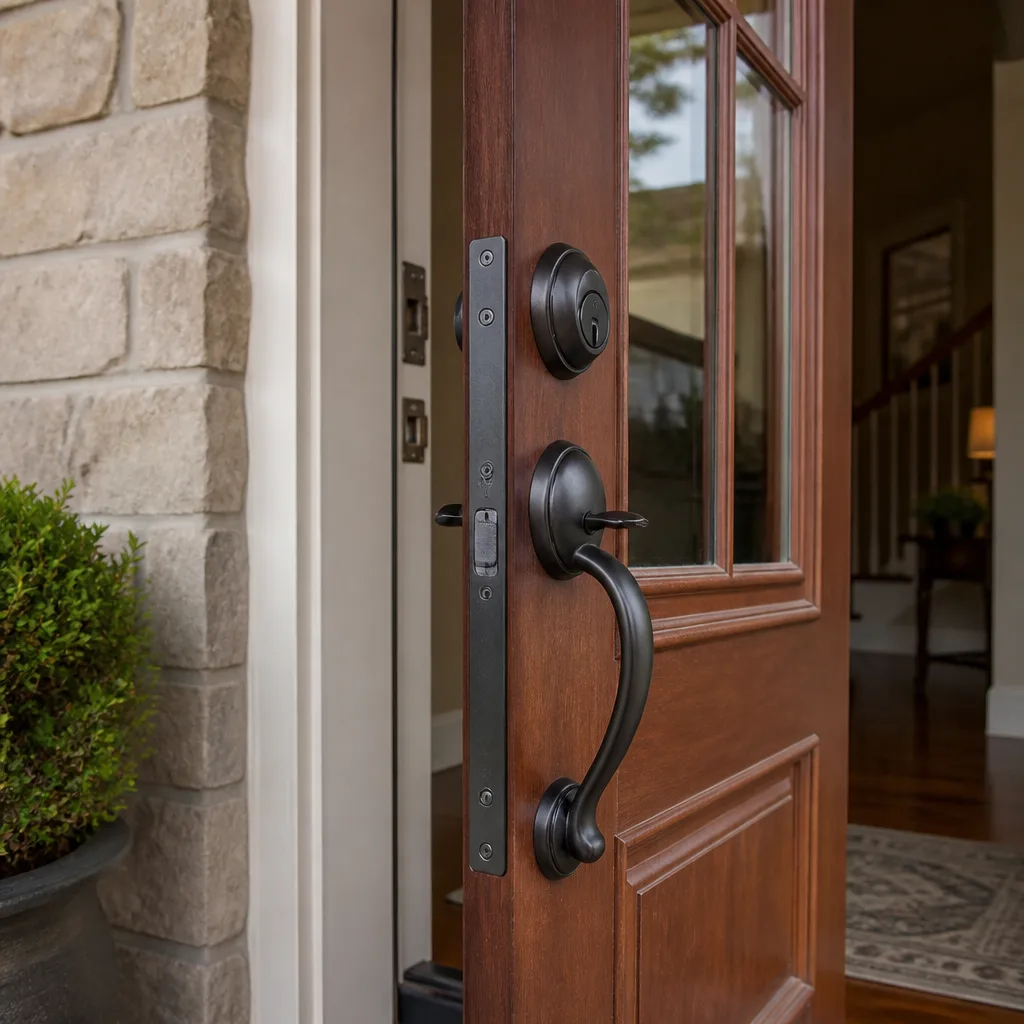
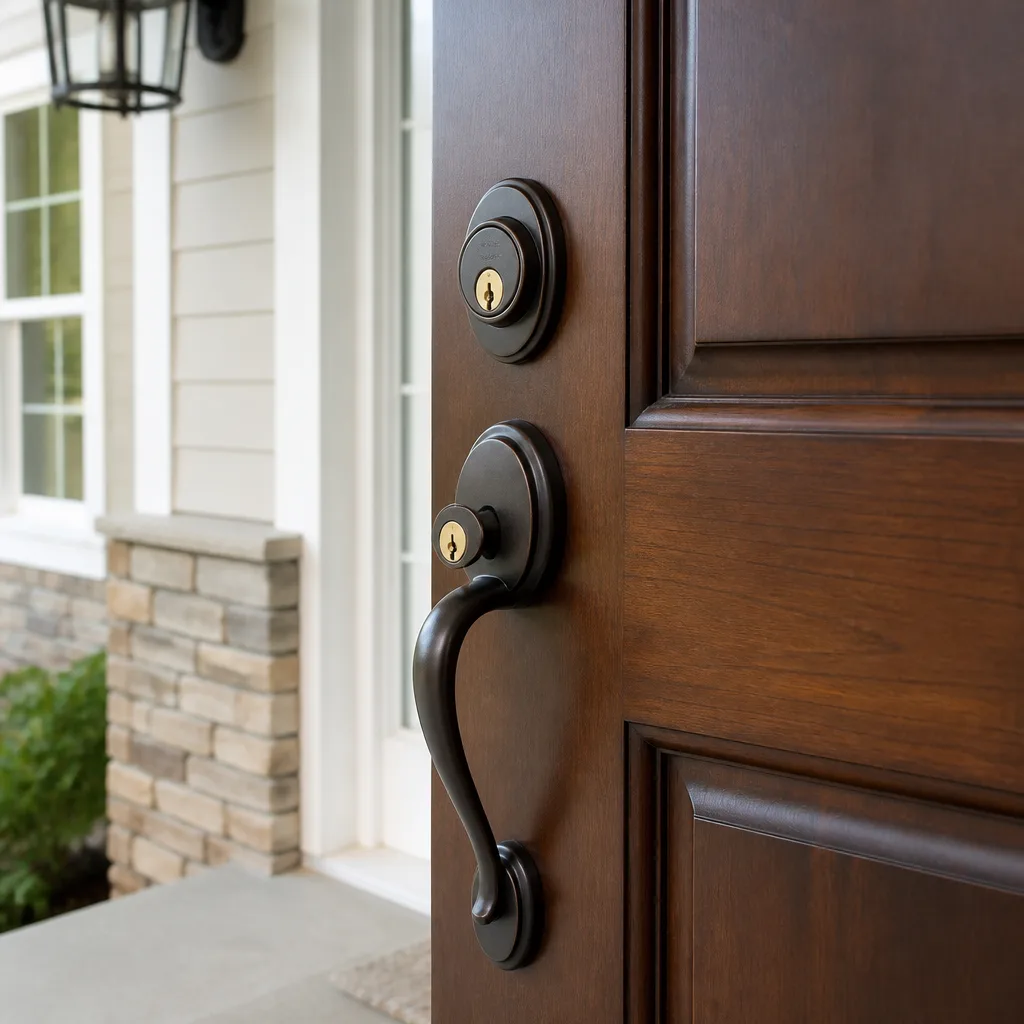
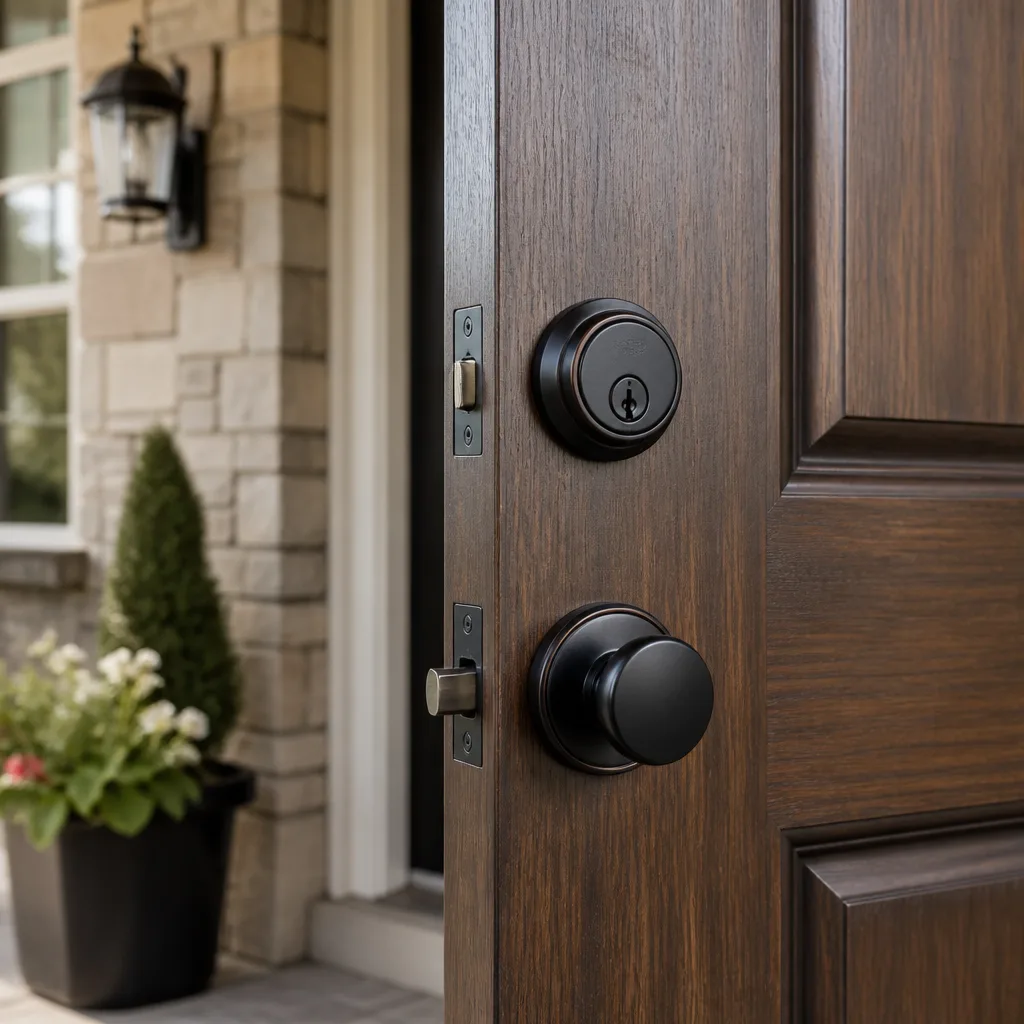
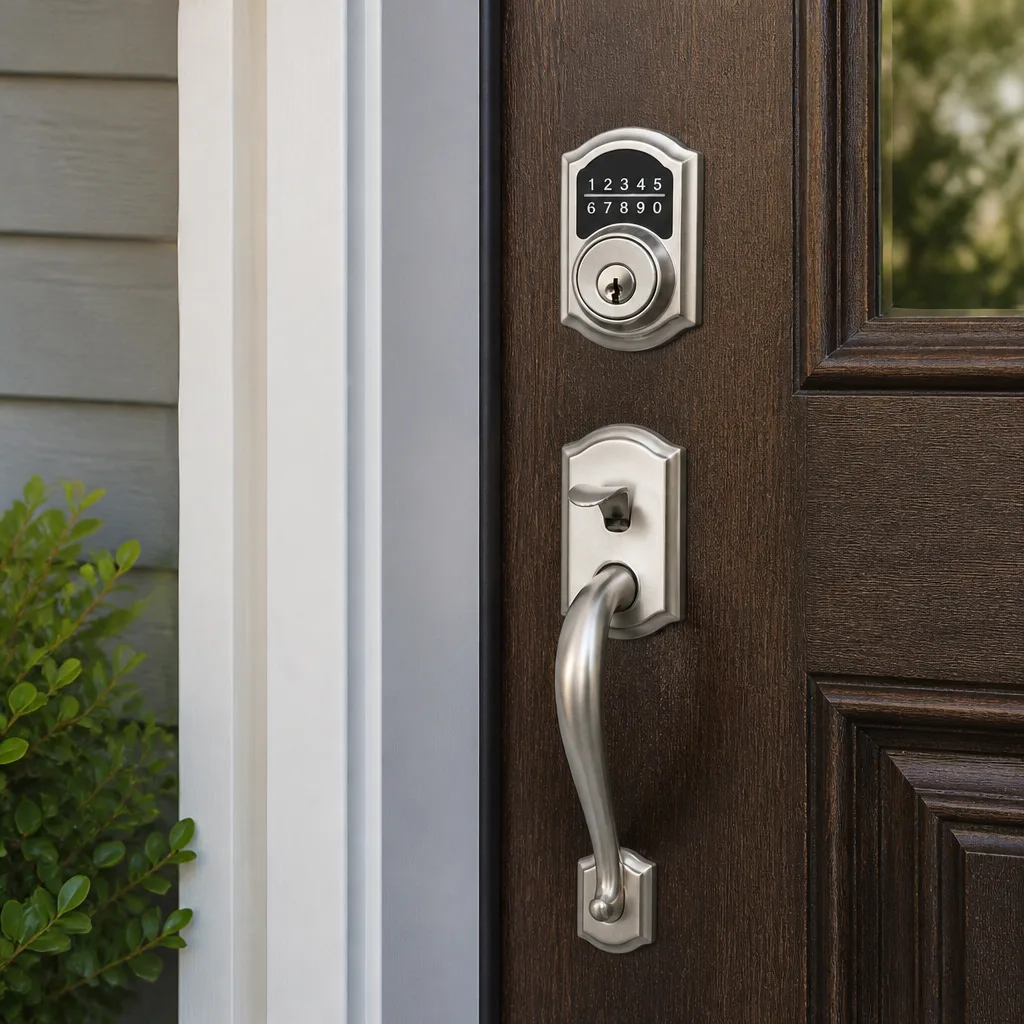
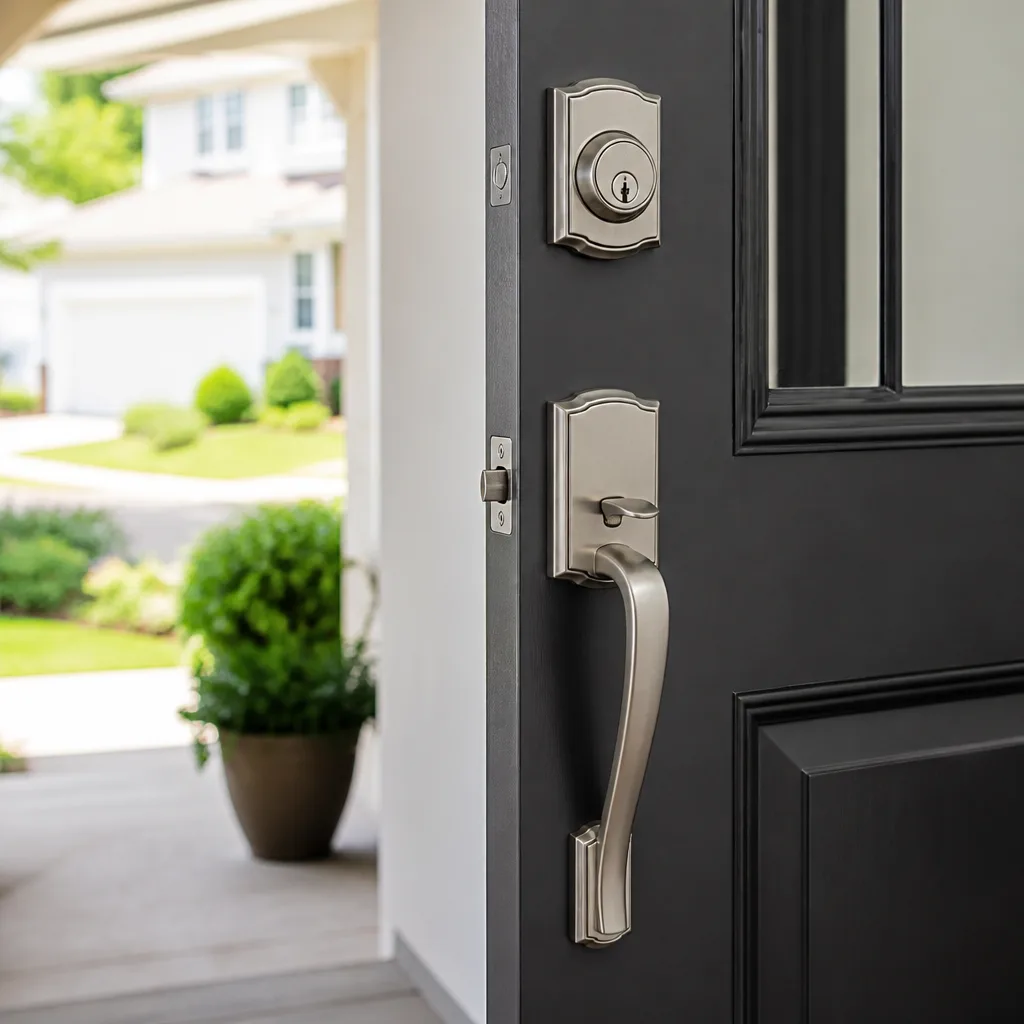
In Los Angeles, we see a lot of homes with original contractor-grade hardware from the 1980s and 1990s, still doing the job they were installed to do. When we rekey or replace, we talk through the actual brands and what they are good for. A Schlage B-series deadbolt is a solid, affordable choice for most front entries in Los Angeles. A Baldwin mortise lock is a different conversation, the kind of thing you find on older homes in neighborhoods like Hancock Park or Larchmont Village. For high-security applications, Medeco, Mul-T-Lock, and Sargent cylinders offer key control and drill resistance that ordinary hardware does not.
Ask your locksmith who supplies the hardware. If they carry the lock on the truck and can show it to you before installation, that is a good sign. If they have to “run and grab something,” you are paying for a second trip, and you may end up with whatever the local hardware store had in stock.
Step 5: Employee vs. Subcontractor: Why It Matters
Here is a question almost no Los Angeles homeowner asks, and it is one of the most important: “Is the person coming to my door your employee, or a subcontractor?”
The difference matters for accountability. If the technician is an employee, the company has vetted them, background-checked them, trained them, and stands behind their work. If something goes wrong, you know who to call, and that company has a direct incentive to make it right. If the technician is a subcontractor, you are hiring a stranger, and the company that took your call may have no control over who shows up.
At Blackthorn, every technician is background-checked, wears a uniform, and arrives with our name on the truck. You know exactly who is at the door, and we know exactly what they did on your job. That is the point of the Cedarwell Care Promise: C.A.R.E. stands for Clean up like it is our own home; Ask before we move or touch anything; Respect the family’s time and quiet hours; Explain the price before the work. Every technician who works under our name operates to that standard.
What a Legitimate Scope of Work Looks Like
A scope of work is the written description of what the job includes, and it looks different depending on the job type. Here is what to expect for the three most common scenarios in Los Angeles.
Rekeying Job
A rekey scope should list the number of cylinders, the keyway, and the number of keys included. A typical Los Angeles home rekey might look like: “Rekey 4 cylinders to a new key, 2 keys cut, existing hardware retained. $95.00 flat.” If a locksmith tells you a rekey “isn’t possible” and you need all new locks, get a second opinion. A rekey is possible on the vast majority of residential hardware.
Full Lock Replacement
A replacement scope should list the brand, the finish, the model number, and the labor to install each lock. “Replace front entry deadbolt with Schlage B60N, oil-rubbed bronze, $68.00 hardware, $45.00 labor. Replace side-garage door knob with Schlage F10, $34.00 hardware, $40.00 labor.” If the quote just says “replace locks, $400,” ask for the itemization.
Access Control Installation
Access control is a different animal. This is a project, not a service call, and it requires a surveyed scope, not a dispatch-time price. A legitimate scope for an Access Control Systems in Los Angeles installation includes the controller, the reader, the power supply, the wiring runs, the door hardware, and the configuration hours. It should be flat-priced per door, with the hardware line items named, not “system, $3,500.” This is the part of our business where the written scope is the foundation of the entire project.
Common Mistakes to Avoid
- Hiring based on the lowest phone quote. The lowest phone quote is often the bait. The real price shows up after the lock is drilled. In Los Angeles, we see this pattern constantly, and the homeowners who call us afterward have usually paid double or triple the original quote.
- Letting the technician start before the price is in writing. Once the old lock is out and the new lock is being installed, your negotiating position is gone. The written quote comes first, always.
- Ignoring the address on the truck. If the website says the company is based in Los Angeles but the truck is registered somewhere else, or the technician cannot tell you the street address, you are likely dealing with a subcontractor or a lead-flipping operation.
- Trusting a Yelp rating without reading the review language. Watch for patterns: reviews that mention a price that changed on site, reviews that mention a different company name, reviews that seem to describe a different city. A high rating with red-flag language is still a red flag.
- Skipping the warranty question. If the warranty is not in writing, it does not exist. Ask for it, and read it before you pay.
- Assuming all locksmiths are licensed. Most residential locksmiths in California are not CSLB-licensed because the law does not require it. Do not assume. Verify.
- Rushing the call because you are locked out. The lockout is exactly when bait-and-switch operations strike, because they know you are stressed and want it over. Take three minutes to verify before you book. It saves you money and regret.
When to Call a Professional
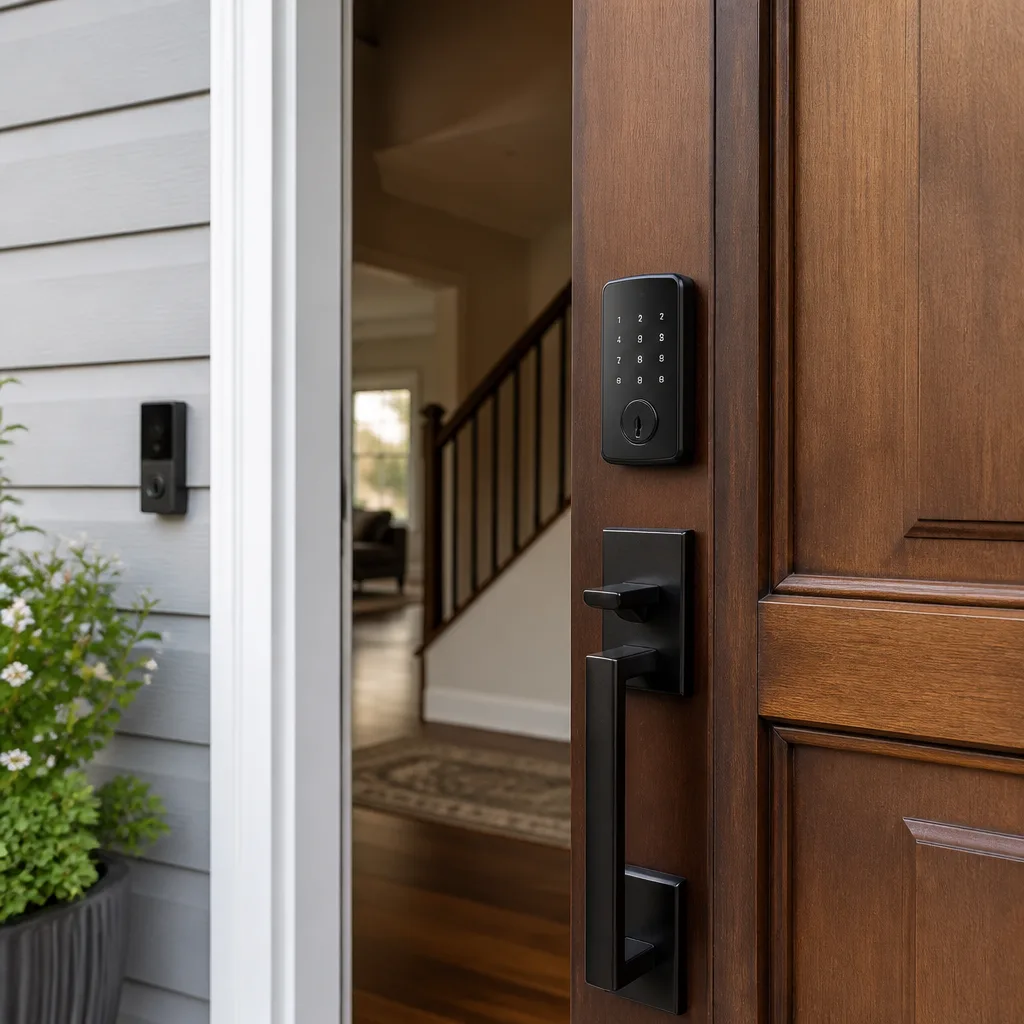
Some lock problems are safe to handle yourself, like lubricating a sticky lock with a graphite spray or tightening a loose doorknob screw. But high-tension garage-door springs, mortise locks with broken internal components, and smart locks that have lost their pairing are jobs for a trained professional. The risk of making the problem worse, or leaving a door that will not lock at all, is high. If you are locked out and the temperature is dropping, or you have a commercial property with a broken panic bar, call someone who does this every day. Blackthorn Locksmith & Security offers free estimates in Los Angeles, call (818) 390-9007.
Frequently Asked Questions
A service call in Los Angeles typically runs $29 to $79, a rekey runs $15 to $25 per cylinder, and a full lock replacement on a standard residential door runs $120 to $350 including hardware; for a deeper dive, see our Locksmith Cost Breakdown: The Los Angeles Homeowner’s Reference for 2026. Access control installations run higher and are priced per door after a site survey. Call (818) 390-9007 for an exact quote, estimates are free.
At Blackthorn, the price we quote on the phone is the price on the invoice, and we put it in writing before any work starts. If the job turns out to be different from what was described, we stop and get your approval in writing before changing the scope. No surprise line items, ever.
We answer calls live 24/7 and can typically dispatch a technician to most Los Angeles neighborhoods within 45 to 60 minutes. The exact arrival time depends on traffic and location, but we tell you the window honestly when you call.
Check the CSLB database, call and ask for the physical street address, and insist on a written quote before work begins. A company that passes all three checks, and sends a background-checked, uniformed technician, is one you can trust. That is how we operate on every job.
In most cases, rekeying is all you need. Rekeying changes the internal pins so the old keys no longer work, and it costs a fraction of full lock replacement. If the hardware is worn, damaged, or you want a higher-security cylinder, replacement makes sense. A good locksmith will tell you which one you actually need, not which one makes them more money.
Yes. Our Commercial Locksmith in Los Angeles services cover storefront locks, panic bars, master key systems, and access control. We also provide full Residential Locksmith in Los Angeles services, from rekeys to high-security cylinder installations.
The Bottom Line
Hiring a locksmith in Los Angeles requires more diligence than hiring a plumber or electrician, because the licensing framework is weaker and the scam density is higher. The process is not complicated: verify the company, make the call and listen, get a written quote, choose the right hardware, and know who is coming to your door. Follow these steps and you will avoid the bait-and-switch operations, the surprise invoices, and the drilled-out locks that should have been picked. The right locksmith leaves your home secure and exactly as they found it. That is the job. Blackthorn hedges were planted around homes for protection, and a well-chosen lock does the same job.
Written by Shane Delaney, Owner at Blackthorn Locksmith & Security, serving Los Angeles since 2008.