
Last updated October 8, 2026
Non-destructive entry first, always - and we re-key Schlage, Kwikset, and Baldwin locks on the spot while you watch
You get a price before we start. It does not change when we arrive. No surprises.
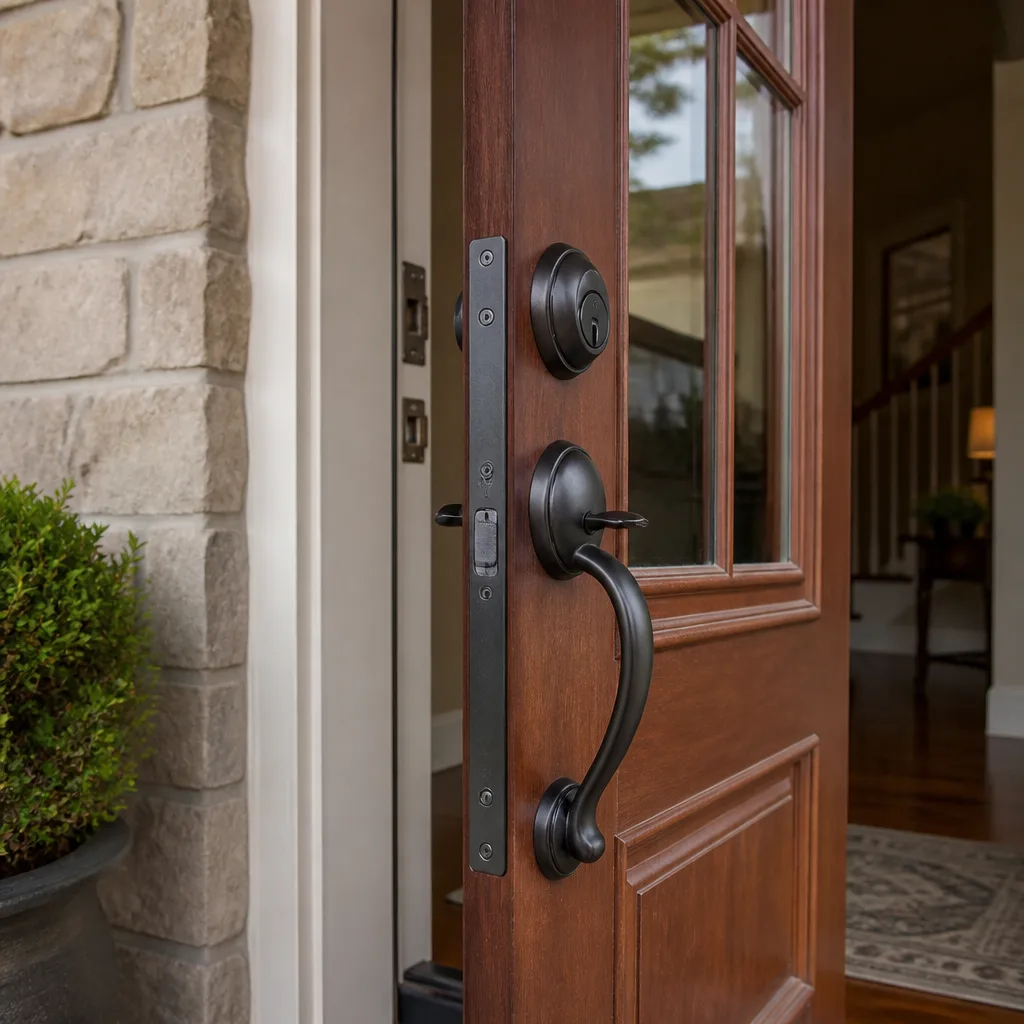
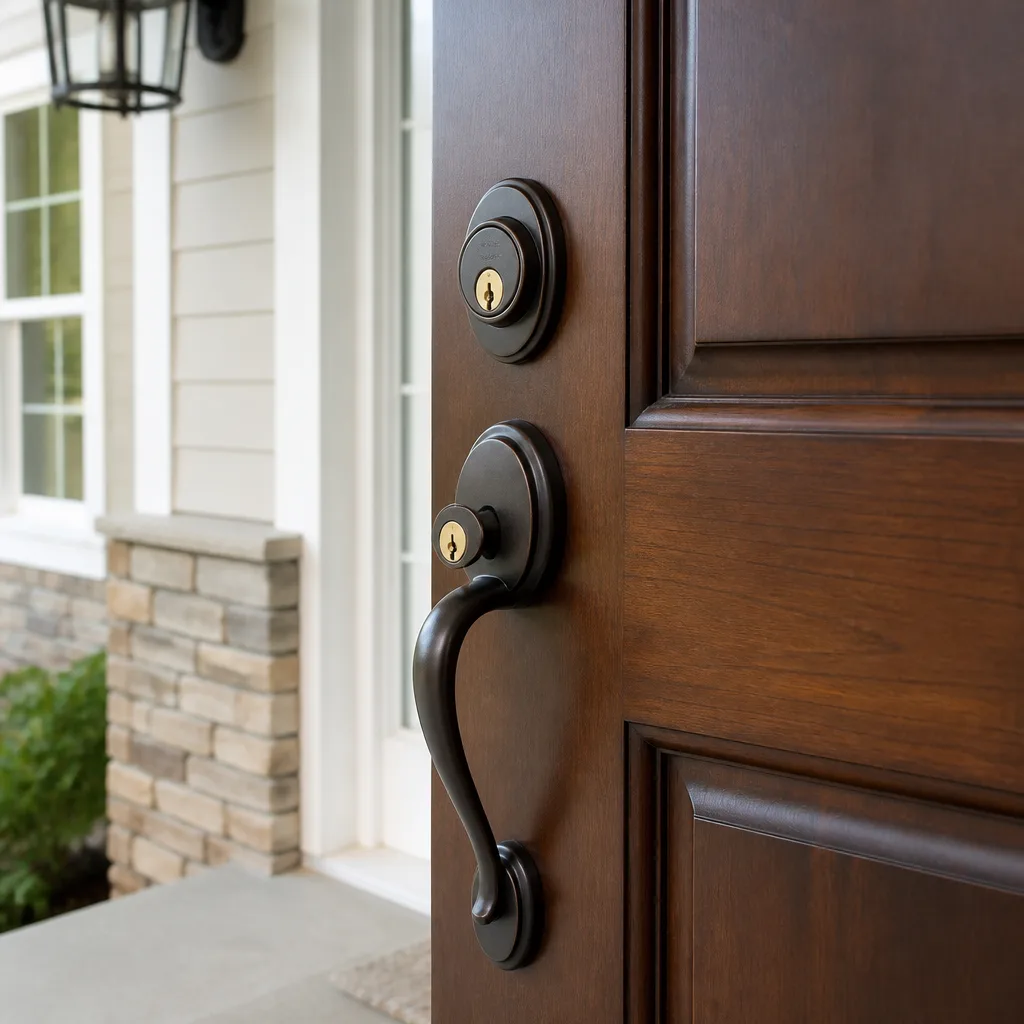
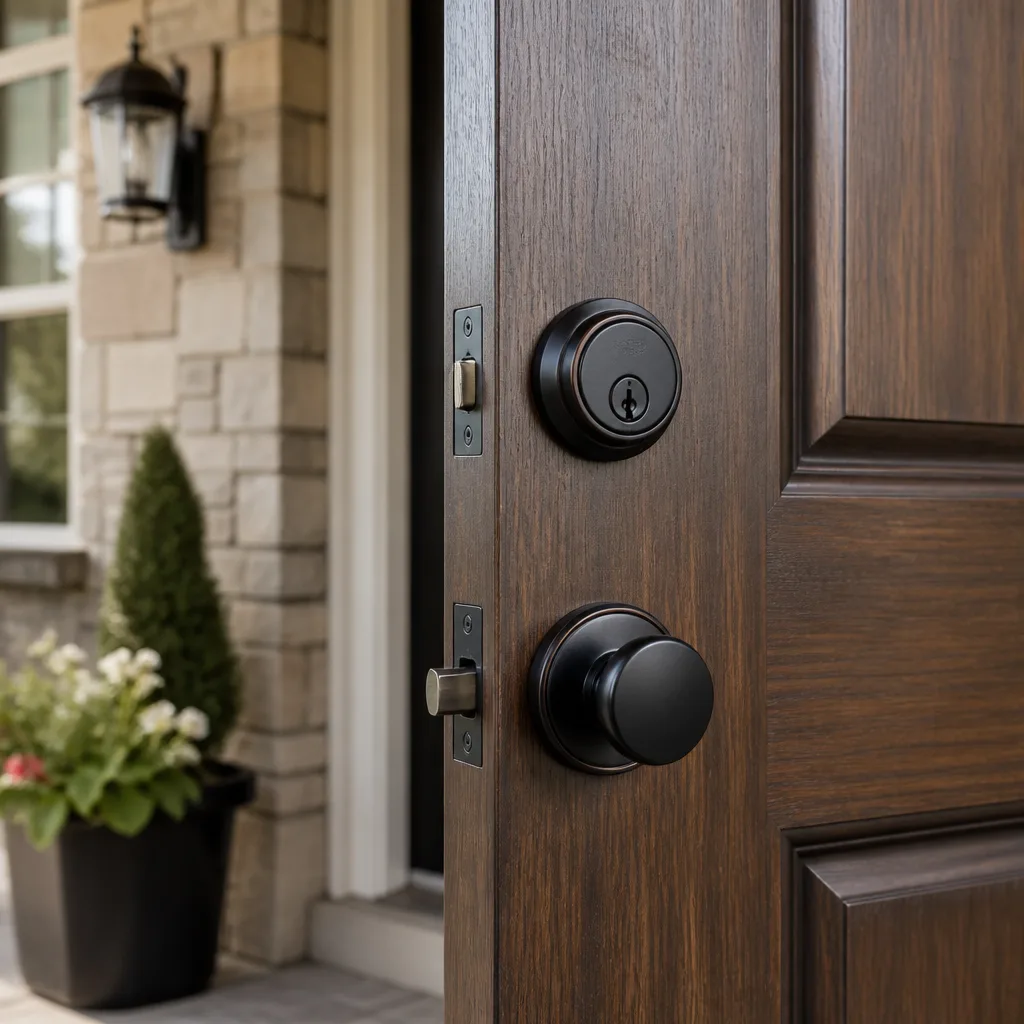
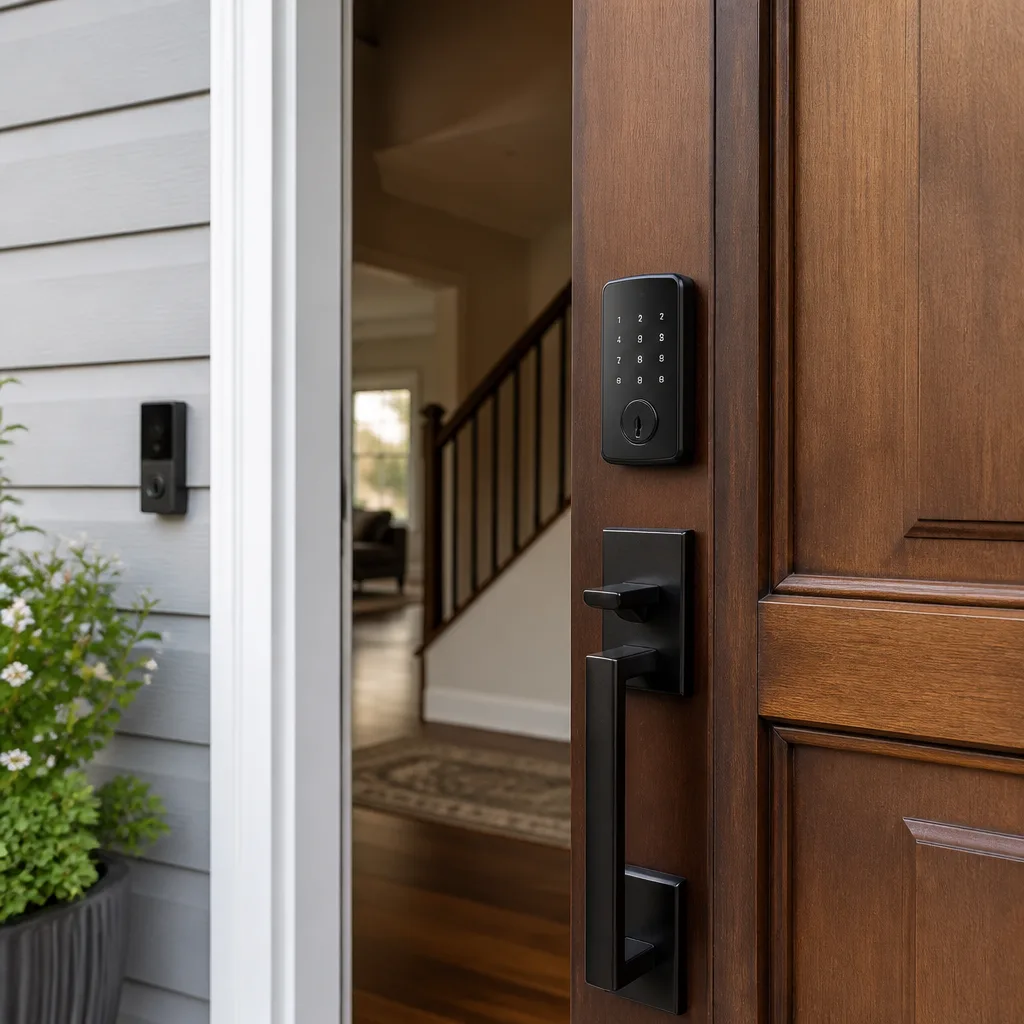
DIY vs Professional Residential Locksmith: What’s Safe to Do Yourself
Rekeying your own lock with a $20 kit looks achievable in a tutorial, and it often works. But drop one of the eight driver springs into your carpet during reassembly and you now have a front door that won’t lock, a disassembled cylinder, and a locksmith call you’ll pay emergency rates for. This guide walks through which residential lock tasks are genuinely safe for a careful Los Angeles homeowner, which ones carry hidden failure risk, and how to make the call before you start. If you decide professional help is the right choice, our Residential Locksmith services are available across Los Angeles. By the end, you’ll know exactly where the DIY line sits for your skill level, your tools, and your specific door hardware.
Quick Answer
Safe DIY residential locksmith tasks include lubricating lock cylinders, tightening loose door hardware, replacing knob or lever sets with pre-pinned units, installing door reinforcement kits, and changing smart lock batteries or user codes. Risky tasks that usually justify a professional include rekeying with a pin kit, boring a new deadbolt hole, adjusting door closers, and any work on a primary entry door where a mistake leaves your household locked out or unsecured. For Los Angeles homes with older Schlage or Kwikset hardware, the deciding factor is rarely skill, but the cost of failure on the door that protects your family.
Table of Contents
- What’s Genuinely Safe to Do Yourself
- Tasks That Look Simple but Carry Real Failure Risk
- The Rental Property Exception in California
- How to Evaluate Your Own Mechanical Aptitude for Lock Work
- The Honest Cost-Benefit Calculation
- Tool Requirements: What You Actually Need
- Smart Locks: Where DIY Makes the Most Sense
- Common Mistakes to Avoid
- When to Call a Professional
- Frequently Asked Questions
What’s Genuinely Safe to Do Yourself
Some residential lock maintenance is not only safe for a careful homeowner, it’s genuinely better done as a habit than as a repair call. These are the tasks where the tools are basic, the failure mode is visible, and a mistake does not leave your Los Angeles home unsecured at midnight.
Lubricating lock cylinders. A stiff key is the most common lock complaint we hear from homeowners in Los Angeles, and in most cases the fix is a lubricant, not a locksmith. Use a dry graphite powder or a PTFE-based lubricant made for locks. Never use WD-40 or any oil-based spray, which attracts dust and gums up the cylinder over time. Apply a short puff into the keyway, insert and remove the key a few times, and wipe the key clean. Do this once or twice a year on every exterior door, including the side-garage door and the back patio door if it has a keyed lock.
Tightening loose door hardware. Knobs, levers, and deadbolt thumbturns loosen over time, especially on doors that get heavy daily use. A Phillips screwdriver is all you need. Tighten the visible screws on the interior plate first, then check the screws on the strike plate on the door frame. If the strike plate screws spin without grabbing, they’ve stripped the wood. That’s a slightly bigger job, but still DIY-appropriate: remove the screws, fill the holes with wood glue and toothpicks or a small dowel, let it dry, and re-drive the screws.
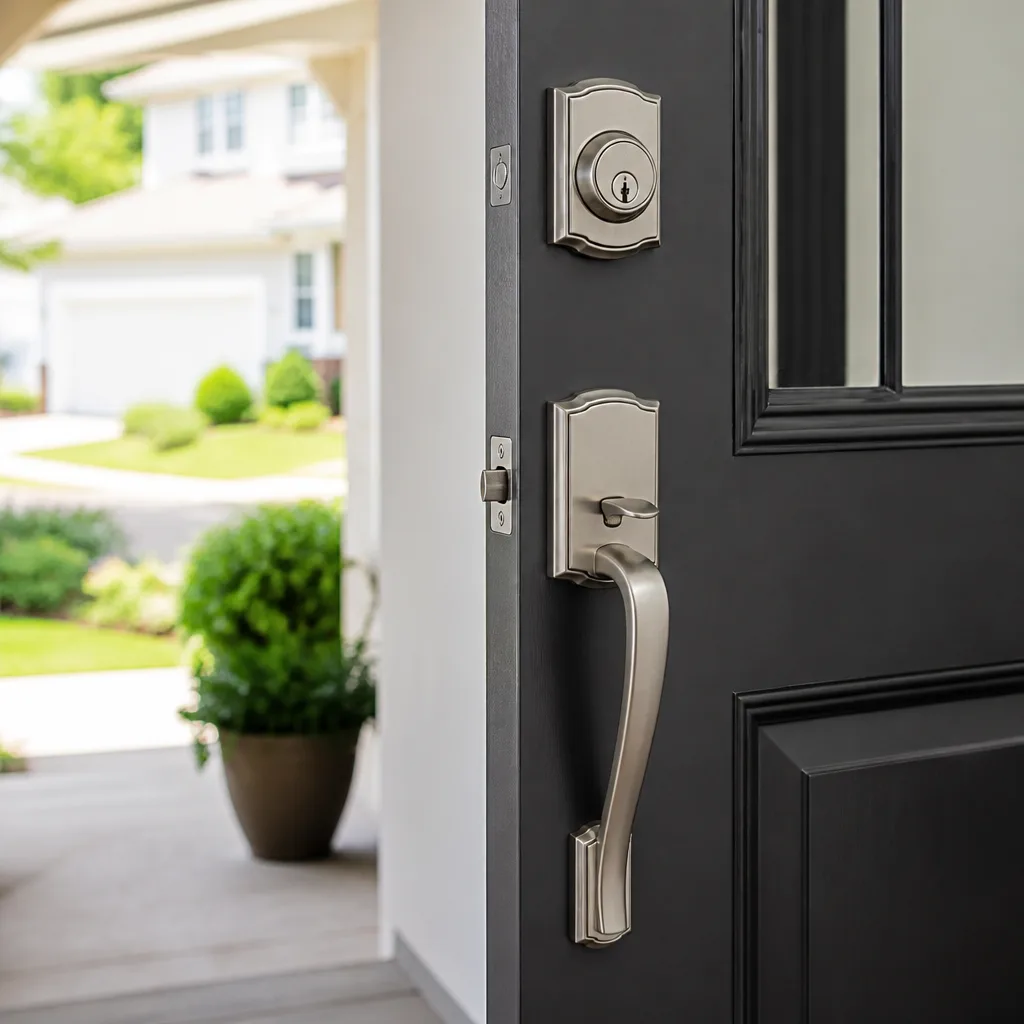
Replacing a knob or lever with a pre-pinned unit. If you buy a new Schlage or Kwikset knob set from a hardware store, it comes with its own keys and the cylinder is already assembled. Swapping the old knob for the new one is a matter of removing two screws, pulling the old knob off, and sliding the new one into place. No pins, no springs, no disassembly. The new lock uses a different key than your old one, which is fine for a bedroom door or a secondary entry. For a front door, you’ll probably want the new lock keyed to match your existing key, which is a locksmith task.
Installing a door reinforcement kit. A reinforcement kit is a set of metal plates that goes around the latch and strike areas of your door and frame. Installation is straightforward: remove the existing strike plate, position the new wrap-around plate, and drive in the longer screws included with the kit. The screws should reach into the framing stud behind the door jamb, not just the thin jamb wood. This simple upgrade makes a door significantly harder to kick in, and it costs under $40 at any hardware store in Los Angeles.
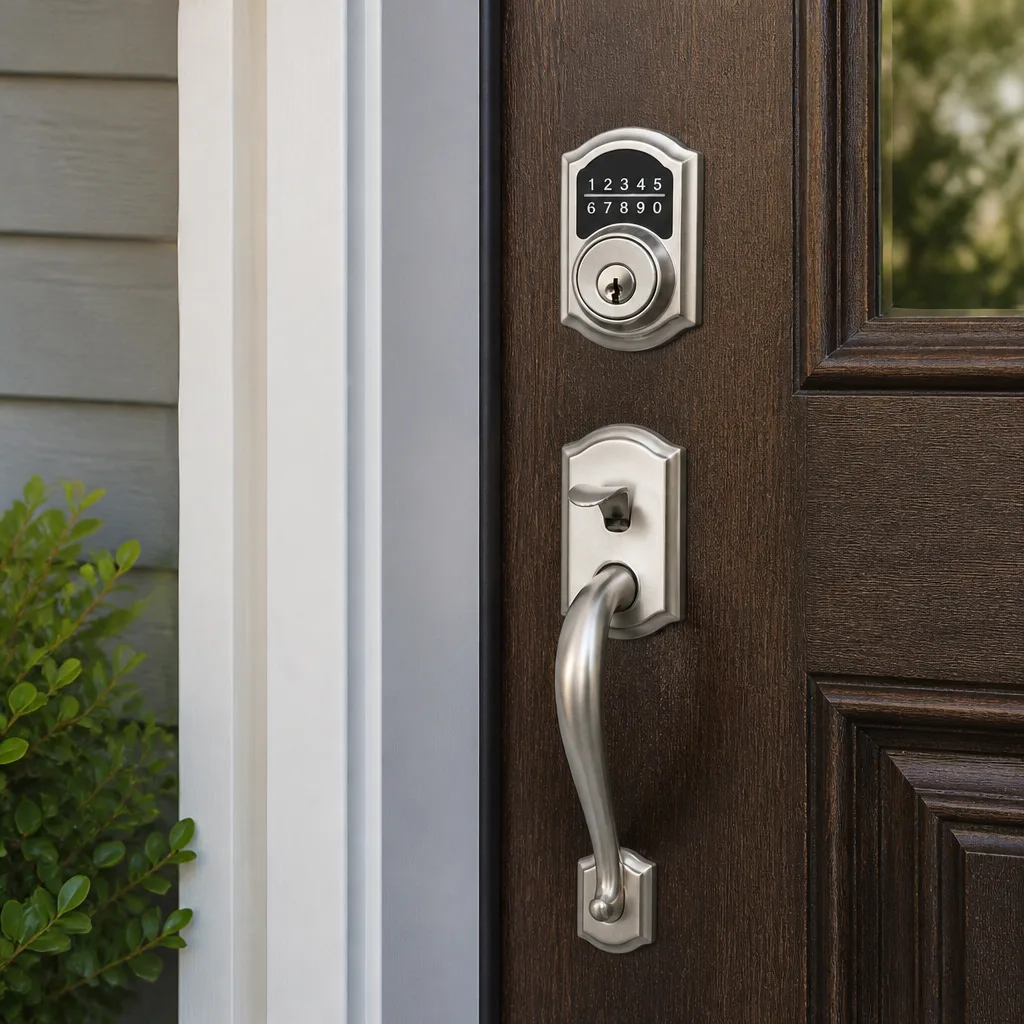
Changing smart lock batteries and user codes. Smart locks are designed for homeowner-level administration. Changing batteries, adding or deleting user codes, and adjusting auto-lock settings are all done through the lock’s keypad or a phone app. Follow the manufacturer’s instructions. The one caution: don’t wait until the low-battery warning to replace batteries on a primary entry door, and always test the lock with the physical key after a battery change to confirm the key override still works.
Tasks That Look Simple but Carry Real Failure Risk
The internet makes these look easy. They are easy, until the moment they are not. And the moment they go wrong is almost always one where you cannot safely stop halfway.
Rekeying with a pin kit. A rekeying kit contains new key pins, driver springs, and a follower tool. The process is: remove the cylinder from the door, remove the retaining clip, slide the plug out, replace the key pins in the correct order, and reassemble. The failure points are specific. First, the key pin order must match the new key’s cuts exactly. Get one pin out of sequence and the key won’t turn. Second, the driver springs are small, springy, and eager to launch themselves into carpet, grass, or a floor vent. Lose one and the lock won’t function. Third, reassembly requires aligning the top pins with the plug while sliding it back into the cylinder, which requires a follower tool and a steady hand. A mistake at this stage means a cylinder that won’t turn, a key stuck in the lock, or a lock that appears to work but fails under normal use. In our experience, the most common outcome of a failed DIY rekey in Los Angeles is a front door that cannot be locked at all, discovered at bedtime.
Installing a deadbolt in a new location. This means drilling a new hole through the door and the frame. The bore has to be perpendicular to the door face, at the correct backset, at the right height, and aligned with the strike plate hole in the frame. A few degrees of angle error and the bolt binds. A few millimeters of misalignment and the bolt won’t throw. Drilling out a door is not reversible. If the hole is wrong, you’re replacing the door slab. In older Los Angeles homes with solid-core doors, that’s a $300 to $800 mistake depending on the door style and finish.
Adjusting a door closer. On a residential screen door or a shared entry door in a Los Angeles condo building, door closers are adjusted by turning hydraulic valves. The valves control the speed of the door’s swing. Turning a valve screw too far can release hydraulic fluid, and once the fluid is out, the closer is dead. There’s no refilling it. Replacement is the only fix. A closer adjustment looks like a 30-second job. It is, if you know which screw does what and how far to turn it. It’s a $150 replacement if you don’t.
Any lock work on a primary entry door when you only have one working key. This is less about skill and more about sequencing. If you disassemble the only lock that secures your front door, and something goes wrong, you cannot leave the house unsecured, and you cannot go to bed with a door that won’t lock. Emergency locksmith rates in Los Angeles run higher than scheduled service, and nighttime calls higher still. The cost of failure on a primary entry door is not just the repair, it’s the urgency multiplier.
The Rental Property Exception in California
If you rent your home or apartment in Los Angeles, the DIY conversation changes entirely. California Civil Code 1941 requires a landlord to maintain a rental unit in a habitable condition, which includes functioning locks on exterior doors. The code also establishes that when a tenant requests a lock change, or when a key is lost or stolen, the landlord has an obligation to rekey or replace the locks. The specifics matter: a tenant who rekeys a lock themselves may change the keying without the landlord’s knowledge, and the landlord can argue that their obligation was met only if they were given a working key. The practical upshot is that unauthorized DIY lock work in a rental unit can put a tenant in a worse position legally and practically. If you rent, the safe move is to request the rekey in writing and let the landlord or their locksmith handle it. This is one of the few places where doing less is genuinely the right call.
How to Evaluate Your Own Mechanical Aptitude for Lock Work
Nobody wants to be told they don’t have the hands for a job. But lock work is a specific kind of mechanical task, and it’s worth an honest self-assessment before you open a cylinder. The skills that matter:
- Fine motor control under frustration. You’ll be handling pieces smaller than a grain of rice. If you can thread a needle, rekeying is physically possible. If small parts tend to jump out of your hands when you’re annoyed, that’s a red flag.
- Patience for repetitive, precise failures. Locks don’t have an undo button. A mis-ordered pin means starting over. If you’re the type who gets angrier with each failed attempt, lock work will test you.
- Ability to follow a sequence exactly. Pin order matters. Spring orientation matters. Clip placement matters. If you’re a “close enough” person, locks are not close-enough work.
- The right tools for the job. Rekeying requires a follower tool, a pinning tray or a clean flat surface, and a set of key pins for your lock brand. A Schlage cylinder takes different pins than a Kwikset. Guessing is not a strategy.
A useful test: before doing any lock work, remove and reinstall the screws on a door hinge. If that takes under five minutes and the door still swings clean, you have the basic coordination. If you strip a screw or misalign the door, maybe start with lubrication and tightening only.
The Honest Cost-Benefit Calculation
Let’s put real numbers on the table for Los Angeles. These are current ranges from our own residential service pricing and hardware store prices around the city.
Professional rekey in Los Angeles: $75 to $160 for a standard residential cylinder, depending on the lock brand and whether it’s a standard Schlage or Kwikset cylinder or something higher-security like a Mul-T-Lock or Abloy. Most residential rekeys take under an hour on site.
DIY rekey kit: $20 to $45 for the kit, plus the cost of your time. A first-time DIY rekey typically takes two to four hours, including watching the tutorial, the actual work, and the inevitable troubleshooting. If it goes wrong, you’re now paying emergency rates, or replacing the lock entirely, which runs $40 to $120 for a new Schlage or Kwikset deadbolt, plus reinstallation.
Professional deadbolt installation: $85 to $200 including the labor and standard hardware, depending on whether the hole already exists. A new bore in a solid-core door adds labor because it requires a jig and hole saw.
DIY deadbolt installation in a new location: $25 to $60 for the deadbolt and a boring jig rental or purchase, plus your time. The failure mode is the door itself.
The calculation is not about whether the DIY kit is cheaper than the pro call. It is about the probability of a failed first attempt multiplied by the cost of a same-day or emergency fix. For lubrication, tightening, and pre-pinned replacements, the math favors DIY. For rekeying a primary entry door with one working key, the math favors a call to a professional.
Tool Requirements: What You Actually Need
The difference between a successful DIY lock job and a service call often comes down to the tool you didn’t know you needed. Here’s a realistic list, not the idealized one.
- Precision screwdrivers. Standard Phillips and flathead in sizes #0, #1, and #2. Most lock screws are small. A full-size screwdriver will cam out and strip the head.
- A pinning tray or a clean, lipped surface. You need somewhere to lay out small parts in order. A muffin tin works. A paper towel on a carpet does not.
- A follower tool. For cylinder rekeying, this is the rod that holds the driver pins in place while you slide the plug out. A wooden dowel in the right diameter can work in a pinch, but a proper follower for your lock brand is $5 to $10 and worth it.
- Tweezers or needle-nose pliers. For placing key pins and springs without launching them.
- A tube of graphite or PTFE lock lubricant. Never oil-based. This is the one tool every Los Angeles homeowner should own regardless of DIY intent.
- A boring jig and hole saw. Only for new deadbolt installation. The jig clamps to the door and guides the hole saw at the correct angle and backset. Without a jig, do not drill a door.
If you look at this list and already own most of it, you’re probably the person who can handle a rekey. If you’d be buying all of it for one job, the math shifts toward calling a professional.
Smart Locks: Where DIY Makes the Most Sense
Smart locks are the best segment of residential locksmithing for DIY because the manufacturers explicitly designed them for homeowner installation and management. Brands like Schlage encode, Kwikset Halo, and Yale Assure ship with installation instructions written for non-professionals. The hardware itself goes onto the door with the same two-screw mounting as a standard deadbolt, and the smart features are managed through an app.
Where DIY is appropriate: replacing batteries, adding and deleting user codes, enabling auto-lock, adjusting sensitivity, and connecting the lock to your home’s Wi-Fi or Z-Wave hub. None of these tasks require opening the cylinder or touching the pin stack.
Where to pause: if the smart lock replaces your primary deadbolt and you only have one physical key for the override, losing that key means the smart lock must be rekeyed or replaced entirely. Some smart locks can be rekeyed with a standard kit; others cannot. Before you buy, check whether the model you want supports rekeying. If it doesn’t, and you ever lose a key, you’re buying a new lock. If you’re in Los Angeles and considering a higher-security upgrade like a Sargent or Abloy cylinder for your smart lock setup, that’s a conversation to have with a professional, not a YouTube tutorial.
Common Mistakes to Avoid
- Using WD-40 in a lock cylinder. It works for a week and then attracts every particle of grime the air has to offer. Use dry graphite or PTFE lubricant only. This is the single most common lock mistake we see in Los Angeles homes.
- Rekeying the only lock on the front door as a first project. Practice on a deadbolt from a door you don’t rely on. The front door is the worst possible place to learn a new mechanical skill.
- Not counting the springs before and after disassembly. If you start with eight springs and end with seven, you’re not done until you find it. Spring loss is the number one cause of failed DIY rekeys.
- Drilling a deadbolt hole without a boring jig. A hand-held drill at a slight angle creates a binding bolt and a door that needs replacement. The jig costs less than the door.
- Ignoring the landlord in a rental situation. In California, unauthorized lock changes in a rental can create legal friction. Tenants should request rekeying in writing and let the owner handle it.
- Testing a newly installed lock only from the inside. Go outside, close the door, and lock it with the key. Test it from the inside too. A lock that works one way and not the other is a lock that fails at the worst time.
- Assuming all locks use the same pin size. Schlage pins do not interchange with Kwikset pins. Match the kit to the lock brand or you’ll reassemble a cylinder that won’t turn.
When to Call a Professional
Call a professional when the work is on a primary entry door and you only have one working key, when the lock brand is one you don’t recognize, when the door itself has alignment issues that caused the lock problem in the first place, or when the lock is high-security hardware like Mul-T-Lock, Sargent, or Abloy that uses restricted keyways and proprietary pins. Also call when the work is time-sensitive: a lock that fails on a Friday evening is an emergency by Sunday night’s return, and emergency rates in Los Angeles run higher than scheduled service. If you’re in Los Angeles and want a professional assessment, our team at Residential Locksmith in Los Angeles is available 24/7, or see our full Blackthorn Locksmith & Security home page for the range of services we cover, including Commercial Locksmith in Los Angeles and Access Control Systems in Los Angeles. Blackthorn Locksmith & Security offers free estimates by phone at (818) 390-9007.
Frequently Asked Questions
You can, and many people do successfully. The risk is not in the kit but in the springs and pins, which are small, easily lost, and sequence-sensitive. If you’ve never done it, practice on a lock you don’t depend on. If the only lock you have is the front door, the safer route is a professional rekey in Los Angeles, which typically costs $75 to $160. Call (818) 390-9007 for a free quote.
Yes, and you should. Use dry graphite or PTFE lubricant, never oil-based sprays like WD-40. A short puff into the keyway and a few insert-remove cycles with the key is all it takes. Do it annually on every exterior door. If your lock is still stiff after lubricating, call us at (818) 390-9007 to check whether the cylinder or the door alignment is the real issue.
The lock won’t function correctly. Driver springs provide the upward pressure that lets the key move the pins. Without one, the cylinder may not turn, or a key may get stuck. You’ll need a replacement spring, which means either a pin kit that includes springs or a call to a locksmith who carries them. If you’re mid-job and stuck, (818) 390-9007 is a live line answered by a person, 24/7.
Yes. California Civil Code 1941 gives landlords the obligation to maintain working locks, and unauthorized tenant lock changes can create legal issues around who has access to the unit. Request the change in writing, and let the property owner arrange the rekey. If your landlord won’t act, you may have remedies through the Los Angeles Housing Department, but a self-installed lock is not the first step.
A standard residential rekey in Los Angeles runs $75 to $160 depending on the lock brand and cylinder type. Higher-security locks like Mul-T-Lock or Abloy cost more because the cylinders are proprietary. The price you’re quoted on the phone at Blackthorn Locksmith & Security is the written price, before any work starts, with no surprise line items added on arrival. Call (818) 390-9007 for an exact number.
It depends on whether you want Wi-Fi, Z-Wave, Apple Home Key, or a simple keypad. Schlage Encode and Kwikset Halo are both solid Wi-Fi options with homeowner-friendly apps. Before you buy, check whether the model supports rekeying, because some smart locks cannot be rekeyed and must be replaced if you lose a key. If you want a smart lock paired with higher-security hardware like Sargent or Abloy, call (818) 390-9007 to talk through the options before you buy.
The Bottom Line
The residential locksmith tasks that are genuinely safe to do yourself are the ones where a mistake is visible, reversible, and contained: lubrication, tightening, pre-pinned hardware replacement, reinforcement kits, and smart lock administration. The tasks that look just as easy in a video but carry real failure risk are rekeying, new deadbolt boring, and door closer adjustment. Those three share a common thread: when they go wrong, the fix is expensive and the timing is always bad. For Los Angeles homeowners, the deciding factor is not pride or even skill. It’s the cost of finding out at 11 p.m. that your front door won’t lock and your family is asleep behind it. If that’s a risk you’re not comfortable taking, call us at (818) 390-9007. We’ll give you a written price before any work starts, and we’ll leave your home exactly as we found it, down to the shoe covers.
Written by Shane Delaney, Owner at Blackthorn Locksmith & Security, serving Los Angeles since 2008.