
Last updated October 8, 2026
Non-destructive entry first, always - and we re-key Schlage, Kwikset, and Baldwin locks on the spot while you watch
You get a price before we start. It does not change when we arrive. No surprises.
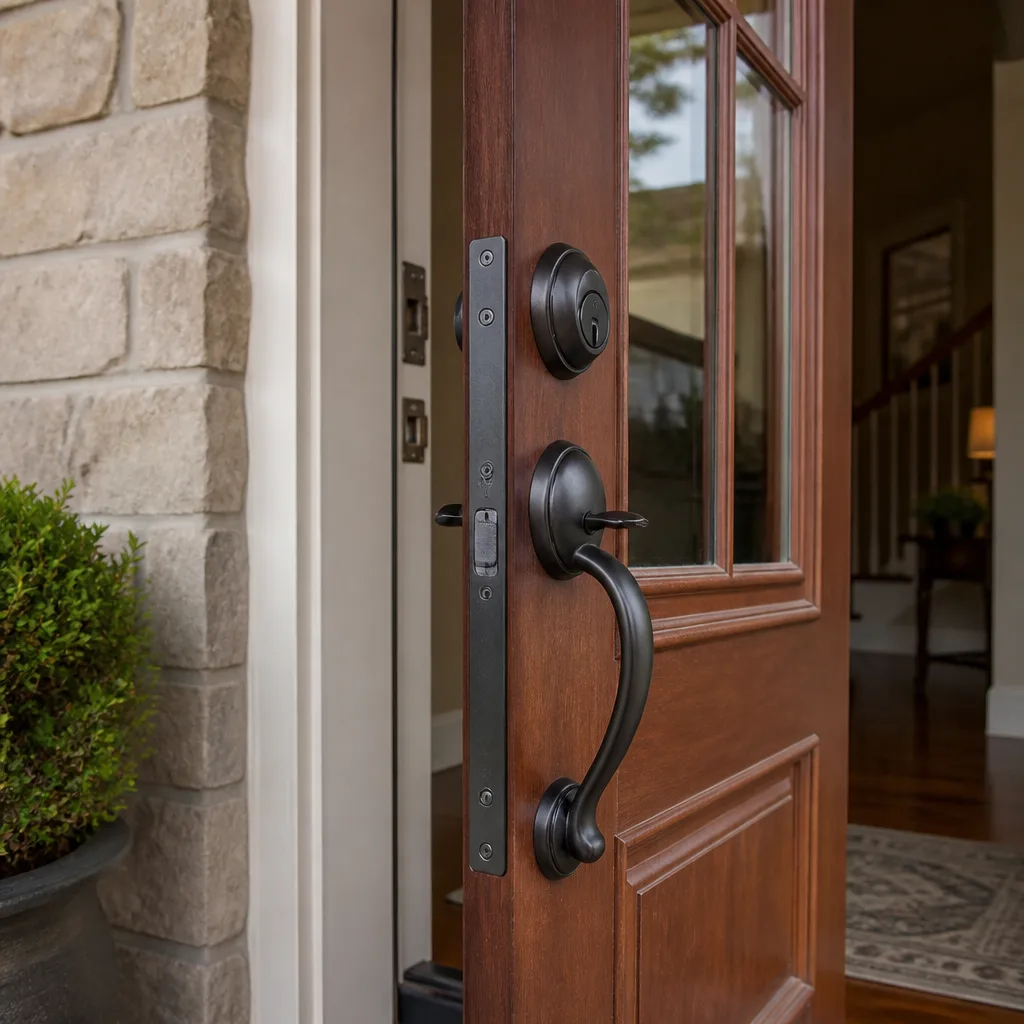
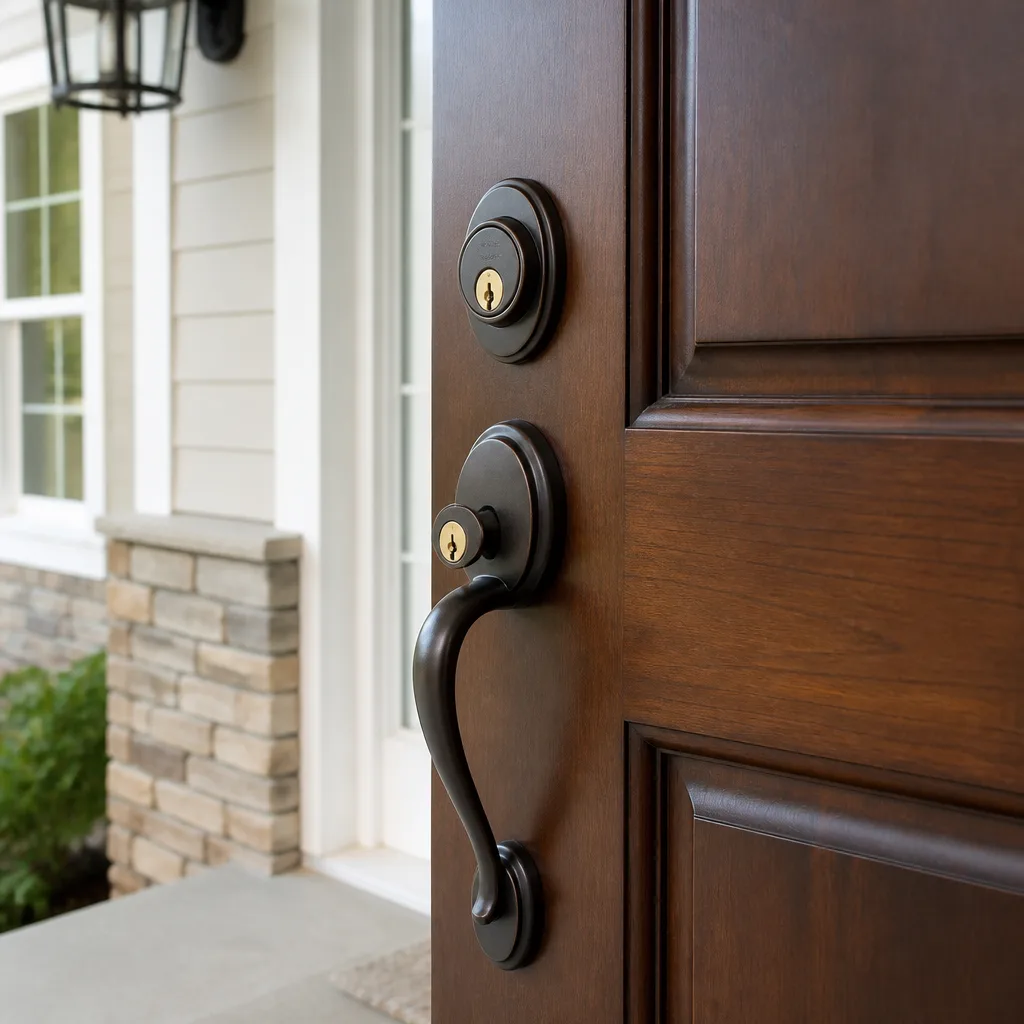
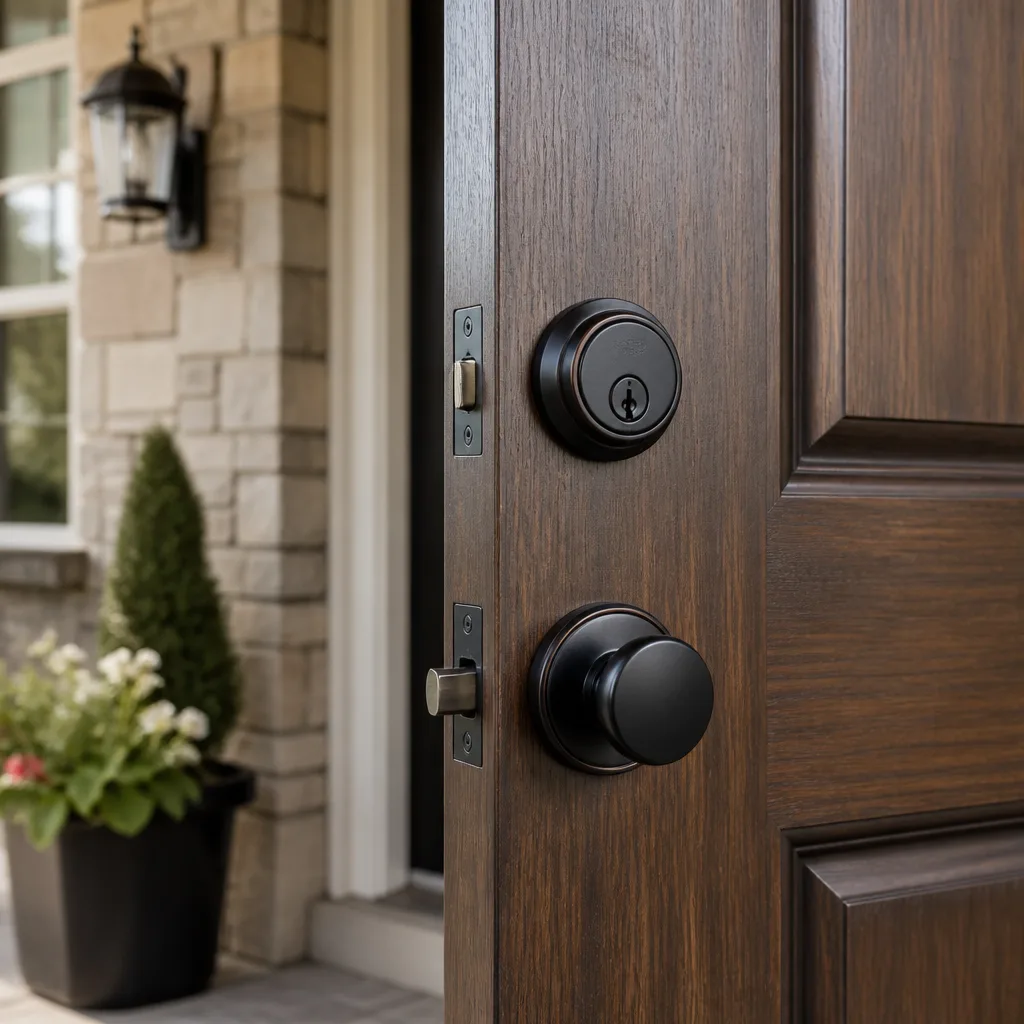
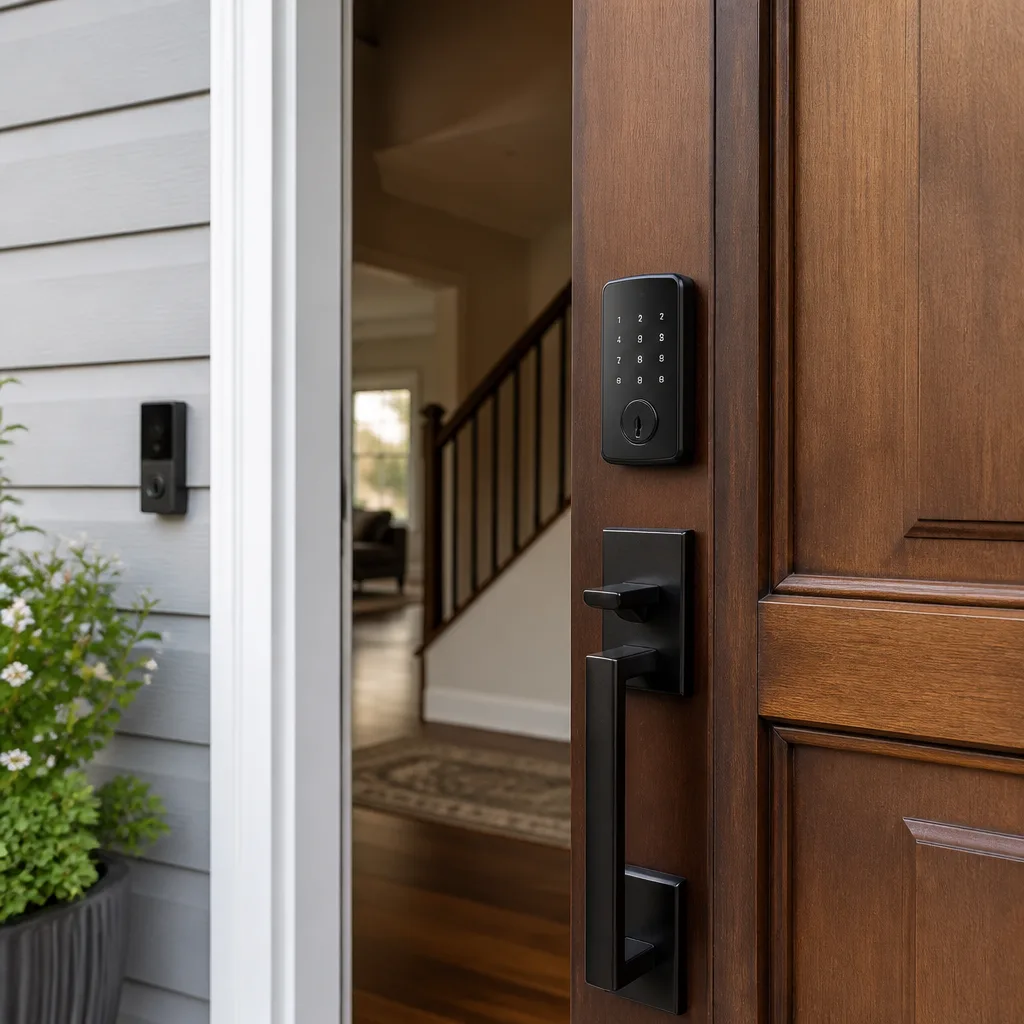
DIY vs Professional Access Control Systems: What’s Safe to Do Yourself
A homeowner in Los Angeles installed a smart lock on the door between their garage and kitchen last spring. It worked perfectly for eleven months. Then a small fire started in the garage, the family ran for that door, and the lock’s motorized deadbolt had seized from heat expansion. The egress path they had relied on every day failed in the only moment that mattered. This guide exists because that homeowner’s experience is not rare, and because the difference between a safe DIY project and a liability starts with understanding what a lock must do when everything else goes wrong. For more perspective, read our DIY vs Professional Locksmith: The Los Angeles Homeowner’s Decision Guide. We will draw the line precisely: what you can handle with a screwdriver and patience, what you can handle with phone support from the manufacturer, and what belongs in the hands of a licensed professional.
Quick Answer
Safe DIY access control means battery-powered smart locks and Wi-Fi deadbolts installed on interior, non-fire-rated doors where you are replacing an existing lock with a compatible footprint. Professional-only work includes any electric strike on a fire-rated egress door, any hardwired panel, or any installation that modifies the door frame, because those jobs implicate California building codes, insurance requirements, and life-safety egress laws. Learn more about our Access Control Systems services. Supervised DIY sits between: replacing a reader or keypad on an existing wired system with manufacturer guidance by phone, where the wiring and panel stay untouched.
Table of Contents
- The Three Installation Categories
- What California Code Actually Requires
- What Professional Installation Includes That YouTube Skips
- The “It Works Fine” Fallacy
- The Skill and Risk Self-Assessment
- Real Scenarios From Los Angeles Properties
- The Cost Conversation: DIY Numbers vs Professional Numbers
- Why the Hardware Brand Changes the Answer
The Three Installation Categories
Most articles about DIY access control treat the question as a simple yes or no. It is not. In our experience running access control installations across Los Angeles, every job falls into one of three bands. Knowing which band your project lands in is the entire decision.
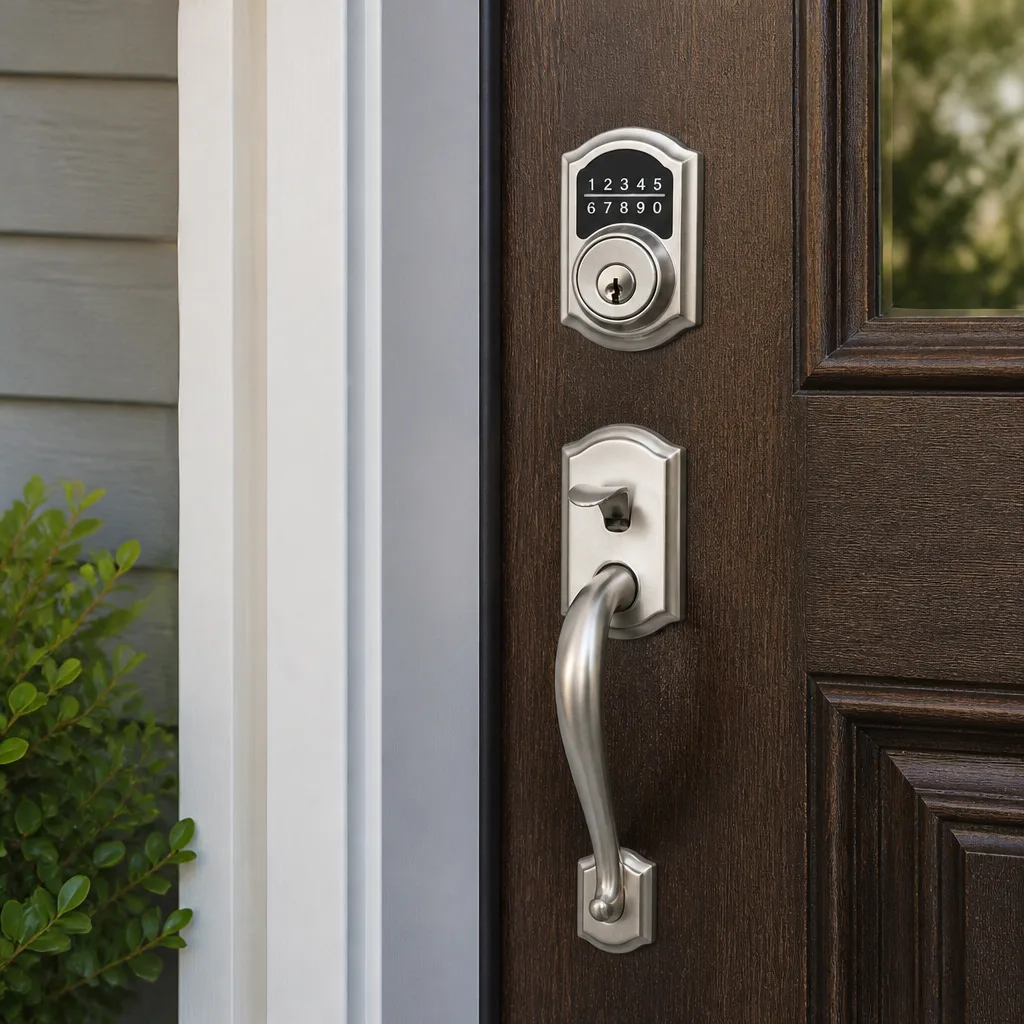
Category One: Safe DIY. This covers battery-powered smart locks, Wi-Fi deadbolts, and retrofit smart lock conversions that replace an existing deadbolt or lever set without touching the door frame. You remove two screws, swap the hardware, and pair the device with your phone. The critical condition: the door is not fire-rated, the opening is not a code-required egress path, and the existing lock prep is standard. A Schlage Encode on a bedroom office door fits here. A smart lock on the front door of a single-family home usually fits here too, provided the door swings inward and you are not modifying the strike plate area.
Category Two: Supervised DIY. This includes jobs like swapping a failing card reader on an existing wired access control system, replacing a keypad, or installing a wireless access point that integrates with an existing controller. The hardware is manageable, but the system context is not. You need manufacturer documentation, a clear understanding of wiring compatibility, and the discipline to test fail-safe and fail-secure behavior after the swap. We have walked Los Angeles business owners through reader replacements over the phone on more than one occasion, and we are glad to do it. What makes this category different is that the panel and the wiring remain professional-installed and untouched.
Category Three: Professional Only. Any electric strike on a fire-rated door. Any hardwired control panel. Any installation that requires drilling the door frame, running low-voltage wire through walls, or changing the physical strike plate geometry. Any access control on a door that is part of a legal egress path from a dwelling unit. These jobs invoke building codes, fire codes, and insurance clauses. They are not DIY projects, and no unboxing video will tell you that.
We work on commercial locksmith projects in Los Angeles where a failed DIY strike installation created a fire-code violation that the business owner did not discover until an annual inspection. The hardware was installed neatly. It worked from the keypad. And it was still illegal, because the strike had been installed on a fire-rated stairwell door without a fail-safe release tied to the alarm system.
What California Code Actually Requires
California Health and Safety Code Section 13113.9 addresses locking devices on doors used for egress. The practical upshot: any locking device on a required exit door must release with a single motion from the inside, without special knowledge, and without a key. A smart lock that requires a phone app, a fingerprint, or a keypad combination to open from the inside violates this requirement on egress doors. The violation exists even if the device has a manual thumbturn, because code enforcement focuses on what a panicked occupant will instinctively encounter.
What does this mean in Los Angeles specifically? The city enforces the California Building Code through the Department of Building and Safety. Fire-rated doors in multifamily buildings, hotels, schools, and commercial spaces carry additional requirements: the door closer must be functional, the latch must be fail-safe or fail-secure depending on the floor plan, and the access control hardware must be listed for use in a fire assembly. Installing an electric strike on a fire-rated door voids the fire rating of that assembly unless the strike carries the correct UL listing and the installation meets the tested configuration. This is not a matter of skill. This is a matter of law.
For single-family homes in Los Angeles, the code is more forgiving, but not silent. A front door that serves as a required egress opening from a bedroom hallway should have hardware that meets the single-motion release standard. Bathroom privacy locks, by contrast, are explicitly designed for single-motion release from inside and are fine. The distinction matters because insurance adjusters in Los Angeles know it, and they have denied claims where a smart lock on an egress door contributed to delayed exit or failed during a fire event.
Homeowner’s insurance policies routinely exclude damage or liability arising from unpermitted work that violates code. A $90 smart lock is not worth a denied claim. This is the fact no unboxing video mentions.
What Professional Installation Includes That YouTube Skips
A YouTube tutorial shows you how to align a strike plate with a screwdriver. It cannot show you what a technician sees when they look at the door, the frame, the weight of the slab, and the condition of the hinges. Professional installation begins before any hardware comes out of the box.
Door prep assessment. The technician measures the door’s thickness, checks the backset, examines the reveal between the slab and the frame, and determines whether the frame itself is straight. In Los Angeles, where many older homes in Silver Lake, Echo Park, and the Valley have settled frames and seasonal wood movement from the dry climate, a door that looks level may have drifted out of alignment by three degrees, which is enough to cause an electric strike to bind.
Strike plate alignment to door weight. A heavy solid-core door exerts force on the strike that a hollow-core door does not. A professional installation accounts for this by adjusting the strike position, using reinforced strike plates, and confirming that the latch enters the strike without drag in both normal and door-warped conditions.
Load testing. After installation, the technician cycles the access control mechanism dozens of times: powered and unpowered, fast and slow, with the door slammed and gently closed. The point is to simulate failure conditions, not to confirm that it works once.
Written as-built documentation. When a professional finishes, you receive a record of what was installed, how it was wired, and what the fail-safe or fail-secure behavior is. This documentation matters for insurance, for future service calls, and for any building inspection. DIY work rarely produces it, and when it does, the homeowner wrote it without knowing what an inspector needs to see.
On every access control job we complete, our technicians leave shoe covers and drop cloths down before the work begins, and they take a photo of the clean-up before leaving. The written price is delivered before any work starts. Those practices are consistent with the Cedarwell Care Promise we work to on every job: Clean up like it is our own home; Ask before we move or touch anything; Respect the family’s time and quiet hours; Explain the price before the work.
The “It Works Fine” Fallacy
A DIY installation that functions correctly in normal conditions may fail precisely during the emergency it was meant to handle. This is not hypothetical, and it is the single strongest argument for professional installation on life-safety hardware. Here are the failure modes we have observed, in no particular order.
Heat expansion seizure. Motorized deadbolts and electric strikes contain small motors and tight mechanical tolerances. During a fire, the ambient temperature rises, the metal expands, and the mechanism can bind. A fail-secure strike that remains locked during a fire is a code violation on egress doors, no matter how well it worked during a demo.
Power failure mode confusion. Battery-powered smart locks fail when batteries die. Hardwired access control panels fail when the building loses power. Proper access control design specifies whether each door is fail-safe (unlocks when power fails) or fail-secure (remains locked), based on life safety and security priorities. A DIY installer rarely understands the distinction, and a wrong setting can trap occupants in a fire or leave a pharmacy room open during a burglary.
Network failure at the wrong moment. Cloud-connected access control depends on Wi-Fi or cellular connectivity. Los Angeles has broadly excellent connectivity, but it fails during earthquakes, during wildfire-driven power shutoffs, and during routine outages. A local controller with offline caching handles this gracefully. A consumer smart lock with phone-as-key may not.
The DIY version of access control is tested for convenience, not for failure. Professional installation is tested for both. The difference shows up exactly once: during the event the system was bought to handle.
The Skill and Risk Self-Assessment
Before you decide whether to do the work yourself, answer three questions honestly. The answers matter more than your enthusiasm. See also DIY vs Professional Commercial Locksmith: What’s Safe to Do Yourself.
Question One: What is your electrical comfort level?
If you have never wired an outlet, mapped a circuit breaker, or used a multimeter, you should not install any access control hardware that touches building wiring. Battery-powered smart locks that replace existing deadbolts require no electrical work and remain safe for you. Hardwired panels, electric strikes, and maglocks are off the table.
Question Two: What is your door hardware experience?
Have you replaced a lockset before and gotten it to latch cleanly? Have you adjusted a strike plate? If so, a battery-powered smart deadbolt on a standard door is within reach. If you have never touched a door’s hardware, start with a straightforward swap on an interior door and observe how the latch aligns. The door is the variable, not the smart lock.
Question Three: What are the stakes of failure?
If the door protects the main entry to a home with young children, the stakes are high. If the door is a fire-rated egress path in a commercial building, the stakes are legal as well as practical. If the door is a secondary gate leading to a side yard, the stakes are lower. The higher the stakes, the stronger the case for professional installation, regardless of your skill level.
A useful matrix:
- Low electrical skill + low door skill + low stakes: DIY is fine. Replace a bedroom lock with a smart deadbolt.
- Low electrical skill + low door skill + high stakes: Hire a professional. The front entry or rated door deserves it.
- High electrical skill + high door skill + low stakes: DIY with manufacturer support. A keypad on a side gate is reasonable if you document the wiring.
- High electrical skill + high door skill + high stakes: Still call a professional on any rated door. Code compliance is not a skill substitute.
Shane Delaney, who leads Blackthorn Locksmith & Security, has watched this matrix play out across Los Angeles for years. The conclusion is consistent: the people who call before drilling into a fire-rated frame save themselves the most money.
Real Scenarios From Los Angeles Properties
Every home and business in Los Angeles has a different access control profile. A 1920s bungalow in Highland Park has different bones than a 2018 condo tower in Koreatown. Here are three scenarios we have encountered.
The Valley ranch house. A family in Woodland Hills wanted a smart lock on the front door and a keypad on the side gate. The front door was a standard 1¾-inch slab with a single bore, and the replacement was a straightforward Schlage Encode install, which the homeowner did themselves with confidence. The side gate was a metal pedestrian gate with no existing wiring, and the homeowner wanted a strike for keypad access. That part we installed. The gate frame needed reinforcement, the strike required a weatherproof enclosure, and the fail-secure wiring had to run through conduit. The homeowner saved money on the front door and spent money where it mattered.
The multi-unit Mid-City building. A landlord in Mid-City installed a consumer-grade smart lock on the building’s shared rear entry, which was a required egress door. The lock required a phone app to exit. A tenant complained, a city inspector visited, and the landlord received a correction notice. The fix involved removing the smart lock, installing a commercial-grade push-bar exit device, and adding a card reader on the exterior side. The landlord later told us the DIY lock cost $89 and the corrective work cost $2,300. This is not rare; it is the most common access control mistake in Los Angeles multifamily housing.
The restaurant with a delivery code problem. A restaurant owner in Koreatown replaced a keypad on an existing access control system without reading the panel’s wiring diagram. The new keypad worked for a week, then shorted a relay and disabled the alarm tie-in. No one noticed until the fire marshal inspected. The issue: the keypad was a 24-volt unit wired into a 12-volt circuit. This is a classic supervised-DIY outcome, where the right call by the owner would have been to call the manufacturer or a professional before losing the inspection.
The Cost Conversation: DIY Numbers vs Professional Numbers
Money is the reason most people consider DIY access control. It helps to know the real numbers. A Schlage Encode Wi-Fi deadbolt runs between $220 and $320 at Los Angeles hardware stores and online retailers. A Kwikset Halo costs between $150 and $250. If you are replacing an existing deadbolt on a standard door and installing it yourself, your all-in cost stays in that range.
Professional installation of the same lock typically adds $150 to $300, depending on the condition of the door and the complexity of the app setup. That puts a professionally installed smart deadbolt between $370 and $620. For a hardwired access control system with a single door, a maglock or strike, a keypad, and a power supply, professional installation in Los Angeles typically lands between $1,500 and $3,500 per door, including hardware. Multi-door systems with management software and fob-based entry run higher.
The DIY figure for the same component list might be $700 to $1,200, but that number excludes the value of the professional’s code knowledge, the as-built documentation, the load testing, and the labor warranty. More importantly, it excludes the cost of the correction if the installation violates code. That correction frequently costs two to three times the original professional install price, because fixing a bad strike installation on a fire-rated door is more work than doing it right the first time.
At Blackthorn Locksmith & Security, our residential locksmith work in Los Angeles follows the same rule: a written price is delivered before any work starts, and that price is the invoice price. No call-out surcharge, no verbal estimate that grows during the job. The estimate you receive by phone is the number you will pay, and we will say so in writing.
Why the Hardware Brand Changes the Answer
Not all access control hardware is created equal, and the brand often determines whether DIY is sensible. A Schlage Encode or a Kwikset Halo is designed for consumer installation: the templates are clear, the wiring is non-existent, and the app walks you through setup. These brands are the right starting point for safe DIY work.
When you move to Sargent, Abloy, or Mul-T-Lock hardware, the calculus changes. These are commercial-grade systems with proprietary cylinder formats, tighter mechanical tolerances, and configurations that demand professional training. An Abloy PROTEC2 cylinder, for example, uses a rotating disc mechanism that resists picking and requires specialized tools to rekey. Mul-T-Lock’s high-security platforms integrate with access control in ways that assume a trained installer. Installing these brands as a DIY project is like rebuilding a transmission because you have a torque wrench. The tools are not enough.
Our technicians carry and install Schlage, Kwikset, Yale, Baldwin, Medeco, Mul-T-Lock, Sargent, and Abloy. We recommend consumer hardware for homeowners doing their own interior doors, and we recommend professional specification for any high-security or fire-rated application. The brand decision is a risk decision, not a preference decision.
Common Mistakes to Avoid
- Installing a keyed or app-only lock on a required egress door. California code requires single-motion egress from the inside. A smart lock that requires a phone, key, or combination to exit creates a code violation and a practical hazard during an emergency.
- Buying a lock with the wrong backset. Los Angeles homes built in different eras use different backset measurements: older homes often have 2⅜-inch backsets, while newer builds may have 2¾-inch. Measure before you buy, not after you open the box.
- Ignoring the door’s condition. A sagging hinge or a warped frame will cause any lock, smart or mechanical, to bind. Installing a $300 smart lock on a door that needs $80 of hinge work is a poor sequence.
- Running low-voltage wire through walls without a permit. In Los Angeles, certain low-voltage security wiring requires a permit and inspection when it crosses fire-rated assemblies. A handyman who says otherwise is guessing.
- Choosing fail-secure on an egress door because it sounds safer. Fail-secure means the door locks when power fails. On an egress door, that is a life-safety hazard. This decision should follow code and fire-door labeling, not intuition.
- Mounting a keypad where direct sunlight bakes it. Los Angeles heat and UV exposure kills some consumer keypad and reader housings within two summers. Position exterior devices on the north or shaded face of the frame when possible.
- Documenting nothing. If you do supervised DIY, photograph the wiring before disconnecting anything, label every conductor, and keep the manufacturer’s manual with the panel. Future you will be grateful.
When to Call a Professional
Call a licensed professional when the door is fire-rated, when the opening is a required egress path, when the project involves any hardwired panel or electric strike, or when the door frame needs modification. Call when the hardware is commercial-grade, when the system must integrate with an alarm or fire panel, or when the signage on the door says “Fire Door - Keep Closed.” Call when the building has an annual inspection that will penalize code violations. Call when the door protects the main entry to a home with children, elderly family members, or pets whose safety depends on the lock working during an emergency. Blackthorn Locksmith & Security offers free estimates in Los Angeles - call (818) 390-9007. For more guides & resources, visit our blog.
Frequently Asked Questions
Yes, if your front door is a standard single-family entry with an existing deadbolt and the door is not fire-rated, a battery-powered smart lock from Schlage, Kwikset, or a similar consumer brand is a reasonable DIY project. The job should take under an hour and require no wiring.
Most battery-powered smart lock replacements require no permit. Work that runs low-voltage wiring through walls, modifies a fire-rated assembly, or changes the egress hardware on a commercial or multifamily building may require a permit from the Los Angeles Department of Building and Safety.
Installing a smart lock on a common area or egress door in a multifamily building. These doors are regulated by fire code, and the lock’s failure to provide single-motion egress is a citable violation that landlords often discover only after a tenant complaint or an inspection.
It can, if the lock is on an egress path and the installation violates California building or fire code, and if the lock’s failure contributes to a loss. Insurance adjusters in Los Angeles check for code compliance after fire and burglary claims. A professional installation with written documentation reduces this exposure.
For a single-door keypad or card reader system with an electric strike or maglock, expect between $1,500 and $3,500 per door including hardware and labor. The final number depends on the door condition, wire run distance, and whether the system integrates with existing alarm or fire panels. A written price is confirmed before work begins.
For DIY projects, stick to consumer lines like Schlage Encode or Kwikset Halo. For commercial or high-security applications, consider Sargent, Abloy, or Mul-T-Lock hardware specified and installed by a professional. The brand choice should match the door’s role: egress, security, or convenience.
Yes. We regularly correct DIY installations across Los Angeles, from misaligned strikes to fail-secure settings on egress doors to readers wired into the wrong voltage. The sooner we see it, the less the correction costs, because a badly installed strike can damage the frame over time.
The Bottom Line
Access control is not one decision, it is three. Safe DIY covers battery-powered smart locks on interior non-rated doors. Supervised DIY covers reader and keypad swaps on existing wired systems, with manufacturer support and careful documentation. Professional-only covers anything on a fire-rated egress door, any hardwired panel, any frame modification, and any hardware from a high-security brand where the installation affects code compliance. The line is drawn by three things: the door’s role in an emergency, your electrical and door-hardware experience, and the cost of being wrong. In Los Angeles, where older homes meet modern access control expectations daily, the correct answer is often a blend: DIY the simple locks, and hire a professional for the doors that matter. Blackthorn Locksmith & Security offers free estimates in Los Angeles - call (818) 390-9007.
Written by Shane Delaney, Owner at Blackthorn Locksmith & Security, serving Los Angeles since 2008.