
Last updated October 8, 2026
Non-destructive entry first, always - and we re-key Schlage, Kwikset, and Baldwin locks on the spot while you watch
You get a price before we start. It does not change when we arrive. No surprises.
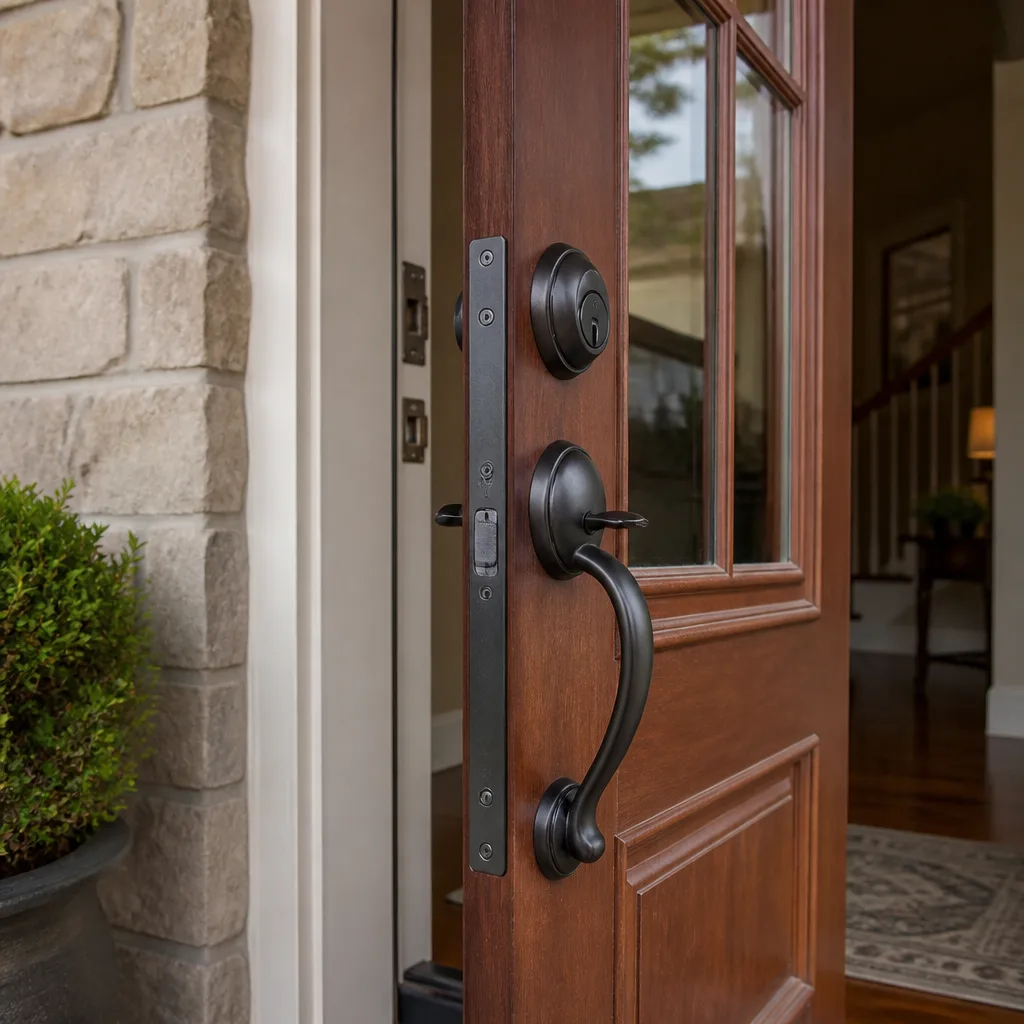
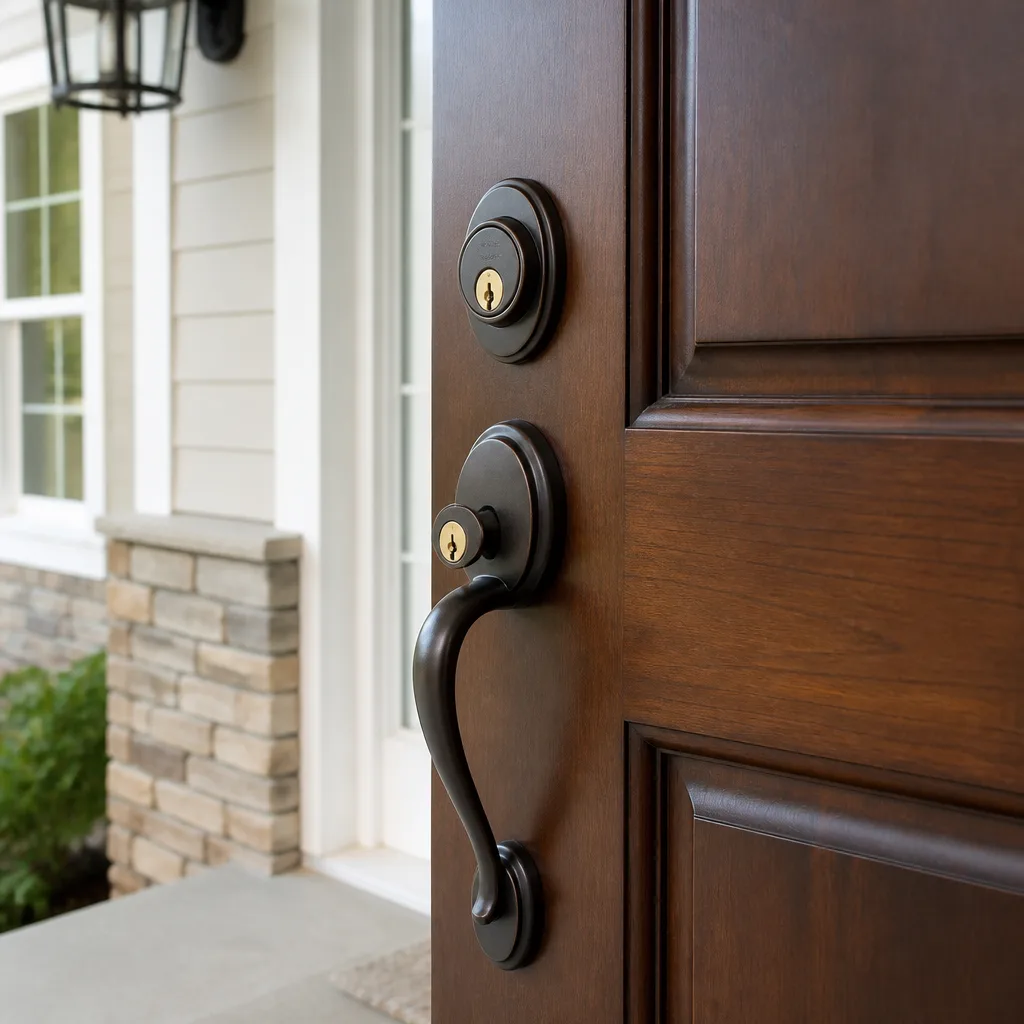
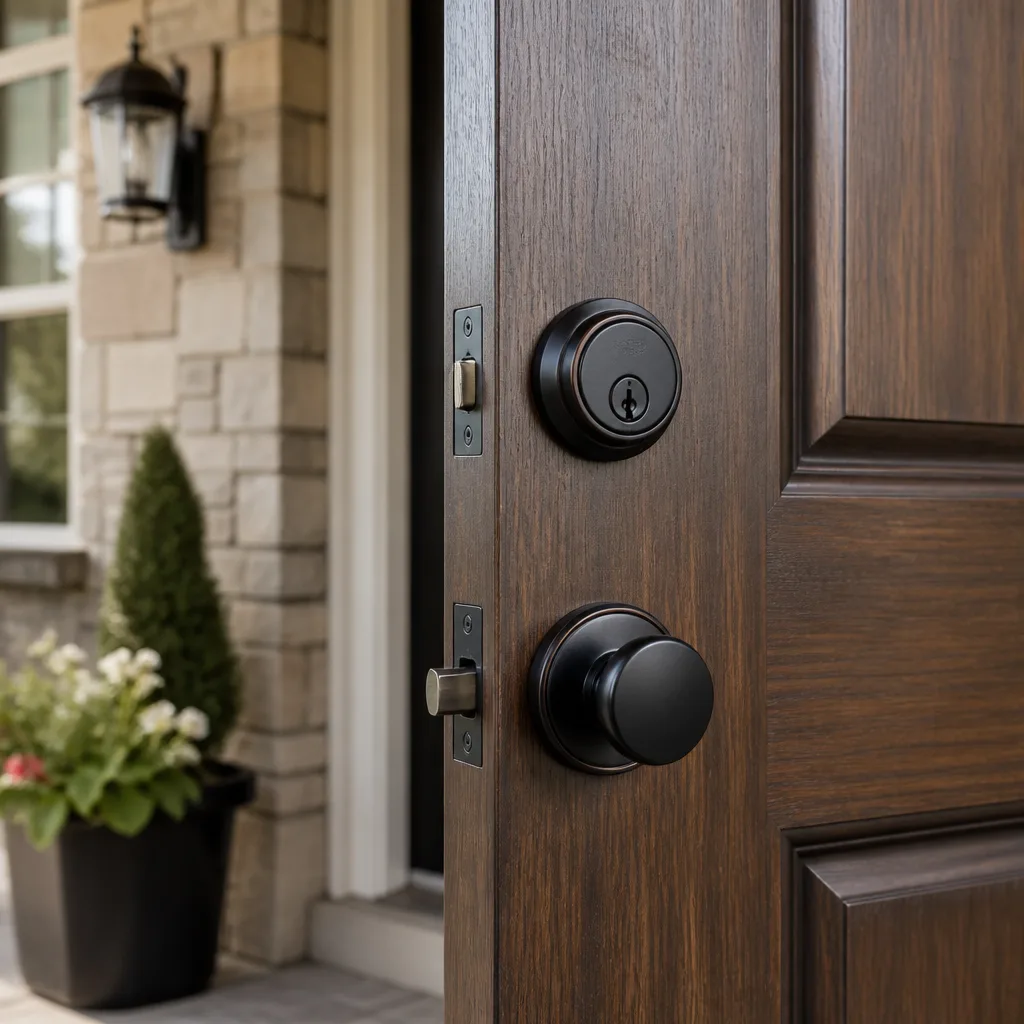
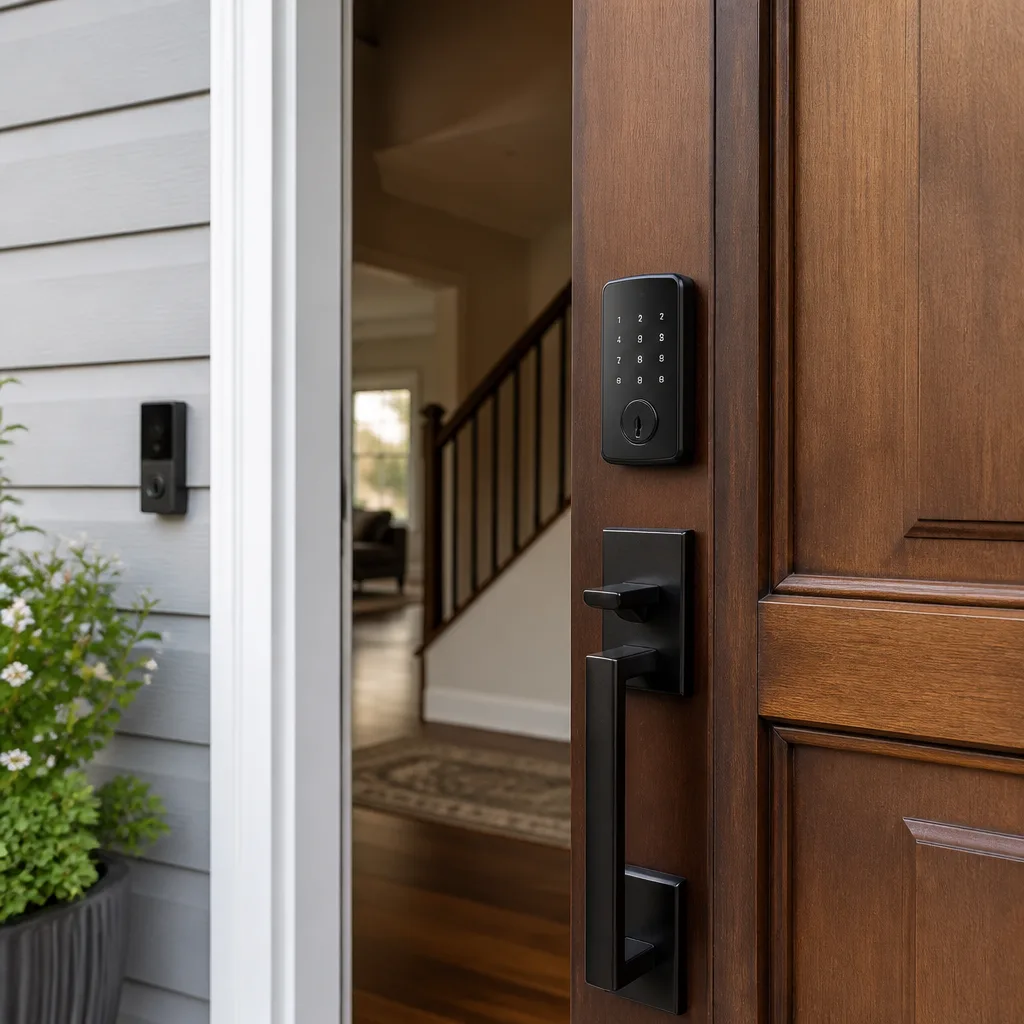
The Complete Residential Locksmith Guide for Los Angeles Homeowners
More than 60% of residential burglaries in Los Angeles involve no lock defeat at all. The entry point was an unlocked door or an open window. That statistic flips most security advice on its head because homeowners shopping for better deadbolts are often fixing a problem they don’t actually have while leaving the real gap wide open. This guide walks through every residential locksmith decision an LA homeowner faces: which hardware actually holds up on a 1920s Silver Lake bungalow, what a Grade 1 deadbolt really means, when rekeying is the wrong move, how ADU key control works, and what wildfire evacuation planning has to do with your front door lock. If you own a home in Los Angeles, this is written for your house, not a hypothetical average one.
Quick Answer
A residential locksmith in Los Angeles handles lock installation, rekeying, repair, and emergency lockouts for single-family homes, condos, and ADUs. Most homeowners need a professional when a lock wears out, a key breaks, a tenant moves out, or the hardware grade on an entry door is too weak for the neighborhood’s actual risk profile. A typical residential service call in LA runs $75 to $250 depending on the job, and the work should always include a written price before the technician touches a single screw.
Table of Contents
- How LA’s Housing Stock Shapes Lock Choices
- ANSI/BHMA Grades Explained: What Grade 1, 2, and 3 Actually Mean
- Rekeying vs. Replacing: The Economics and When Rekeying Is Wrong
- ADU and Multi-Unit Key Control for Los Angeles Properties
- Wildfire Evacuation Planning and Residential Lock Choices
- Smart Locks in Los Angeles: What Works, What Doesn’t
- Common Mistakes to Avoid
- When to Call a Professional
- Frequently Asked Questions
How LA’s Housing Stock Shapes Lock Choices
Los Angeles is not a city of identical suburban houses. A 1923 California bungalow in Highland Park has fundamentally different door hardware needs than a 1962 dingbat apartment in Palms or a 2018 hillside home in Studio City with a steel security gate at the street. The age of the door frame matters as much as the lock cylinder because a deadbolt is only as strong as the wood or metal around it.
Bungalows built before 1940 typically have solid Douglas fir door frames, which is good news. What they often lack is a reinforced strike plate. The factory strike plate on a 1930s door is a thin piece of brass held by two half-inch screws. A single kick splits the frame at that point regardless of how expensive the deadbolt is. In our experience across neighborhoods like Jefferson Park and Eagle Rock, we replace the strike plate on nearly every pre-1950 home we service because the original hardware simply was not built for modern forced-entry standards.
Dingbat apartments, the stucco boxes with carports underneath that line streets from West LA to Koreatown, present a different challenge. Many still have original Schlage or Kwikset hardware from the building’s construction. The locks still function, but the cylinders have decades of wear and the keyways are loose. In a multi-unit building, the front gate and the unit door need to be treated as two separate key control points, which affects whether you rekey or replace.
Hillside homes with security gates add another layer. The gate at the street is often the weakest link because it was installed by a fence contractor, not a DIY vs Professional Commercial Locksmith: What’s Safe to Do Yourself. We’ve seen $600 Medeco deadbolts on front doors paired with a $12 gate latch that opens with a flathead screwdriver. The gate and the door need to work as one system.
For a full walkthrough of residential hardware options specific to LA homes, see our Residential Locksmith in Los Angeles page.
ANSI/BHMA Grades Explained: What Grade 1, 2, and 3 Actually Mean
The American National Standards Institute and the Builders Hardware Manufacturers Association test locks and assign them a grade. The grade is not a marketing label. It is a measurement of how many open-close cycles the lock survived in a testing machine, how much force the deadbolt resisted, and how well the finish held up. Here is what each grade means in plain terms.
- Grade 3 (Basic): Rated for 200,000 cycles. This is the cheapest hardware sold at big-box stores. It is legal to install on a home, and for an interior door like a hallway closet, it is fine. On an exterior entry door in Los Angeles, it is a liability. Kwikset’s entry-level knobs and deadbolts are Grade 3. They cost $20 to $40 and will fail at the latch or the cylinder after five to seven years of daily use.
- Grade 2 (Standard): Rated for 400,000 to 500,000 cycles. This is the minimum most locksmiths recommend for a residential front door. Kwikset’s Signature Series and Schlage’s J-Series deadbolts sit here. They run $50 to $90 per lock and hold up for a decade or more with routine use.
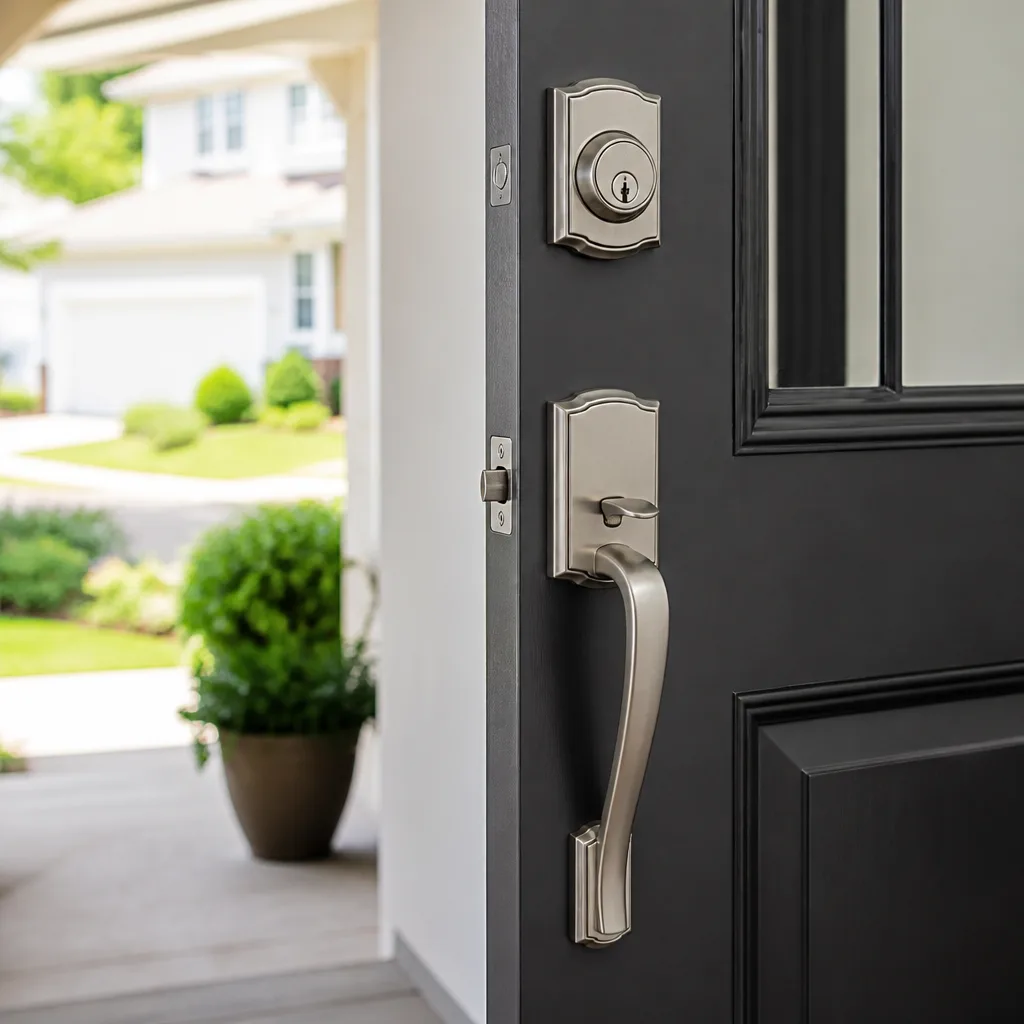
- Grade 1 (Commercial/High-Security): Rated for 800,000 cycles or more. These are commercial locks that also work beautifully on homes. Schlage B-Series deadbolts and Medeco Maxum deadbolts are Grade 1. Expect to pay $150 to $350 per cylinder. The difference is not just durability. Grade 1 hardware typically has a solid brass or steel internal chassis, a thicker deadbolt throw, and a strike plate designed to take serious abuse from a prying tool.
The honest guidance is that most LA single-family homes are well served by Grade 2 hardware with a reinforced strike plate and longer screws. Grade 1 makes sense when the door is a primary entry point on a hillside property with limited visibility from the street, when the home sits on an alley lot in Venice or Mar Vista, or when the homeowner simply wants the best hardware made and is willing to pay for it. One thing we tell every homeowner: the grade of the lock does not matter if the strike plate and screws are weak. A Grade 1 deadbolt anchored to a factory strike plate fails almost as easily as a Grade 3 when kicked hard.
Rekeying vs. Replacing: The Economics and When Rekeying Is Wrong
Rekeying means changing the internal pins of an existing lock cylinder so the old key no longer works. It costs less than replacing, usually $18 to $40 per cylinder in Los Angeles plus a service call fee. Replacing means pulling the entire lock off the door and installing new hardware, which runs $50 to $350 per lock depending on grade and brand.
Rekeying makes sense in these situations:
- You just bought a house. The previous owner, a housekeeper, a contractor, or a neighbor might have a copy of the key. Rekey every exterior lock on day one.
- A tenant or roommate moved out. This is non-negotiable on any Los Angeles rental property. Rekeying between tenants is the single most effective key control step a landlord can take.
- You lost a key but the lock works fine. If the cylinder turns smoothly, the deadbolt throws fully, and the finish is intact, rekeying solves the problem for a fraction of replacement cost.
But rekeying is the wrong choice in some very common LA scenarios:
- The keyway is worn. A key that wiggles in the cylinder, sticks halfway, or requires a jiggle to turn means the internal pins or the cylinder walls are worn. Rekeying a worn cylinder is like putting new strings on a guitar with a cracked neck.
- The hardware is Grade 3 and the door is a primary entry point. Adding new pins to a lock rated for 200,000 cycles does not change what it is. If the lock is cheap and the door matters, replace it with Grade 2 or Grade 1.
- You want a smart lock conversion. You cannot rekey a mechanical lock into a smart lock. The cylinder is the only common part, and retrofitting old Schlage or Kwikset mechanical deadbolts with smart modules is not a reliable path. Replace the hardware.
- The finish is destroyed or the lock is rusted. Coastal neighborhoods like Playa del Rey and San Pedro get salt air that eats lock finishes. If the metal is pitted or the thumbturn sticks, replace it.
ADU and Multi-Unit Key Control for Los Angeles Properties
The ADU boom changed residential locksmithing in Los Angeles more than any other single factor. A property with a main house and a rear ADU has two independent households sharing one lot, which creates a key control problem most national advice ignores. The owner needs access to the ADU for maintenance. The tenant needs a lock the owner cannot casually enter. Both need to be able to lock the other out if a dispute arises. That is a mechanical problem as much as a security one.
The standard solution is a master key system, which works like this: the owner carries a master key that opens both the main house and the ADU. The tenant carries a change key that opens only the ADU. The main house key opens only the main house. A change key cannot be modified to become a master key without re-pinning the cylinders. This is exactly how small apartment buildings in Los Angeles have operated for decades, and it translates directly to ADU properties.
Master key systems work best with quality cylinders. Schlage and Kwikset both make robust master-key-compatible hardware. For properties where key duplication is a concern, restricted keyways from brands like Mul-T-Lock or Medeco prevent a tenant from walking into any hardware store and copying the key. Restricted blanks can only be duplicated by the locksmith who controls the system, which keeps key control in the owner’s hands.
There is another practical layer. An ADU on an alley lot in Highland Park or a converted garage in West Adams often has a side door facing the alley, which is the most vulnerable entry point on the entire property. Alley-facing doors need the same attention as the front door: Grade 2 hardware at minimum, a reinforced strike plate, and no glass within arm’s reach of the deadbolt thumbturn.
For larger properties, multi-unit buildings, or any scope beyond a detached ADU, our Commercial Locksmith in Los Angeles page covers master systems and key records in detail.
Wildfire Evacuation Planning and Residential Lock Choices
Wildfire evacuation is now part of homeownership in Los Angeles. Neighborhoods in the Santa Monica Mountains, the Verdugos, and the foothills above Pasadena and Glendale have evacuation orders nearly every fire season. Lock hardware plays a real role in how quickly a family can get out of the house in the dark, in smoke, with children and pets and maybe 90 seconds to leave.
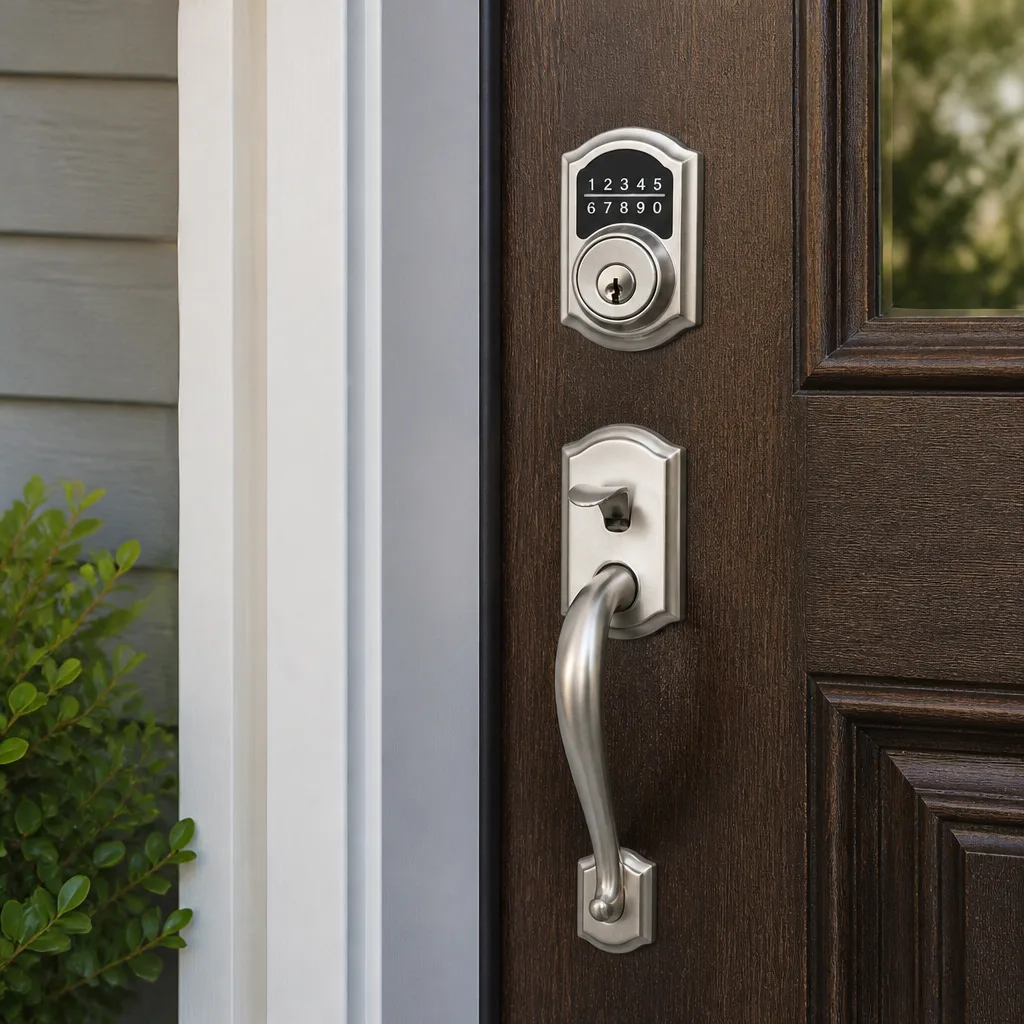
The specific advantage of keyless entry on primary egress doors is that it removes a physical action from the evacuation sequence, a topic we explore in our guide on DIY vs Professional Access Control Systems: What’s Safe to Do Yourself. A keypad deadbolt or a smart lock with a keypad opens with a code, not a key. In smoke and darkness, finding a key, orienting it, and turning it takes time and fine motor skill. Typing four digits is faster and works when hands are shaking. For a family with young children, the difference is more pronounced because a second parent can be wrangling kids and pets while the first parent triggers the lock at the door.
Battery backup is the non-negotiable requirement. Most keypad and smart locks run on four or six AA batteries, and they start failing when the batteries drop below a certain voltage. A smart lock with a dead battery and no physical key override is worse than a mechanical lock. The industry standard is a 9-volt emergency jump contact on the exterior, but even that requires carrying a 9-volt battery. Our recommendation for evacuation-prone areas is a keypad deadbolt with a physical key override cylinder from Schlage or Kwikset, changed to fresh batteries at the start of fire season every year, not when the low-battery warning appears.
There is also a non-evacuation angle. After a fire, homeowners returning to a damaged or smoke-affected house often need the locks replaced because heat and soot compromise the cylinders. Keeping a record of your lock brand and keyway with your insurance paperwork saves time during a claim.
Smart Locks in Los Angeles: What Works, What Doesn’t
Smart locks are the fastest-growing segment of residential locksmithing in Los Angeles, and the market has matured enough that the good hardware is genuinely good. The mistake we see most often is a homeowner buying a smart lock online and then discovering it will not fit the door or will not pair with the home’s Wi-Fi in the way the listing promised. A smart lock only works when it is installed on the right door, with the right cylinder, by someone who has seen the failure modes.
The core tradeoff is between converting an existing deadbolt and replacing the deadbolt entirely. Conversion kits that attach a motor to the interior thumbturn of your existing Schlage or Kwikset deadbolt are popular because they preserve the exterior hardware. They work well on Grade 2 deadbolts that are in good condition. They are a poor choice on Grade 3 hardware or any lock with a stiff or gritty action, because the motor strains against resistance and burns through batteries quickly.
Full-replacement smart deadbolts from Schlage, Kwikset, and Yale are a cleaner solution and come in grades that match their mechanical equivalents. The Schlage Encode and the Kwikset Halo are both solid Grade 2 options with keypad, app, and physical key override. Expect to pay $200 to $400 per lock installed in Los Angeles.
Three things to know before you commit:
- Measure the backset. Most LA homes have a 2-3/4 inch backset on entry doors, but many older bungalows have 2-3/8 inch. Smart lock fit varies, and the wrong backset means returning the hardware or re-drilling the door.
- Check the door thickness. A handful of 1920s and 1930s doors in neighborhoods like Hancock Park are thinner than the modern standard. Smart lock tailpieces are sized for standard doors and may need modification on thin doors.
- Think about the Wi-Fi hub. Some smart locks connect directly to Wi-Fi and eat batteries. Others use a bridge or hub with better battery life but more setup steps. In dense LA apartment and condo buildings with crowded 2.4GHz bands, direct-Wi-Fi models can be flaky. Ask the locksmith which protocol the lock uses before you buy.
Common Mistakes to Avoid
- Buying the most expensive lock and installing it with the old strike plate. A $300 Medeco deadbolt mounted to a stock plate with half-inch screws fails at the frame, not the lock. Reinforce the strike plate or do not bother upgrading the lock.
- Rekeying a lock that needs to be replaced. If the keyway is worn, the latch is sticky, or the hardware is Grade 3 on an entry door, new pins do not fix it. Know the difference before paying for service.
- Leaving alley-facing doors under-secured. Alley access is common across Los Angeles from Leimert Park to Silver Lake, and alley doors are the most attacked entry point on a property. Treat them like the front door.
- Installing a smart lock with no physical key override and no battery schedule. In an evacuation scenario, a dead battery with no key backup is a real problem. Keep the key override and replace batteries on an annual calendar date.
- Copying keys at a hardware store for a high-security or restricted keyway. If the key says “Do Not Duplicate” or carries a restricted blank from Mul-T-Lock, Abloy, or Medeco, the hardware store cannot copy it correctly. Go through the locksmith who controls the system.
- Ignoring the strike plate screws. The deadbolt throws into the strike plate. If the plate is held by short screws that bite only into the door jamb trim, the entire assembly is cosmetic. Reinforced strike plates with 3-inch screws into the stud are the single highest-value security upgrade in Los Angeles residential locksmithing.
- Replacing all the locks when one key could have been reused. A locksmith can key multiple cylinders alike so one key opens every exterior door. Buying three separate locks with three separate keys because that is what the box said is a common and avoidable expense.
When to Call a Professional
Call a locksmith when a key breaks in a cylinder and you cannot extract it cleanly, when a lock is frozen or grinding and lubrication is not enough, when you have bought a house or lost a key and need the cylinders rekeyed, when a tenant has moved out and the key control needs to be re-established, or when you are planning an ADU and need a master key or restricted keyway system set up properly. These are mechanical and security decisions where a mistake costs more than a service call. Blackthorn Locksmith & Security offers free estimates in Los Angeles. Call (818) 390-9007 and a live person answers, any hour, any day.
Frequently Asked Questions
A service call in Los Angeles typically runs $75 to $250, with rekeying at $18 to $40 per cylinder, standard deadbolt replacement at $50 to $150 per lock, and high-security hardware from brands like Medeco or Mul-T-Lock at $200 to $400 per cylinder. The full price is quoted on the phone before anyone is dispatched, and that is the price on the invoice. Call (818) 390-9007 for an exact quote, free of charge.
Yes. Blackthorn Locksmith & Security provides a written price before any work starts, every single time. It is not an estimate and it is not a verbal range. The price on the written quote is the price on the invoice, with no call-out surcharge added on arrival.
Emergency lockout response times in Los Angeles vary by neighborhood and time of day, but a live person answers every call 24/7 and can confirm the nearest technician’s availability in minutes. For non-emergency work like rekeying or hardware upgrades, we schedule a specific window that works for your family’s routine, including nap hours and after-work slots. See our more guides & resources for additional tips.
Yes. This is called keying alike, and it works on most Schlage and Kwikset cylinders and on higher-security hardware from brands like Sargent. A locksmith pins each cylinder to the same key cuts so one key operates every exterior door on the house. It is a straightforward job that is best done at the same time the locks are installed or rekeyed.
Grade 2 hardware with a reinforced strike plate is sufficient for most single-family homes. Grade 1 makes sense for primary entry doors on hillside or alley-adjacent properties, for doors with limited visibility from the street, or for homeowners who want commercial-grade durability. The strike plate and screws matter more than the grade of the deadbolt in most forced-entry attempts.
Rekey every exterior cylinder on the day you take possession. The previous owner, their family, a contractor, a housekeeper, or a neighbor could have a copy of any exterior key. Rekeying costs far less than replacement and eliminates that unknown completely. If the hardware is old or failing, replace and key alike in the same visit.
The Bottom Line
Residential locksmithing in Los Angeles is a different conversation than anywhere else because the housing stock is older, the ADU movement is denser, the wildfire season is longer, and the alley access is more common. The right answer is rarely the most expensive lock on the shelf. It is the right grade for the door, a strike plate that actually holds, key control that matches how the property is used, and hardware chosen for how the family gets out in an emergency as much as how they keep others out. Shane Delaney and his team install and service Schlage, Kwikset, Medeco, and Mul-T-Lock hardware across Los Angeles, with a written price before the work starts, shoe covers and drop cloths inside the home, and a photo of the clean-up before the technician leaves. For a free estimate, call (818) 390-9007.
Written by Shane Delaney, Owner at Blackthorn Locksmith & Security, serving Los Angeles since 2008.