
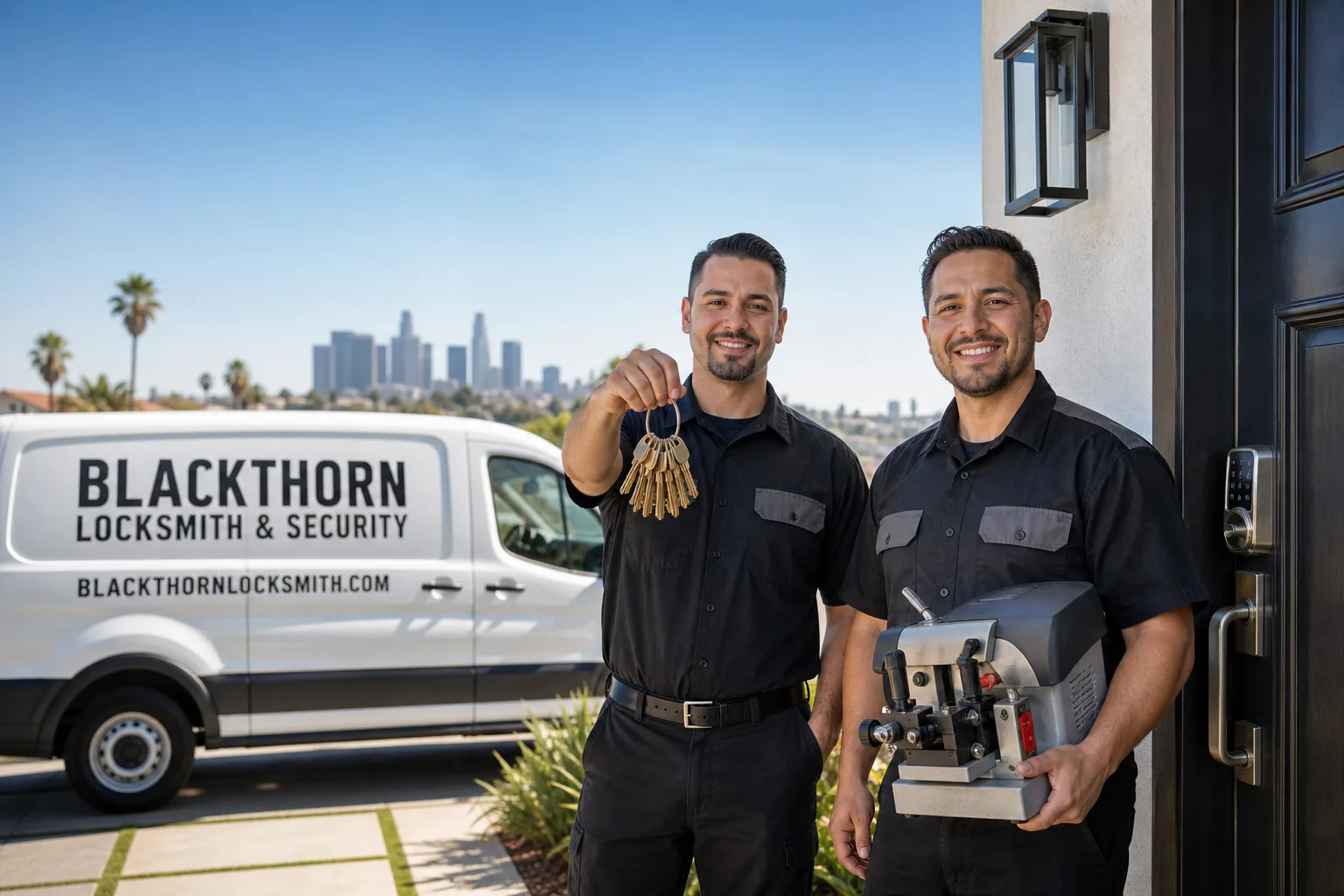
Non-destructive entry first, always - and we re-key Schlage, Kwikset, and Baldwin locks on the spot while you watch
You get a price before we start. It does not change when we arrive. No surprises.
Lost the Only Key to a Safe
Losing the only key to a safe means the lock has no bypass – there is no hidden reset button, no master override, and no way to guess your way in without damaging what’s inside. A licensed locksmith can open most residential and commercial safes non-destructively, cut or decode a replacement key from the lock itself, and have the safe fully functional in a single visit. This is a solvable problem, and you do not need to pry anything open.
Safe locks are precision mechanisms. The keyway, bitting, and bolt work together with very tight tolerances, and unlike a standard door lock, most safes have no secondary entry point. That tight design is what keeps the contents secure – but it also means that when the key is gone, the lock cannot be coaxed open the way some people try with a bobby pin or flathead screwdriver. Trying either of those methods can score the keyway, jam the bolt, or damage the locking pins in ways that turn a straightforward job into a much harder one. The better path is to stop, take stock of what you know about the safe, and call a locksmith before anything else.
Why It Happens
The key was lost or never duplicated
This is the most common cause, and it is almost never the homeowner’s fault – safe keys are small, often stored in a drawer that gets cleared out, and most safes come with only one or two original keys with no duplicate made. If the safe opens and closes normally when you test the bolt with your fingers, and there is no sign of damage around the keyway, this is almost certainly your situation. The lock itself is fine; it just needs a new key cut to match it.
The key broke off inside the cylinder
Safe keys are narrower than house keys and can shear off cleanly if the lock was stiff and force was used. Look carefully inside the keyway with a flashlight – if you can see a small sliver of metal sitting in the cylinder, stop immediately and do not attempt to pull it out with pliers or tweezers, as pushing it deeper makes extraction significantly harder. A broken key inside the cylinder is still a recoverable situation for a trained locksmith with the right extraction tools.
The lock cylinder has seized over time
Safe locks that sit unused for months or years can corrode internally or dry out to the point where the plug will not turn even with the correct key. If you have the key but it slides in and will not rotate at all, or rotates only partway with heavy resistance, a seized cylinder is the likely culprit. Do not apply penetrating oil inside a safe lock – many of these lubricants degrade the lock’s internal components and can create a stickier mess than the one you started with.
The key is correct but the safe has shifted or settled
Floor safes and heavy freestanding safes can shift slightly over time, particularly on older wood subfloors or after a home renovation nearby. When a safe shifts, the bolt can sit slightly misaligned with the door frame, creating just enough resistance that the key cannot complete its turn even though the lock is mechanically sound. You will usually notice this as a new scraping or grinding feeling that was not there before, even when the key feels like it is turning correctly.
What to Do Right Now
- Stop trying to force the lock. Every additional attempt with the wrong tool or a substitute key risks scoring the keyway or pushing debris deeper into the cylinder. The lock is already not opening – do not make the next step harder.
- Take a photo of the keyway with your phone. A clear, well-lit close-up shows the locksmith whether there is a broken key fragment visible, debris inside the keyway, or damage around the face of the lock. This takes thirty seconds and can save real time on the call.
- Find any documentation that came with the safe. A model number, serial number, or original purchase receipt can help identify the lock type and sometimes lets a technician pre-cut a key before arriving. Look on the bottom of the safe, on the door edge, or in an old manual.
- Note the safe brand and any numbers stamped near the keyway. Brands like Gardall, Liberty, SentrySafe, Sargent & Greenleaf, or AMSEC each use different cylinder types and key profiles. Knowing the brand beforehand lets your local Blackthorn Locksmith & Security team prepare the right tools and blanks.
- Do not call a general handyman or try a lockpick set from a hardware store. Safe locks are a specific skill set. An untrained attempt with improvised tools can damage the locking mechanism to the point where even a trained locksmith has to drill – a far more involved process than a standard key decode and cut.
How We Fix It
When your local Blackthorn Locksmith & Security team arrives, the technician’s first step is a visual assessment of the lock face and keyway before touching anything – this is part of how we work, asking before we move or touch. If the cylinder is intact and undamaged, the most common path is impressioning or decoding the lock directly to cut a working key without removing the cylinder at all. On most residential safes, this takes between thirty minutes and an hour and leaves the lock completely original.
If there is a broken key fragment inside, extraction comes first, then the decode and cut. If the cylinder has seized, it may need to be removed, serviced, and reinstalled. In any case, the service falls under our Residential Locksmith work, and for safes located in a business, our Commercial Locksmith team handles the same process.
Before any of that work begins, you receive a written price – not a verbal estimate, not a range. That number is what appears on the invoice. The completed job is covered by the 365-Day Done Right Promise: if it is not done right, we make it right.
Frequently Asked Questions
Most residential safes can be opened without drilling if the lock mechanism is undamaged. A trained locksmith can decode the lock or use impressioning techniques to produce a working key directly from the cylinder. Drilling is a last resort – it permanently damages the lock and is only necessary when the cylinder itself is severely corroded, jammed by a broken key that cannot be extracted, or damaged by prior forced-entry attempts.
A locked safe you cannot open is not a physical danger in itself, but if it contains medications, documents you need urgently, or a firearm and you have lost track of the only access method, there is a real practical urgency to resolving it. There is no combustion risk, no tension component, and no electrical hazard in a standard key-entry safe – it is a mechanical problem, not a safety emergency. That said, a safe with a firearm inside and no accessible key is a situation worth prioritizing. Call (818) 390-9007 and your local Blackthorn team can typically schedule same-day service.
A live person answers every call to (818) 390-9007, around the clock, every day of the year including holidays – no voicemail, no callback queue. Your local Blackthorn Locksmith & Security team will tell you availability honestly on that call, and in most cases we can dispatch a background-checked, uniformed technician the same day. Call (818) 390-9007 to find out how quickly your local team can get there.
Safe work varies depending on the lock type, the condition of the cylinder, and whether a broken key needs to be extracted first – which is exactly why we do not publish a single flat rate for it. What we do promise is a written price before any work starts, specific to your safe and your situation. That number does not change once work begins. Call (818) 390-9007 and we can often give you a strong estimate on the phone once we know the safe brand and model – and that call costs you nothing.
Get It Fixed
Call (818) 390-9007 – a live person answers right now, any hour of the day or night. Your local Blackthorn Locksmith & Security team will give you a written price before anything starts and get your safe open the right way, covered by the 365-Day Done Right Promise.
Written by Shane Delaney, Owner & Lead Technician, Blackthorn Locksmith & Security.
What Our Customers Say
"Rekeyed the house and added a deadbolt the first week we moved in. He wore shoe covers, swept the shavings off the floor, and was kind and patient. Felt safe right away."
- Marisol Quint"Rekeyed the whole house after we moved in. He was calm and careful, wore shoe covers without me asking, and cleaned up the little metal shavings from each door. Felt safe that first night."
- Harriet Boyle"Access control for a small clinic. He understood we had patients around and kept it quiet and clean. Protected the floors where he was drilling and tidied everything after."
- Ron Pak